🇦🇿 artist: JIVA will represent Azerbaijan

JIVA will represent Azerbaijan at the Eurovision Song Contest 2026 in Vienna. The Azerbaijani broadcaster İctimai Television announced the news on Friday 6 March. With that decision, Azerbaijan has chosen its act for the country’s 18th Eurovision participation since its debut in 2008. JIVA will perform in the first half of the second semi-final on Thursday 14 May.

The selection process was extensive. A total of 186 songs were submitted to the broadcaster. Of those entries, 107 came from local composers and performers, while 79 were sent in by international songwriters. After an initial review by a professional panel, 18 candidates were invited to audition. Their vocal abilities, stage presence and international potential were then assessed. In the end, three artists remained on the shortlist. A specially formed focus group made the final decision and selected JIVA as Azerbaijan’s representative.

JIVA is the stage name of Jamila Hashimova. According to Eurovision’s official announcement, she is known for strong vocals and sincere live performances. Her career started in 2003, when she finished second in the Baku Autumn competition. In 2007, she also took part in the Show Time project. Over the years, JIVA worked with the RAST ensemble, led by Rashad Hashimov, and performed at the Montreux Jazz Festival. Later, she became the lead vocalist of Hazz Band, where she mixed jazz influences with contemporary pop.

Since 2017, JIVA has continued as a solo artist. She records pop, dance and R&B songs in Azerbaijani, Russian and English. In 2025, she won The Voice of Azerbaijan as part of Roya Aykhan’s team. Eurovision fans may also remember her from 2011, when she reached the top three of Azerbaijan’s national selection. For now, Azerbaijan’s Eurovision 2026 story starts with the announcement of JIVA. She now has the chance to step onto Eurovision’s stage.

Related news

History

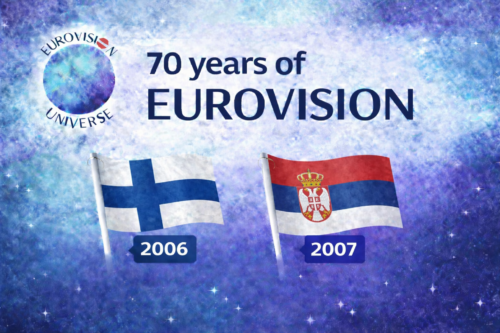
70 years of Eurovision: of monsters and prayers

The Eurovision Song Contest is celebrating its 70th anniversary. That is a wonderful milestone. We at Eurovision Universe love diving into the history of the contest. That is why we are taking a closer look at the contests of the past 70 years. 2006 Sakis Rouvas, together with Maria Manonous, hosted the Eurovision Song Contest from the O.A.C.A. Olympic Indoor Hall in Athens. Austria and Hungary decided not to participate. Serbia & Montenegro was going to participate, but a dispute broke out. During the national final, the Serbian jury members voted for Montenegrin artists, but the reverse did not happen, or barely so. The same thing happened the year before. For the second consecutive time, the Montenegrin group No Name won. The Serbian audience (the national final was held in Belgrade) became so angry that the band members did not perform an encore, just for their own safety. Ultimately, Serbia & Montenegro withdrew completely. Fortunately, there was also a debuting country: Armenia. That brought the total number of countries to 37. And because Serbia & Montenegro were automatically in the final, another country was now allowed to advance: Croatia. The songs There were many returning artists. Anna Vissi participated for the third time. Vissi had by then become a major star in a large part of Europe. Former winner Carola was no stranger either. She was given another chance for Sweden. Ich Troje participated for the second time for Poland; the singer had green hair by then. The group did not reach the final this time. Fabrizio Faniello made a repeat appearance for Malta. And then there was Hari Mata Hari. In 1999, disqualified for Bosnia and Herzegovina, but this time the group participated and even became 3rd. There were big stars as well. The Belgian Kate Ryan had also had a hit abroad before. Expectations were high for “Je t’adore”, but a nervous Kate did not make the final. Arsenium was among those participating for Moldova. He had scored a worldwide hit a year before as a member of the group O-Zone: “Dragostea din tei”. The Spanish group Las Ketchup was, of course, known for “The Ketchup Song (AserejĂ©)”. However, they were not very successful with their “Bloody Mary”. Iceland sent Silvia Night. This was a fictional, satirical character from an Icelandic TV series. She walked around Athens giggling and making insulting remarks. When she failed to reach the final, she threatened to jump off a bridge. Fortunately, it was all just a show; a show that was not taken in by the public. A show that *was* taken in, however, was that of the Russian Dima Bilan. He became second. The fact that a whole series of pornographic photos of Bilan went viral on the internet shortly after the announcement of his participation certainly didn’t bother him. For Lithuania, the group LT United performed: a group that had come up with lyrics to a teasing tune: “We Are the Winners of Eurovision,” the group sang. They did not win. For Croatia, Severina sang a cheerful song about high heels: “Moja štikla.” What stuck with us from that song to this day was the cry “Afrika Paprika!”. Lordi Candidates could stand out as much as they wanted, but no one surpassed Lordi in that regard. Lordi is a band that has always performed dressed as monsters. So, they did so again now. Their disguise was not specifically for Eurovision. However, with “Hardrock Hallelujah,” they appealed to a large portion of the televoters. And so, the country that had been waiting in vain for a victory since 1961 finally finished at the top. Soon after the victory, photos leaked showing what the members of Lordi really looked like. Nevertheless, they adhered to the rule of never appearing in public without a disguise. And in Finland, they certainly celebrated! 2007 A record 42 countries participated in the Eurovision Song Contest. Although Monaco dropped out, Austria and Hungary returned. Serbia and Montenegro returned, but now independently of each other. Georgia and the Czech Republic also made their debut. The Eurovision Song Contest was held in the Hartwall Arena in Helsinki. Jaana Pelkonen and Mikko Leppilampi hosted the event. The songs Evridiki (Cyprus) participated for the third time. EirĂ­kur Hauksson did too; he had previously participated for both Iceland and Norway. Edsilia Rombley (the Netherlands) was there for the second time. None of the three artists reached the final. The Macedonian Karolina Goceva had more luck with her second participation: she did make it to the final. Switzerland had managed to convince DJ Bobo to represent the country. However, with his “Vampires Are Alive,” he didn’t make it either. Reason for him to grumble loudly: “If Turkey lays a flag on the stage for three minutes, they’ll still make the final.” Drag queen DQ also failed to reach the final with her “Drama Queen.” Belarus surprised with Dimi Koldun. His “Work Your Magic” not only reached the final with ease but also finished very high there, securing sixth place. The Russian female trio Serebro, which later scored several international hits, also performed well with a third place. It was their first song. Because no good title had been conceived, the song was called “Song #1”. Very striking, but unfortunately not scoring high, was the jazzy German entry by Roger Ciccero: “Frauen regier’n die Welt”, which meant: women rule the world. According to Ciccero, it was not an ode to the (female) Chancellor of Germany, Angela Merkel. The United Kingdom continued to search in vain for tongue-in-cheek entries. Dressed as stewards and stewardesses, the group Scooch sang “Flyin’ the Flag” to the bottom ranks. How different it was for Ukraine. Drag queen Verka Serduchka managed to get the crowd clapping with the rousing entry “Dancing Lasha Tumbai”. Dressed entirely in silver, Verka sang, but what did that “Lasha Tumbai” actually mean? It was said that it was something in Mongolian. That was incorrect. But “Lasha Tumbai” was very easy to confuse with “Russia


Read More »
History
Martijn

70 years of Eurovision: of monsters and prayers

The Eurovision Song Contest is celebrating its 70th anniversary. That is a wonderful milestone. We at Eurovision Universe love diving into the history of the contest. That is why we are taking a closer look at the contests of the past 70 years. 2006 Sakis Rouvas, together with Maria Manonous, hosted the Eurovision Song Contest from the O.A.C.A. Olympic Indoor Hall in Athens. Austria and Hungary decided not to participate. Serbia & Montenegro was going to participate, but a dispute broke out. During the national final, the Serbian jury members voted for Montenegrin artists, but the reverse did not happen, or barely so. The same thing happened the year before. For the second consecutive time, the Montenegrin group No Name won. The Serbian audience (the national final was held in Belgrade) became so angry that the band members did not perform an encore, just for their own safety. Ultimately, Serbia & Montenegro withdrew completely. Fortunately, there was also a debuting country: Armenia. That brought the total number of countries to 37. And because Serbia & Montenegro were automatically in the final, another country was now allowed to advance: Croatia. The songs There were many returning artists. Anna Vissi participated for the third time. Vissi had by then become a major star in a large part of Europe. Former winner Carola was no stranger either. She was given another chance for Sweden. Ich Troje participated for the second time for Poland; the singer had green hair by then. The group did not reach the final this time. Fabrizio Faniello made a repeat appearance for Malta. And then there was Hari Mata Hari. In 1999, disqualified for Bosnia and Herzegovina, but this time the group participated and even became 3rd. There were big stars as well. The Belgian Kate Ryan had also had a hit abroad before. Expectations were high for “Je t’adore”, but a nervous Kate did not make the final. Arsenium was among those participating for Moldova. He had scored a worldwide hit a year before as a member of the group O-Zone: “Dragostea din tei”. The Spanish group Las Ketchup was, of course, known for “The Ketchup Song (AserejĂ©)”. However, they were not very successful with their “Bloody Mary”. Iceland sent Silvia Night. This was a fictional, satirical character from an Icelandic TV series. She walked around Athens giggling and making insulting remarks. When she failed to reach the final, she threatened to jump off a bridge. Fortunately, it was all just a show; a show that was not taken in by the public. A show that *was* taken in, however, was that of the Russian Dima Bilan. He became second. The fact that a whole series of pornographic photos of Bilan went viral on the internet shortly after the announcement of his participation certainly didn’t bother him. For Lithuania, the group LT United performed: a group that had come up with lyrics to a teasing tune: “We Are the Winners of Eurovision,” the group sang. They did not win. For Croatia, Severina sang a cheerful song about high heels: “Moja štikla.” What stuck with us from that song to this day was the cry “Afrika Paprika!”. Lordi Candidates could stand out as much as they wanted, but no one surpassed Lordi in that regard. Lordi is a band that has always performed dressed as monsters. So, they did so again now. Their disguise was not specifically for Eurovision. However, with “Hardrock Hallelujah,” they appealed to a large portion of the televoters. And so, the country that had been waiting in vain for a victory since 1961 finally finished at the top. Soon after the victory, photos leaked showing what the members of Lordi really looked like. Nevertheless, they adhered to the rule of never appearing in public without a disguise. And in Finland, they certainly celebrated! 2007 A record 42 countries participated in the Eurovision Song Contest. Although Monaco dropped out, Austria and Hungary returned. Serbia and Montenegro returned, but now independently of each other. Georgia and the Czech Republic also made their debut. The Eurovision Song Contest was held in the Hartwall Arena in Helsinki. Jaana Pelkonen and Mikko Leppilampi hosted the event. The songs Evridiki (Cyprus) participated for the third time. EirĂ­kur Hauksson did too; he had previously participated for both Iceland and Norway. Edsilia Rombley (the Netherlands) was there for the second time. None of the three artists reached the final. The Macedonian Karolina Goceva had more luck with her second participation: she did make it to the final. Switzerland had managed to convince DJ Bobo to represent the country. However, with his “Vampires Are Alive,” he didn’t make it either. Reason for him to grumble loudly: “If Turkey lays a flag on the stage for three minutes, they’ll still make the final.” Drag queen DQ also failed to reach the final with her “Drama Queen.” Belarus surprised with Dimi Koldun. His “Work Your Magic” not only reached the final with ease but also finished very high there, securing sixth place. The Russian female trio Serebro, which later scored several international hits, also performed well with a third place. It was their first song. Because no good title had been conceived, the song was called “Song #1”. Very striking, but unfortunately not scoring high, was the jazzy German entry by Roger Ciccero: “Frauen regier’n die Welt”, which meant: women rule the world. According to Ciccero, it was not an ode to the (female) Chancellor of Germany, Angela Merkel. The United Kingdom continued to search in vain for tongue-in-cheek entries. Dressed as stewards and stewardesses, the group Scooch sang “Flyin’ the Flag” to the bottom ranks. How different it was for Ukraine. Drag queen Verka Serduchka managed to get the crowd clapping with the rousing entry “Dancing Lasha Tumbai”. Dressed entirely in silver, Verka sang, but what did that “Lasha Tumbai” actually mean? It was said that it was something in Mongolian. That was incorrect. But “Lasha Tumbai” was very easy to confuse with “Russia

Read More »
Follow Us: