Weekly Update

It is Tuesday, 7 April 2026, and the road to Vienna has entered its “schedule” phase. The official semi-final running orders were published on 2 April.  The next big stop is the pre-party stretch: Amsterdam first, then Bucharest, then London.  Meanwhile, bookmakers still place “Liekinheitin” on top, with the closest challengers a few steps behind. 

This weekly update focuses on three things: where to see the artists live, how the running order may help or hurt specific countries, and what the betting market looks like right now.

Pre-party season

Eurovision In Concert returns on Saturday, 11 April 2026 at AFAS Live. The organisers list a 20:00 start. Doors are scheduled for 18:30, with an expected end around 23:00. Hosts Krista Siegfrids and Cornald Maas are confirmed, and the current line-up list mentions 24 participating countries.  Eurovision Universe will be present! Our reporter Kal will do interviews in his own special style, as we see him doing every year. Keep an eye on our website!
The London Eurovision Party is back on Sunday, 19 April 2026 at HERE at Outernet. Doors are listed as 6.30pm. Performances are scheduled from 7.30pm to 11.40pm (estimate), followed by an after party until 1.30am.  The organisers also confirm three hosts: Sissal, Tia Kofi, and Cesár Sampson.  The published list includes many 2026 contestants, plus a guest slot for Aliona Moon

Pre-party Bucharest is set for Saturday, 18 April 2026 at Arenele Romane. Tickets are on sale.  The show is organised by eMagic in collaboration with TVR, AIMR and OGAE Romania.  Announced performers so far include Bulgaria’s DARA, Greece’s Akylas, Malta’s Aidan, Romania’s Alexandra Căpitănescu, plus guests Paula Seling and Jamala.  Fans can also follow updates via the dedicated Facebook group. 
First semi-final running order

The first semi-final (Tuesday, 12 May) opens with Moldova and closes with Serbia.  Sweden performs second, while Finland appears at number seven, directly after Italy’s non-competing performance slot.  Germany also performs as an automatic qualifier during the show, just before Belgium takes the stage at number eleven. 

My AI take: the late slots look more comfortable. Since 2013, producers have shaped the running order to build a stronger TV show and avoid similar entries clashing back-to-back.  Even with those choices, order effects are real. Research on sequential performance evaluation (including Eurovision-based work) finds that running position can influence outcomes, with later slots often performing better on average. 

Positive placements: Finland has a post-interval “reset” at #7. Belgium follows the Germany break at #11. Poland at #14 and Serbia as the closer (#15) should also enjoy strong end-of-show recall.  Potential headwinds: Sweden (#2) sits in the classic early zone. Croatia (#3) and Greece (#4) are also in that opening cluster. source: Eurovision.com
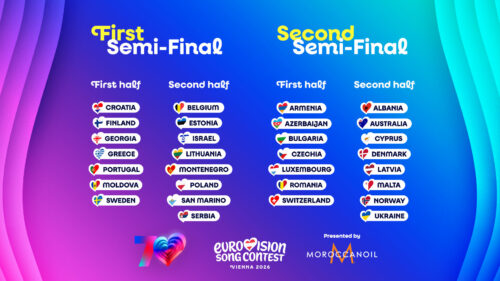
Second semi-final running order

The second semi-final (Thursday, 14 May) starts with Bulgaria and ends with Norway.  Romania is early at number three.  Strong mid-to-late slots include Denmark (#10), Australia (#11) and Ukraine (#12).  Three automatic qualifiers are woven in: France after song five, Austria after song eight, and the United Kingdom after song twelve. 

My AI take: this show has two clear “mini-finals”. One ends at Cyprus (#8), then Austria performs. The second builds from Latvia (#9) through Denmark, Australia and Ukraine, then the United Kingdom performs.  The finish is a clean three-song sprint: Albania (#13), Malta (#14), and Norway (#15).  That final trio should be happy, especially Norway with the closing slot, given the documented advantage of later positions on average. 

Harder positions: Azerbaijan (#2), Romania (#3), and Luxembourg (#4) sit early.  Czechia (#5) performs just before France’s interval slot, which can split momentum. source: Eurovision.com

Betting odds snapshot

EurovisionWorld’s winner odds currently list Linda Lampenius x Pete Parkkonen’s “Liekinheitin” as the clear favourite, with a quoted winning chance of 30%. Monroe’s “Regarde !” is second on 11%. Søren Torpegaard Lund is third on 10%. Delta Goodrem and Akylas follow next, both listed at 8%.  The next tier includes Noam Bettan and Felicia, both shown at 4%. 

Odds are a market signal, not a result. EurovisionWorld also notes that odds are subject to change and reflect bookmakers’ predictions at that moment.  source: EurovisionWorld

Eurovision Universe on the ground

For Eurovision In Concert in Amsterdam, Eurovision Universe will be there in person. Expect on-the-floor reactions, fast quotes, and interviews from Kal. The focus stays on what the artists actually say and do on the night. Below you’ll find an example of what to expect: Kal interviews Kyle Alessandro, last years Norwegian participants. Kyle will be present at Eurovision In Concert this year too!

Related news

History

70 years of Eurovision: sadness and hapiness

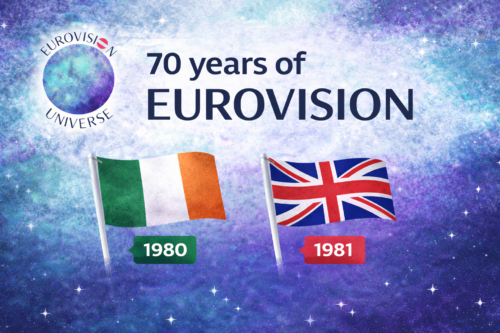
The Eurovision Song Contest is celebrating its 70th anniversary. That is a wonderful milestone. We at Eurovision Universe love diving into the history of the contest. That is why we are taking a closer look at the contests of the past 70 years. 1980 There had been plans for an open-air Eurovision Song Contest at the Sea of ​​Tiberias. The Israeli broadcaster simply ran out of money to organize the contest. Eventually, the Netherlands took over. The Dutch broadcaster used the scripts from 1976 again. Even the opening film was the same as back then. Israel itself did not participate. The festival coincided with a memorial day there. Monaco also dropped out, but Morocco participated for the first time. Marloes Fluitsma hosted the event. She was extremely nervous. ‘Dames en heren, hallo, (Ladies and gentlemen, hello)’ she opened the contest. Without any spontaneity, she struggled her way through the event. Thank goodness, every country had brought its own presenter for this 25th Eurovision Song Contest. Katja Ebstein participated for Germany for the third time. She was accompanied by a group of backing vocals dressed as clowns. Maggie MacNeal made a comeback for the Netherlands; At the time as half of a duo, now solo and with the song “Amsterdam”. Paola, who had already represented Switzerland in 1969, was also present. Her song “Cinéma” dealt with Mickey Mouse, Charlie Chaplin, and Buster Keaton, among others. All three returning candidates finished in the top 5. Also noteworthy was Turkey, which returned and immediately sent a politically charged song, about oil of course: “Petr’oil”. Morocco sent Samira Ben Said, who would later become a major star throughout the entire Arab world as Samira Said. Another notable entry was that of Luxembourg. The French twins Sophie and Magaly participated for that country. The singing was not very in tune. Things did not end well for the twins in the end. Both died young. The song, “Le papa pingouin”, would become a number 1 hit in France twenty years later. Besides Turkey, Norway also submitted a politically charged song. This country called attention to a Norwegian minority, the Sami, who live in the north of Scandinavia. The yoik, a special Sami chant, could be heard in this song. Singer Mattis Hætta wore a matching costume. Johnny Logan Ireland was not really the favorite for the final victory. Kudos however to Johnny Logan for his good singing and simple performance, and for the saxophone solo included in the song. Against all expectations, it was all enough for an Irish victory. “He’s so happy, isn’t he?” Marloes Fluitsma sighed when Logan stormed onto the stage as the winner. Johnny Logan initially managed to capitalize on his victory. However, due to lawsuits and contract issues, he failed to build a major career. But more on that later. 1981 For the second time, the festival went to Dublin, this time to the Royal Dublin Society. Morocco dropped out, but Cyprus made its debut. Yugoslavia returned. Doireann Ni Bhriain was the host. She did a fine job, even when things went wrong with the Yugoslav jury. After she called out to the jury several times, a loud ‘Hello’ rang out, after which she asked for the points. “I don’t have it,” a somewhat surprised jury chairwoman announced. It took a while before she finally announced the points. Marty Brem participated for Austria for the second time. However, no one understood the ballet that accompanied the Austrian entry. Tommy Seebach (Denmark) also participated for the second time. Maxi (Ireland) was a member of the group Sheeba, and Björn Skifs participated for Sweden again. Peter, Sue, and Marc performed for Switzerland for the fourth and final time. And, very remarkably, Jean-Claude Pascal, the winner of 1961, performed for Luxembourg! Just like the two previous years, Ralph Siegel and Bernd Meinunger wrote the entry for Germany, this time “Johnny Blue” for Lena Valaitis. It became an international hit and a Eurovision evergreen. For Norway, Finn Kalvik sang the ballad “Aldri i livet”. At the record, he was accompanied by none other than Agnetha and Frida from Abba. However, they were not present during the live broadcast. And unfortunately, no one had any points left for Kalvik. Bucks Fizz The group that represented the United Kingdom was formed specifically for the Eurovision Song Contest: Bucks Fizz. One of the members, Cheryl Baker, had previously participated with the group Co-Co. Two men and two women, modeled after ABBA, sang “Making Your Mind Up”. The group members were dressed in primary colors; the ladies wore long skirts. Halfway through the act, the men pulled off the ladies’ skirts, and the women suddenly appeared to be wearing miniskirts. It made such an impression that the poor singing went unnoticed. “I started half a tone too high and sang the whole song off-key. And yet I won,” Cheryl Baker later explained. Bucks Fizz did manage to secure the victory. Not only was their Eurovision song a huge success, but less than a year later, the group topped all European charts again with the song “The Land Of Make Believe”. The group still exists, although only one member from the original lineup, Bobby G, is still involved. After the votes came in and Bucks Fizz had won, the group was jumping around enthusiastically and happily. That was in strong contrast to Johnny Logan, who came to present the award. It was clear that all the joy surrounding his victory had vanished from him: Logan had clearly not had a good year.

Read More »
History
Martijn

70 years of Eurovision: sadness and hapiness

The Eurovision Song Contest is celebrating its 70th anniversary. That is a wonderful milestone. We at Eurovision Universe love diving into the history of the contest. That is why we are taking a closer look at the contests of the past 70 years. 1980 There had been plans for an open-air Eurovision Song Contest at the Sea of ​​Tiberias. The Israeli broadcaster simply ran out of money to organize the contest. Eventually, the Netherlands took over. The Dutch broadcaster used the scripts from 1976 again. Even the opening film was the same as back then. Israel itself did not participate. The festival coincided with a memorial day there. Monaco also dropped out, but Morocco participated for the first time. Marloes Fluitsma hosted the event. She was extremely nervous. ‘Dames en heren, hallo, (Ladies and gentlemen, hello)’ she opened the contest. Without any spontaneity, she struggled her way through the event. Thank goodness, every country had brought its own presenter for this 25th Eurovision Song Contest. Katja Ebstein participated for Germany for the third time. She was accompanied by a group of backing vocals dressed as clowns. Maggie MacNeal made a comeback for the Netherlands; At the time as half of a duo, now solo and with the song “Amsterdam”. Paola, who had already represented Switzerland in 1969, was also present. Her song “Cinéma” dealt with Mickey Mouse, Charlie Chaplin, and Buster Keaton, among others. All three returning candidates finished in the top 5. Also noteworthy was Turkey, which returned and immediately sent a politically charged song, about oil of course: “Petr’oil”. Morocco sent Samira Ben Said, who would later become a major star throughout the entire Arab world as Samira Said. Another notable entry was that of Luxembourg. The French twins Sophie and Magaly participated for that country. The singing was not very in tune. Things did not end well for the twins in the end. Both died young. The song, “Le papa pingouin”, would become a number 1 hit in France twenty years later. Besides Turkey, Norway also submitted a politically charged song. This country called attention to a Norwegian minority, the Sami, who live in the north of Scandinavia. The yoik, a special Sami chant, could be heard in this song. Singer Mattis Hætta wore a matching costume. Johnny Logan Ireland was not really the favorite for the final victory. Kudos however to Johnny Logan for his good singing and simple performance, and for the saxophone solo included in the song. Against all expectations, it was all enough for an Irish victory. “He’s so happy, isn’t he?” Marloes Fluitsma sighed when Logan stormed onto the stage as the winner. Johnny Logan initially managed to capitalize on his victory. However, due to lawsuits and contract issues, he failed to build a major career. But more on that later. 1981 For the second time, the festival went to Dublin, this time to the Royal Dublin Society. Morocco dropped out, but Cyprus made its debut. Yugoslavia returned. Doireann Ni Bhriain was the host. She did a fine job, even when things went wrong with the Yugoslav jury. After she called out to the jury several times, a loud ‘Hello’ rang out, after which she asked for the points. “I don’t have it,” a somewhat surprised jury chairwoman announced. It took a while before she finally announced the points. Marty Brem participated for Austria for the second time. However, no one understood the ballet that accompanied the Austrian entry. Tommy Seebach (Denmark) also participated for the second time. Maxi (Ireland) was a member of the group Sheeba, and Björn Skifs participated for Sweden again. Peter, Sue, and Marc performed for Switzerland for the fourth and final time. And, very remarkably, Jean-Claude Pascal, the winner of 1961, performed for Luxembourg! Just like the two previous years, Ralph Siegel and Bernd Meinunger wrote the entry for Germany, this time “Johnny Blue” for Lena Valaitis. It became an international hit and a Eurovision evergreen. For Norway, Finn Kalvik sang the ballad “Aldri i livet”. At the record, he was accompanied by none other than Agnetha and Frida from Abba. However, they were not present during the live broadcast. And unfortunately, no one had any points left for Kalvik. Bucks Fizz The group that represented the United Kingdom was formed specifically for the Eurovision Song Contest: Bucks Fizz. One of the members, Cheryl Baker, had previously participated with the group Co-Co. Two men and two women, modeled after ABBA, sang “Making Your Mind Up”. The group members were dressed in primary colors; the ladies wore long skirts. Halfway through the act, the men pulled off the ladies’ skirts, and the women suddenly appeared to be wearing miniskirts. It made such an impression that the poor singing went unnoticed. “I started half a tone too high and sang the whole song off-key. And yet I won,” Cheryl Baker later explained. Bucks Fizz did manage to secure the victory. Not only was their Eurovision song a huge success, but less than a year later, the group topped all European charts again with the song “The Land Of Make Believe”. The group still exists, although only one member from the original lineup, Bobby G, is still involved. After the votes came in and Bucks Fizz had won, the group was jumping around enthusiastically and happily. That was in strong contrast to Johnny Logan, who came to present the award. It was clear that all the joy surrounding his victory had vanished from him: Logan had clearly not had a good year.

Read More »
Follow Us: