
Weekly Update

It’s Tuesday, December 23, 2025. Time for another weekly update! This week saw the first two countries confirm their Eurovision 2026 entries. Several others moved forward with national selection plans. Broadcasters from San Marino to Bulgaria unveiled updates on their contests. Meanwhile in Vienna, preparations for the 70th Eurovision Song Contest are in full swing. Here are this week’s top stories:

New Entries
🇦🇱 Albania: Alis – Nân

Albania has now selected its entry for the Eurovision Song Contest 2026. At the 64th Festivali i Këngës, Alis won with the song “Nân”. The festival is one of Europe’s longest-running national selection events. Combined jury and public televoting in the final decided the winner. “Nân” topped both the televote and the jury scoreboard, earning Alis the overall victory and the right to compete for Albania at the upcoming contest. “Nân” is described as a poignant ballad about enduring love and personal connection. Its success at FiK 64 marks a new chapter for Albania’s Eurovision journey. You can write all about the 64th Festivali i Këngës here, and a full biography of Alis here.

🇲🇪 Montenegro: Tamara Živković – Nova Zora

Tamara Živković emerged victorious in Montesong 2025. She will thus represent at Eurovision 2026 with her song “Nova zora”. Fifteen acts competed in the live show in Podgorica, where the winner was decided by an equal mix of jury and televote. Tamara is a newcomer on the Eurovision stage. You can read everything about Montesong here. You can read Tamara’s full biography here.

National Finals and Selections
🇸🇲 San Marino

San Marino RTV has adjusted the dates of its newly rebranded San Marino Song Contest selection. The two semi-finals will now take place on March 2 and 3. This will be followed by the grand final on March 6. Itmoved one day earlier than initially planned. Over the past week, San Marino continued holding casting auditions, including online sessions for international hopefuls. At a year-end press conference, the SMRTV Director General also affirmed ongoing efforts to strengthen the broadcaster’s relationship with the EBU. He was underscoring San Marino’s commitment to a successful Eurovision return. source: SMRTV

🇲🇩 Moldova

16 Finalists Chosen for Selecția Națională – Teleradio-Moldova (TRM) has revealed the 16 artists who will compete in Moldova’s national final on January 17, 2026. These finalists were selected on December 16 after live auditions involving 34 performers. Initially the selection was to be only 10 acts. However, TRM expanded the lineup to 16, citing an unexpected surge of high-quality entries and polished performances at the auditions. Producers noted that the talent level “exceeded initial expectations,” leading to the rule change to give more acts a shot at the big stage. Moldova returns to Eurovision in 2026 after a one-year absence, aiming to build on its past successes. source: TRM

🇧🇬 Bulgaria

Bulgaria’s broadcaster BNT has published the rules for its Eurovision 2026 selection. They confirm a national final on February 28. The process will unfold in three televised phases. First, 15 invited artists perform one of their own songs on January 24, with a jury and an online public vote narrowing the field to seven. Those top 7 acts will sing again on January 31. The highest combined jury+public score that night wins the ticket to Eurovision for the artist. Finally, on Feb 28 the winning artist will present three brand-new songs created for Eurovision. A 10-person jury alongside the public will pick the winning song that becomes Bulgaria’s entry. This marks Bulgaria’s return to Eurovision after last participating in 2022. source: BNT

🇦🇹 Austria

In host country Austria, preparations continue for the national final “Vienna Calling – Wer singt für Österreich?”. The national final is scheduled on February 20, 2026. This week the line-up of 12 acts was finalized after singer Tamara Flores withdrew from the competition for personal reasons. Sidrit Vokshi, a 35-year-old artist from Vienna, has been announced as her replacement, joining the other eleven contenders vying to represent Austria in May. source: ORF

🇵🇹 Portugal

A wave of artist protests has hit Portugal’s Eurovision selection. AGRIDOCE, an indie pop duo competing in Festival da Canção 2026, announced that they will not go to Eurovision even if they win the national final. In fact, 13 of the 16 composers/acts in FdC 2026 have now publicly stated they would refuse Eurovision participation should they win Portugal’s ticket. The artists cite political and ethical reasons behind this stance. In an Instagram post, Agridoce expressed hope for “signs of accountability and justice” in response to ongoing events, lamenting that the situation “remains unchanged”. They refer to the Israel-Palestine conflict. Portugal’s broadcaster RTP has not yet commented on how it will proceed if its FdC winner declines to go to Vienna. source: Instagram

Eurovision 2026 News
Vienna: 2,000 Apply for Eurovision Stand-In Roles

Host broadcaster ORF reports an overwhelming response to its call for stand-in performers for Eurovision 2026. Around 2,000 singers and dancers from around the world applied to be stand-ins. Those are the performers who rehearse in place of the actual acts during early technical rehearsals. ORF invited about 650 of them to live auditions in Vienna this montht. Only 30 stand-in positions are available in total. The final selection of these lucky performers will be announced by the end of January 2026. In past years, stand-in opportunities have even led to some performers later joining actual Eurovision delegations as backing vocalists or dancers. That’s a true backstage springboard. source: ORF

Allocation Draw Scheduled for January 12

The official Semi-Final Allocation Draw for Eurovision 2026 will take place on January 12, 2026. This ceremony will be held in the historic Vienna Rathaus (City Hall) and broadcast live on ORF 1 and online via ORF’s streaming platform. During the event, the Mayor of Vienna will receive the Eurovision insignia (the symbolic keys to the contest) from the Mayor of Basel (host city of ESC 2025). He will get it in the traditional Host City handover ceremony. Following that, officials will draw lots to determine which countries perform in which Semi-Final, and in which half of the show each will appear. The draw’s outcome will be crucial for the 30+ countries involved, as it sets their path to the Grand Final. (Note: Austria, as host, and the “Big 5” countries skip the semis and go straight to the final.) source: ORF
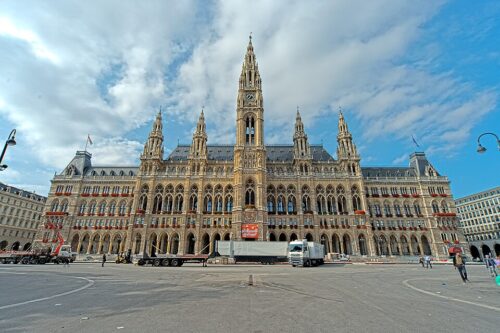
Vienna to Launch Eurovision Countdown Clock

The city of Vienna is set to ring in the New Year with a nod to Eurovision. Exactly at midnight on January 1, 2026, Vienna will launch the official Eurovision Countdown Clock, marking the start of the Eurovision year. A large-scale LED installation has been erected along the Ringstraße, at City Hall Square (Rathausplatz). This will from that moment onward count down the time until the Grand Final on May 16, 2026. In a special New Year’s Eve celebration, all stages across Vienna’s “Silvesterpfad” will synchronize their screens to display the countdown as the famous Pummerin bell tolls and the Blue Danube waltz plays. This gives 800,000 revelers a unique dual celebration of the New Year and the upcoming Eurovision Song Contest. The countdown clock will remain on display in central Vienna, reminding locals and visitors daily of the approaching Eurovision extravaganza in May. source: ORF

Related news

History

70 years of Eurovision: what saved the contest?

The Eurovision Song Contest is celebrating its 70th anniversary. That is a wonderful milestone. We at Eurovision Universe love diving into the history of the contest. That is why we are taking a closer look at the contests of the past 70 years. 1968 The Royal Albert Hall in London was the venue, and Cathy Boyle hosted for the third time. The same 17 countries as the previous year participated. And something else was special too: for the first time, the Eurovision Song Contest was broadcast in color. Oddly enough, the broadcast in the host country, the United Kingdom, was still  in black and white. The British did not see the color version until the other day. The United Kingdom pulled out all the stops in more ways than one: the British participant was none other than Cliff Richard. In fact, no one really expected Cliff, who sang the song “Congratulations,” to win anymore. By then, he was high on the charts in many countries. In that light, what happened in Norway was quite remarkable. The song that won there sounded so terribly similar to Cliff’s “Summer Holiday” that the composer did not want to wait for an investigation into it. He simply withdrew the song. In Norway, people didn’t panic. The runner-up from the national selection was now allowed to go to London. That that song was called “Stress” is probably just a coincidence. Furthermore, former winner Isabelle Aubret participated for France one more time. Massiel In a hall full of screaming teenage girls, the unthinkable happened: Cliff Richard did not win. With a lead of just one point, the Spanish singer Massiel overtook him. Massiel was not the first choice in his own country. The Catalan Joan Manuel Serrat was originally supposed to sing the song “La, la, la.” However, he only wanted to sing the song in Catalan. General Franco’s dictatorial regime did not approve it. Thus, Massiel was pushed forward. Every so often, the story surfaces that General Franco allegedly bought this victory. He wanted to put Spain on the map in a positive light with it. It is an urban legend. No evidence has ever been found for these accusations. 1969 Austria refused to travel to dictatorial Spain. The number of participating countries therefore rose to sixteen. For the same reason, the Netherlands had to look for another conductor. Regular conductor Dolf van der Linden did not want to travel to Spain. Madrid was the setting. Spain had pulled out all the stops to put itself on the map in a positive way. For instance, the contest logo was designed by none other than the famous artist Salvador Dalí. The host was Laurita Valenzuela. The hall in the Teatro Real in Madrid was characterized by a huge organ. It opened the broadcast with the Te Deum. The Belgian Louis Neefs represented his country for the second time. And for the second time, he finished seventh, to disappointment of the Belgians themselves. Simone de Oliveira made a second appearance for Portugal. Siw Malmkvist also participated once again. Kirsti Sparboe even participated for the third time for Norway. Also noteworthy was Jean-Jacques, the French boy who competed for Monaco. This 13-year-old singer was by far the youngest candidate ever and would remain so until 1989. The scoring remained exciting until the very last moment. It was as battle between four countries… and all four won! The defining moment of the broadcast was when a surprised Laurita Valenzuela asked the scruteneer, Clifford Brown, if this meant there were four winners. Brown confirmed it. Four winners Spain won again. Salomé was the singer, “Vivo Cantando” the song. Salomé had a tough time. She wore a leaden blue dress. It was, in fact, made entirely of porcelain! The second winner was Lulu with “Boom Bang A Bang”. Lulu had already had a worldwide hit with the song “Shout”. A British newspaper wrote about Lulu’s entry: ‘It is a rotten song. It will undoubtedly win and be translated into Hungarian and all the dialects of Mongolia, but it is still a rotten song’. Lulu ended her performance in Spain with a loud “Olé”. The Dutch winner, Lenny Kuhr, was devoid of any frills. She had composed her song “De Troubadour” herself and performed it, accompanying herself on the guitar. Kuhr especially impressed Southern Europe. Her career would span more than fifty years. She will perform at Eurovision In Concert this year. Shortly thereafter, she will retire. The French winner, Frida Boccara, also managed to significantly expand her career. Although her song “Un jour, un enfant” didn’t do much in the charts, Boccara, who was born in Cassablanca, would remain a major star until her death in 1996. Her song “Cent mille chansons” became an evergreen. 1970 France and the Netherlands were willing to host the contest. By a draw, the Netherlands was chosen, and Eurovision moved to Amsterdam. A condition set by the Dutch broadcaster was that it would not become a funeral for the Eurovision Song Contest. Yet it almost became that funeral. Mad about the result of the previous year, all Scandinavian countries stayed away, along with Austria and Portugal. Only twelve countries participated. Nonetheless, the Dutch broadcaster NOS pulled out all the stops to make it a success. Director Theo Ordeman had devised a plan to introduce each song via a so-called ‘postcard’. It is a tradition that would never disappear. Stage designer Roland de Groot had designed a beautiful moving stage. The United Kingdom sent another big star: Mary Hopkin. Spain sent a former soccerplayer who had to retire due to an injury, and then started a singing career: Julio Iglesias. It would bring him a great deal of success, but not during the Eurovision Song Contest. David Alexandre Winter did not have much success either. He came from Amsterdam but entered for Luxembourg. He did so in an incomprehensible kind of French. No one was willing to give him any points. The Netherlands itself caused

Read More »
History
Martijn

70 years of Eurovision: what saved the contest?

The Eurovision Song Contest is celebrating its 70th anniversary. That is a wonderful milestone. We at Eurovision Universe love diving into the history of the contest. That is why we are taking a closer look at the contests of the past 70 years. 1968 The Royal Albert Hall in London was the venue, and Cathy Boyle hosted for the third time. The same 17 countries as the previous year participated. And something else was special too: for the first time, the Eurovision Song Contest was broadcast in color. Oddly enough, the broadcast in the host country, the United Kingdom, was still  in black and white. The British did not see the color version until the other day. The United Kingdom pulled out all the stops in more ways than one: the British participant was none other than Cliff Richard. In fact, no one really expected Cliff, who sang the song “Congratulations,” to win anymore. By then, he was high on the charts in many countries. In that light, what happened in Norway was quite remarkable. The song that won there sounded so terribly similar to Cliff’s “Summer Holiday” that the composer did not want to wait for an investigation into it. He simply withdrew the song. In Norway, people didn’t panic. The runner-up from the national selection was now allowed to go to London. That that song was called “Stress” is probably just a coincidence. Furthermore, former winner Isabelle Aubret participated for France one more time. Massiel In a hall full of screaming teenage girls, the unthinkable happened: Cliff Richard did not win. With a lead of just one point, the Spanish singer Massiel overtook him. Massiel was not the first choice in his own country. The Catalan Joan Manuel Serrat was originally supposed to sing the song “La, la, la.” However, he only wanted to sing the song in Catalan. General Franco’s dictatorial regime did not approve it. Thus, Massiel was pushed forward. Every so often, the story surfaces that General Franco allegedly bought this victory. He wanted to put Spain on the map in a positive light with it. It is an urban legend. No evidence has ever been found for these accusations. 1969 Austria refused to travel to dictatorial Spain. The number of participating countries therefore rose to sixteen. For the same reason, the Netherlands had to look for another conductor. Regular conductor Dolf van der Linden did not want to travel to Spain. Madrid was the setting. Spain had pulled out all the stops to put itself on the map in a positive way. For instance, the contest logo was designed by none other than the famous artist Salvador Dalí. The host was Laurita Valenzuela. The hall in the Teatro Real in Madrid was characterized by a huge organ. It opened the broadcast with the Te Deum. The Belgian Louis Neefs represented his country for the second time. And for the second time, he finished seventh, to disappointment of the Belgians themselves. Simone de Oliveira made a second appearance for Portugal. Siw Malmkvist also participated once again. Kirsti Sparboe even participated for the third time for Norway. Also noteworthy was Jean-Jacques, the French boy who competed for Monaco. This 13-year-old singer was by far the youngest candidate ever and would remain so until 1989. The scoring remained exciting until the very last moment. It was as battle between four countries… and all four won! The defining moment of the broadcast was when a surprised Laurita Valenzuela asked the scruteneer, Clifford Brown, if this meant there were four winners. Brown confirmed it. Four winners Spain won again. Salomé was the singer, “Vivo Cantando” the song. Salomé had a tough time. She wore a leaden blue dress. It was, in fact, made entirely of porcelain! The second winner was Lulu with “Boom Bang A Bang”. Lulu had already had a worldwide hit with the song “Shout”. A British newspaper wrote about Lulu’s entry: ‘It is a rotten song. It will undoubtedly win and be translated into Hungarian and all the dialects of Mongolia, but it is still a rotten song’. Lulu ended her performance in Spain with a loud “Olé”. The Dutch winner, Lenny Kuhr, was devoid of any frills. She had composed her song “De Troubadour” herself and performed it, accompanying herself on the guitar. Kuhr especially impressed Southern Europe. Her career would span more than fifty years. She will perform at Eurovision In Concert this year. Shortly thereafter, she will retire. The French winner, Frida Boccara, also managed to significantly expand her career. Although her song “Un jour, un enfant” didn’t do much in the charts, Boccara, who was born in Cassablanca, would remain a major star until her death in 1996. Her song “Cent mille chansons” became an evergreen. 1970 France and the Netherlands were willing to host the contest. By a draw, the Netherlands was chosen, and Eurovision moved to Amsterdam. A condition set by the Dutch broadcaster was that it would not become a funeral for the Eurovision Song Contest. Yet it almost became that funeral. Mad about the result of the previous year, all Scandinavian countries stayed away, along with Austria and Portugal. Only twelve countries participated. Nonetheless, the Dutch broadcaster NOS pulled out all the stops to make it a success. Director Theo Ordeman had devised a plan to introduce each song via a so-called ‘postcard’. It is a tradition that would never disappear. Stage designer Roland de Groot had designed a beautiful moving stage. The United Kingdom sent another big star: Mary Hopkin. Spain sent a former soccerplayer who had to retire due to an injury, and then started a singing career: Julio Iglesias. It would bring him a great deal of success, but not during the Eurovision Song Contest. David Alexandre Winter did not have much success either. He came from Amsterdam but entered for Luxembourg. He did so in an incomprehensible kind of French. No one was willing to give him any points. The Netherlands itself caused

Read More »
Follow Us: