Weekly Update

It’s time for another weekly Eurovision update. Lithuania has officially confirmed its participation for 2026. Bosnia & Herzegovina sadly announced it will not return. Belgium’s Eurovision plans remain uncertain despite earlier reports. Meanwhile, Kazakhstan is inching closer to a possible debut. Austrian media are buzzing with the first host rumors, and ORF has entered negotiations with Vienna and Innsbruck to decide the 2026 host city.

🇱🇹 🇧🇦 Lithuania In, Bosnia-Herzegovina Out of Eurovision 2026

Lithuania’s broadcaster LRT has confirmed that the country will compete in the Eurovision Song Contest 2026. The confirmation was given to ESC Today. Details on how Lithuania will select its entry are yet to be announced, but a national final is expected as in previous years.

📷 EBU/Sarah Louise Bennett

In contrast, Bosnia & Herzegovina will not be participating in Eurovision 2026. Broadcaster BHRT officially stated it cannot return next year. That is due to ongoing EBU sanctions stemming from unpaid debts. The Bosnian delegation explained that without resolving the funding issues and outstanding debts – and securing a sponsor – a Eurovision comeback isn’t feasible. Bosnia & Herzegovina last took part in 2016 and has been absent from the contest ever since.

🇧🇪 Belgium’s 2026 Participation Remains Uncertain

Contrary to reports last week, Belgium’s Eurovision 2026 participation is not yet fully confirmed. French-language broadcaster RTBF (responsible for Belgium’s 2026 entry) clarified the station has not officially committed to the contest yet. RTBF cited ongoing discussions within the EBU and among its member broadcasters. That’s why they are proceeding with preparations without a formal confirmation of participation for now. In short, Belgium is lining up a potential act for Eurovision 2026, but RTBF is keeping its options open until certain international discussions are resolved.

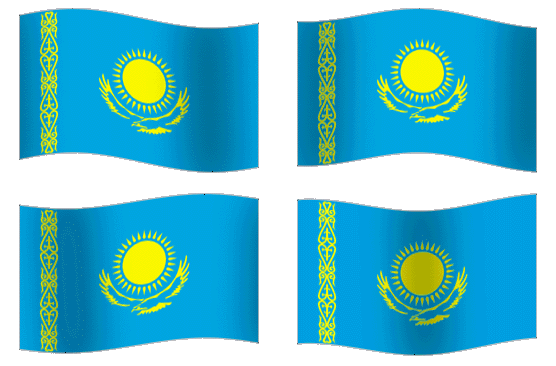
🇰🇿 EBU to Discuss Kazakhstan’s Possible Debut

Kazakhstan’s Eurovision dreams are gaining traction. During the recent EBU General Assembly in London, the chairman of Kazakhstan’s broadcaster (Khabar Agency) met with EBU officials to propose the country’s debut in 2026. According to Kemelbek Oishybayev (Khabar’s director), EBU chief Noel Curran reacted positively and agreed to have Kazakhstan’s participation proposal discussed at the next EBU meeting.

If the EBU extends an invitation, 2026 could mark Kazakhstan’s first appearance in the Eurovision Song Contest. Kazakhstan has participated in Junior Eurovision in the past, but because Khabar is not a full EBU member, a special invitation is required for the main contest. So far, Australia is the only country to receive such an invitation. A final decision on Kazakhstan’s Eurovision 2026 fate is expected in the coming months.
🇦🇹 Host Rumors: ORF Eyes Swarovski and Knoll for 2026

With Austria preparing to host Eurovision 2026, speculation has started about who will present the shows. One name on everyone’s lips is Andi Knoll. He is Austria’s veteran Eurovision commentator. According to Kleine Zeitung, Knoll is considered a likely choice – essentially a “fixed” host for 2026. Knoll has been the Austrian commentator since 1999. So seeing him step on the Eurovision stage next year would be a fitting full-circle moment.
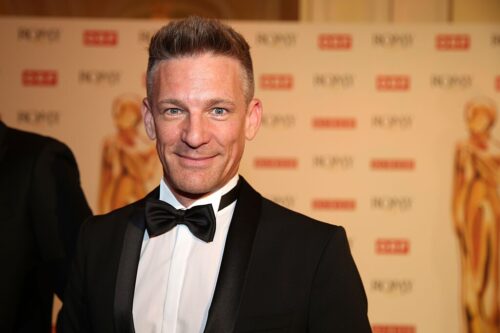
📷 Johan Morgenbesser, Wikimedia Commons

Another high-profile name emerging is Victoria Swarovski. ORF is reportedly interested in the TV presenter as a potential Eurovision host. Victoria is known for hosting Germany’s “Let’s Dance”. Austrian media reveal that ORF insiders are “flirting” with the idea of featuring the Tyrolean-born Swarovski in the hosting lineup. However, there could be scheduling conflicts with her RTL commitments, which might depend on RTL’s involvement in Eurovision next year.
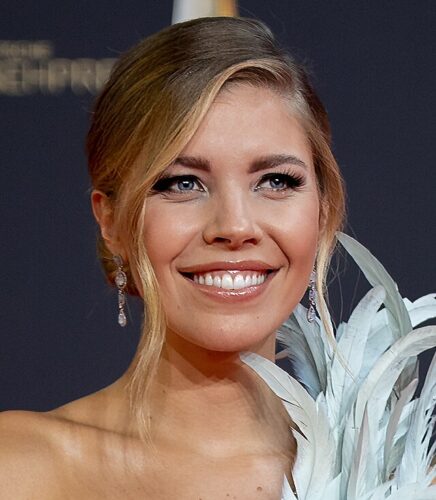
📷 Superbass, Wikimedia Commons

Swarovski isn’t the only woman in the mix. Several ORF news anchors – such as Nadja Bernhard, Alexandra Wachter, and Raffaela Schaidreiter – are also rumored as possibilities for the hosting team. Fans have even speculated about bringing back the trio of female hosts from Vienna 2015: Arabella Kiesbauer, Mirjam Weichselbraun, and Alice Tumler. In fact, Kiesbauer has already stated she’d be ready to return if asked, saying “if I’m needed, I’ll be there”. ORF has yet to make any official announcements, so the host selection remains an exciting guessing game for now. Also Conchita Wurst is rumoured as a host. She did the job in the green room in 2015.

Vienna and Innsbruck in Final Host City Talks

Vienna and Innsbruck have emerged as the final two cities vying to host Eurovision 2026. Both cities submitted their official bid proposals by the July 4 deadline and impressed the broadcaster with their plans. ORF conducted initial site visits at Wiener Stadthalle in Vienna and the Olympiaworld arena in Innsbruck, the venues proposed in the bids. Following those inspections, ORF invited both cities to enter detailed negotiations, calling the two proposals “very exciting and promising”.

ORF’s Director General Roland Weißmann praised Vienna and Innsbruck for their strong enthusiasm and suitable conditions to host the contest. The Stadthalle (which can hold up to ~16,000 attendees and previously hosted Eurovision in 2015) and Innsbruck’s Olympiaworld (around 12,000 capacity) both meet the key requirements. Over the coming weeks, ORF will be in deep discussions with each city’s team to scrutinize all logistical and financial details. The final decision on the Eurovision 2026 host city is expected by the second half of August – so we’ll soon find out whether the honor goes to the capital Vienna or the Tyrolean city of Innsbruck.

That’s all for this weekly update. Stay tuned for another roundup next week. The road to Eurovision 2026 continues!

Related news

History

Austria in the Eurovision Song Contest, part 6

This year’s Eurovision Song Contest has been won by Austria. It was the 57th Austrian entry. Reason for us to go back to all the Austrian entries in history! For the sixth episode, we look back at the nineties. With Tony Wegas’ double, and a total of three top-10 scores, the hard times began for Austria in the Eurovision Song Contest. 1992: Tony Wegas – “Zusammen geh’n” Tony Wegas, an Austrian singer and television actor, represented Austria at Eurovision 1992 with the power ballad “Zusammen geh’n”. Dieter Bohlen composed the music and Joachim Horn-Bernges wrote the lyrics, giving the song a classic pop-ballad style. Wegas delivered an emotive performance of this German-language track on the Malmö stage. “Zusammen geh’n” earned 63 points, securing a 10th place finish for Austria at the 1992 contest. 1993: Tony Wegas – “Maria Magdalena” Tony Wegas returned in 1993 to represent Austria with “Maria Magdalena,” a dramatic pop song with biblical references. He was selected internally, and presented 7 songs. Wegas, known for his singing career and TV acting, gave an engaging performance of this German-language track about Mary Magdalene. Christian Kolonovits and Johann Bertl composed the music, while Thomas Spitzer penned the lyrics, infusing the song with theatrical flair. Despite its uptempo style compared to the previous year, “Maria Magdalena” scored 32 points and placed 14th out of 25 entries at Eurovision 1993. 1994: Petra Frey – “Für den Frieden der Welt” Eight artists and songs competed in the national final. Simone participated but did not win. Petra Frey, only 16 years old at the time, represented Austria at Eurovision 1994 in Dublin with the ballad “Für den Frieden der Welt” (translated as “For the Peace of the World”). Alfons Weindorf composed the music, and brothers Karl & Johann Brunner wrote the lyrics, creating a heartfelt pop ballad calling for world peace. The song showcased Frey’s strong vocals, honed from her early schlager music career, and delivered a sincere message on stage. Austria’s 1994 entry earned 19 points, finishing in 17th place among 25 countries. 1995: Stella Jones – “Die Welt dreht sich verkehrt” Stella Jones, an Austrian singer with jazz and soul roots, took the stage in 1995 with “Die Welt dreht sich verkehrt” (meaning “The World Turns Upside Down”). Jones delivered a funky, blues-infused pop performance that reflected her versatile musical background. Michael W. Krausz both wrote the lyrics and composed the music for this entry, a song which stood out amid a contest often dominated by ballads. The Austrian entry scored 67 points, achieving a 13th place finish in the 1995 Eurovision final. 1996: George Nussbaumer – “Weil’s dr guat got” George Nussbaumer, a blind Austrian blues musician, brought a unique gospel-blues flair to Eurovision 1996 with “Weil’s dr guat got”. Sung in his native Vorarlberg dialect (the title roughly means “Because You’re Doing Well”), the song blended upbeat soul and pop elements. Nussbaumer co-wrote the entry himself. He composed the music and co-authored the lyrics with Michael W. Krausz and infused it with authentic blues style. His uplifting performance in Oslo resonated with the juries, as Austria earned 68 points and a 10th place finish at the 1996 contest. 1997: Bettina Soriat – “One Step” Bettina Soriat, an Austrian singer and stage performer, stepped into the spotlight in 1997 with “One Step.” Having been a backing vocalist for Austria’s 1996 entry, Soriat brought an upbeat dance-pop routine to Eurovision 1997. Marc Berry (stage name of Marcus Dlugaiczyk) wrote the song’s lyrics and co-composed the music with Ina Siber, crafting a catchy tune with playful choreography. Despite the energetic performance and its fun pop appeal, “One Step” received just 12 points, placing 21st out of 25 entries in the Dublin final. 1999: Bobbie Singer – “Reflection” Bobbie Singer (born Tina Schosser), an 18-year-old Austrian pop singer, returned for Eurovision 1999 after Austria’s one-year absence. She performed “Reflection,” a contemporary English-language pop song that projected a youthful, radio-friendly vibe. Dave Moskin wrote and composed “Reflection”, providing a modern pop sound accompanied by a live band on stage. Bobbie’s engaging performance in Jerusalem gave Austria a fresh image in the contest. The entry scored 65 points, achieving a 10th place finish out of 23 countries – Austria’s best Eurovision result of the 1990s.        

Read More »
History
Martijn

Austria in the Eurovision Song Contest, part 6

This year’s Eurovision Song Contest has been won by Austria. It was the 57th Austrian entry. Reason for us to go back to all the Austrian entries in history! For the sixth episode, we look back at the nineties. With Tony Wegas’ double, and a total of three top-10 scores, the hard times began for Austria in the Eurovision Song Contest. 1992: Tony Wegas – “Zusammen geh’n” Tony Wegas, an Austrian singer and television actor, represented Austria at Eurovision 1992 with the power ballad “Zusammen geh’n”. Dieter Bohlen composed the music and Joachim Horn-Bernges wrote the lyrics, giving the song a classic pop-ballad style. Wegas delivered an emotive performance of this German-language track on the Malmö stage. “Zusammen geh’n” earned 63 points, securing a 10th place finish for Austria at the 1992 contest. 1993: Tony Wegas – “Maria Magdalena” Tony Wegas returned in 1993 to represent Austria with “Maria Magdalena,” a dramatic pop song with biblical references. He was selected internally, and presented 7 songs. Wegas, known for his singing career and TV acting, gave an engaging performance of this German-language track about Mary Magdalene. Christian Kolonovits and Johann Bertl composed the music, while Thomas Spitzer penned the lyrics, infusing the song with theatrical flair. Despite its uptempo style compared to the previous year, “Maria Magdalena” scored 32 points and placed 14th out of 25 entries at Eurovision 1993. 1994: Petra Frey – “Für den Frieden der Welt” Eight artists and songs competed in the national final. Simone participated but did not win. Petra Frey, only 16 years old at the time, represented Austria at Eurovision 1994 in Dublin with the ballad “Für den Frieden der Welt” (translated as “For the Peace of the World”). Alfons Weindorf composed the music, and brothers Karl & Johann Brunner wrote the lyrics, creating a heartfelt pop ballad calling for world peace. The song showcased Frey’s strong vocals, honed from her early schlager music career, and delivered a sincere message on stage. Austria’s 1994 entry earned 19 points, finishing in 17th place among 25 countries. 1995: Stella Jones – “Die Welt dreht sich verkehrt” Stella Jones, an Austrian singer with jazz and soul roots, took the stage in 1995 with “Die Welt dreht sich verkehrt” (meaning “The World Turns Upside Down”). Jones delivered a funky, blues-infused pop performance that reflected her versatile musical background. Michael W. Krausz both wrote the lyrics and composed the music for this entry, a song which stood out amid a contest often dominated by ballads. The Austrian entry scored 67 points, achieving a 13th place finish in the 1995 Eurovision final. 1996: George Nussbaumer – “Weil’s dr guat got” George Nussbaumer, a blind Austrian blues musician, brought a unique gospel-blues flair to Eurovision 1996 with “Weil’s dr guat got”. Sung in his native Vorarlberg dialect (the title roughly means “Because You’re Doing Well”), the song blended upbeat soul and pop elements. Nussbaumer co-wrote the entry himself. He composed the music and co-authored the lyrics with Michael W. Krausz and infused it with authentic blues style. His uplifting performance in Oslo resonated with the juries, as Austria earned 68 points and a 10th place finish at the 1996 contest. 1997: Bettina Soriat – “One Step” Bettina Soriat, an Austrian singer and stage performer, stepped into the spotlight in 1997 with “One Step.” Having been a backing vocalist for Austria’s 1996 entry, Soriat brought an upbeat dance-pop routine to Eurovision 1997. Marc Berry (stage name of Marcus Dlugaiczyk) wrote the song’s lyrics and co-composed the music with Ina Siber, crafting a catchy tune with playful choreography. Despite the energetic performance and its fun pop appeal, “One Step” received just 12 points, placing 21st out of 25 entries in the Dublin final. 1999: Bobbie Singer – “Reflection” Bobbie Singer (born Tina Schosser), an 18-year-old Austrian pop singer, returned for Eurovision 1999 after Austria’s one-year absence. She performed “Reflection,” a contemporary English-language pop song that projected a youthful, radio-friendly vibe. Dave Moskin wrote and composed “Reflection”, providing a modern pop sound accompanied by a live band on stage. Bobbie’s engaging performance in Jerusalem gave Austria a fresh image in the contest. The entry scored 65 points, achieving a 10th place finish out of 23 countries – Austria’s best Eurovision result of the 1990s.        

Read More »
Follow Us: