Weekly Update

It’s time for another weekly Eurovision update. This week brings news on the 2026 host city race, national final announcements, small-country concerns, leadership changes, and possible voting rule changes. Here’s everything you need to know.

🇦🇹 1. Oberwart and Ebreichsdorf out of the race

Two Austrian towns have dropped out of the 2026 Eurovision host city competition. Oberwart confirmed it won’t submit a bid. The local exhibition hall can hold about 4,000 people, which doesn’t meet Eurovision’s requirements. Source

Ebreichsdorf has also ended its plans. The proposed venue, Comer City, faced timing issues. City officials didn’t give it the green light. Source

Graz is still in the race. The city council will make a decision this Friday. Source

Other cities still preparing their bids include Vienna, Linz/Wels, Innsbruck, and St. Pölten. ORF will reveal the host city on August 8.
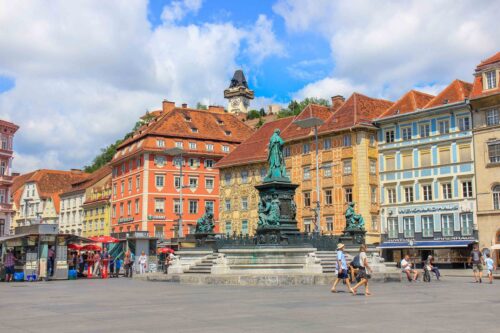
📷 placesofjuma.com

🇳🇴 🇫🇮 2. Norway and Finland kick off national final season

Norway and Finland have started preparing for their Eurovision 2026 entries. In Norway, broadcaster NRK opened submissions for Melodi Grand Prix 2026. Source

NRK’s music manager says they want unique songs. Entries should have something special—something people want to hear again and again. Let’s see who follows in the footsteps of Kyle Alessandro.

Finland is also moving forward. UMK 2026 opens for submissions on August 18. Source

The submission window will close on August 24. The national final takes place on February 28 in Tampere’s Nokia Arena. At that day, we know who will be the Finnish contestant after Erika Vikman.

Winners of MGP and UMK will represent their countries in Austria next year.

🇸🇲 3. San Marino talks to the EBU

San Marino wants changes before joining Eurovision 2026. RTV director Roberto Sergio says the country will meet with the EBU and other small states. Source

He hopes San Marino stays in the contest but only under fairer conditions. Small countries like his often feel overlooked. They usually don’t get a real televote and depend on algorithms.

San Marino wants equal chances. Talks with the EBU and possibly with Andorra or Monaco may change things. If not, San Marino could stay out in 2026.

4. Ana María Bordas leads Reference Group

Spain’s Ana María Bordas now chairs the Eurovision Song Contest Reference Group. Source

She began her two-year term in June. Bordas replaces Switzerland’s Bakel Walden. As RTVE’s Head of Delegation, she helped shape Spain’s Benidorm Fest.

Bordas says she wants teamwork and unity. Her goal is to support all broadcasters and make Eurovision even stronger. She will help lead the 2026 planning process.

📷 RTVE

5. Voting changes on the table

More broadcasters are speaking out about the current voting system. Norway, Spain, Belgium, and Iceland want change. Source

NRK says, according to newspaper VG, that the EBU is open to discussion. The Reference Group will address the issue this summer.

One major concern is how televoting works. Viewers can vote up to 20 times per device. Some fans use multiple SIM cards to vote more than allowed. Critics say that’s unfair.

In 2025, Israel won the public vote despite having low streaming numbers. Many suspect a large, government-funded voting push helped them win.

The public and jury votes don’t always align. Broadcasters want more balance and trust in the system. The EBU is expected to review the rules before next year’s contest.
 

Related news

History

🇦🇹 Austria in the Eurovision Song Contest, part 3

📷 Waterloo & Robinson This year’s Eurovision Song Contest has been won by Austria. It was the 57th Austrian entry. Reason for us to go back to all the Austrian entries in history! For the third episode, we will look back at the seventies. Austria entered the top-5 twice. They also sang in a minority language. They also had some deviant entries. 1971 – Marianne Mendt – Musik Austria returned to the Eurovision Song Contest in 1971 after a two-year absence . They boycotted the Franco-ruled 1969 contest and protesting the four-way tie of 1969 by skipping 1970. Marianne Mendt performed “Musik.” Mendt, a jazz-pop singer from Vienna, delivered the song in her native Viennese German dialect, a rarity at Eurovision. Richard Schönherz and Manuel Rigoni composed “Musik” and also wrote its lyrics, giving the entry a swinging, soulful vibe about the power of music. At the contest in Dublin, “Musik” scored 66 points and finished 16th out of 18 entries. 1972 – The Milestones – Falter im Wind The Austrian rock band The Milestones represented the country at the Eurovision Song Contest 1972 in Edinburgh with “Falter im Wind” (“Butterfly in the Wind”). Composers Richard Schönherz and Manuel Rigoni teamed up with lyricist Heinz Unger to craft this folk-tinged pop song addressed to a butterfly. They reflected on life’s impermanence. The song’s gentle melody and rich harmonies resonated with the juries. Austria earned 100 points and achieved 5th place. This was the country’s best Eurovision result since its 1966 victory, showcasing a high point for Austria before a brief mid-’70s withdrawal from the contest. 1976 – Waterloo & Robinson – My Little World After skipping the contest from 1973 to 1975, Austria returned at the Eurovision Song Contest 1976 in The Hague with pop duo Waterloo & Robinson performing “My Little World.” The duo was already popular at home. They presented an upbeat, feel-good song that songwriter Gerhard Heinz had composed. Sung in English, “My Little World” celebrates the simple joys of love and life. It earned 80 points and reached 5th place, matching Austria’s 1972 success. This strong result followed ORF’s mid-’70s Eurovision hiatus, which was reportedly due to dissatisfaction with the contest’s scoring system at the time. 1977 – Die Schmetterlinge – Boom Boom Boomerang Austria took a daring turn at the Eurovision Song Contest 1977 in London with the group Schmetterlinge and their song “Boom Boom Boomerang.” Known for their political cabaret style, Schmetterlinge delivered a satirical pop performance. In that performance they lampooned the commercial music industry, complete with nonsense “international” lyrics and zany on-stage antics. Group members like Georg “Schurli” Herrnstadt and Willi Resetarits wrote the music, while Lukas Resetarits provided tongue-in-cheek lyrics skewering formulaic pop. Despite the bold concept and humor, the entry earned only 11 points, placing 17th out of 18 countries. Notably, two members of Schmetterlinge had been part of The Milestones (Austria’s 1972 act), adding a nod to the country’s earlier Eurovision experience. 1978 – Springtime – Mrs. Caroline Robinson In 1978, Austria was represented by Springtime, a pop trio formed by brothers Walter and Gerhard Markel with bassist Norbert Niedermayer. Their song “Mrs. Caroline Robinson” was an upbeat schlager-pop number with a humorous twist. It was written by the trio themselves. The lyrics told the quirky story of Caroline Robinson, the “top-witch of this town” who captivates everyone with her charm. Springtime’s performance in Paris was fun and energetic, and the song even became a hit at home. It earned a gold record in Austria. On the Eurovision scoreboard, however, “Mrs. Caroline Robinson” earned 14 points, finishing 15th out of 20 countries in 1978. 1979 – Christina Simon – Heute in Jerusalem Austria’s 1979 entry was the soulful “Heute in Jerusalem” (“Today in Jerusalem”), performed by singer Christina Simon. Christina had a background as a jazz vocalist. This reflective ballad was composed by Peter Wolf with lyrics by Austrian artist André Heller. Musically it blended contemporary jazz and blues influences, and its lyrics carried a heartfelt plea for peace in Jerusalem. That was quite fittingly, the contest was held in Jerusalem just days after the Israel–Egypt peace treaty. Simon’s emotional delivery brought gravitas to the stage. Unfortunately, “Heute in Jerusalem” received only 5 points, ending up in 18th (last) place at the 1979 contest. 

Read More »
History
Martijn

🇦🇹 Austria in the Eurovision Song Contest, part 3

📷 Waterloo & Robinson This year’s Eurovision Song Contest has been won by Austria. It was the 57th Austrian entry. Reason for us to go back to all the Austrian entries in history! For the third episode, we will look back at the seventies. Austria entered the top-5 twice. They also sang in a minority language. They also had some deviant entries. 1971 – Marianne Mendt – Musik Austria returned to the Eurovision Song Contest in 1971 after a two-year absence . They boycotted the Franco-ruled 1969 contest and protesting the four-way tie of 1969 by skipping 1970. Marianne Mendt performed “Musik.” Mendt, a jazz-pop singer from Vienna, delivered the song in her native Viennese German dialect, a rarity at Eurovision. Richard Schönherz and Manuel Rigoni composed “Musik” and also wrote its lyrics, giving the entry a swinging, soulful vibe about the power of music. At the contest in Dublin, “Musik” scored 66 points and finished 16th out of 18 entries. 1972 – The Milestones – Falter im Wind The Austrian rock band The Milestones represented the country at the Eurovision Song Contest 1972 in Edinburgh with “Falter im Wind” (“Butterfly in the Wind”). Composers Richard Schönherz and Manuel Rigoni teamed up with lyricist Heinz Unger to craft this folk-tinged pop song addressed to a butterfly. They reflected on life’s impermanence. The song’s gentle melody and rich harmonies resonated with the juries. Austria earned 100 points and achieved 5th place. This was the country’s best Eurovision result since its 1966 victory, showcasing a high point for Austria before a brief mid-’70s withdrawal from the contest. 1976 – Waterloo & Robinson – My Little World After skipping the contest from 1973 to 1975, Austria returned at the Eurovision Song Contest 1976 in The Hague with pop duo Waterloo & Robinson performing “My Little World.” The duo was already popular at home. They presented an upbeat, feel-good song that songwriter Gerhard Heinz had composed. Sung in English, “My Little World” celebrates the simple joys of love and life. It earned 80 points and reached 5th place, matching Austria’s 1972 success. This strong result followed ORF’s mid-’70s Eurovision hiatus, which was reportedly due to dissatisfaction with the contest’s scoring system at the time. 1977 – Die Schmetterlinge – Boom Boom Boomerang Austria took a daring turn at the Eurovision Song Contest 1977 in London with the group Schmetterlinge and their song “Boom Boom Boomerang.” Known for their political cabaret style, Schmetterlinge delivered a satirical pop performance. In that performance they lampooned the commercial music industry, complete with nonsense “international” lyrics and zany on-stage antics. Group members like Georg “Schurli” Herrnstadt and Willi Resetarits wrote the music, while Lukas Resetarits provided tongue-in-cheek lyrics skewering formulaic pop. Despite the bold concept and humor, the entry earned only 11 points, placing 17th out of 18 countries. Notably, two members of Schmetterlinge had been part of The Milestones (Austria’s 1972 act), adding a nod to the country’s earlier Eurovision experience. 1978 – Springtime – Mrs. Caroline Robinson In 1978, Austria was represented by Springtime, a pop trio formed by brothers Walter and Gerhard Markel with bassist Norbert Niedermayer. Their song “Mrs. Caroline Robinson” was an upbeat schlager-pop number with a humorous twist. It was written by the trio themselves. The lyrics told the quirky story of Caroline Robinson, the “top-witch of this town” who captivates everyone with her charm. Springtime’s performance in Paris was fun and energetic, and the song even became a hit at home. It earned a gold record in Austria. On the Eurovision scoreboard, however, “Mrs. Caroline Robinson” earned 14 points, finishing 15th out of 20 countries in 1978. 1979 – Christina Simon – Heute in Jerusalem Austria’s 1979 entry was the soulful “Heute in Jerusalem” (“Today in Jerusalem”), performed by singer Christina Simon. Christina had a background as a jazz vocalist. This reflective ballad was composed by Peter Wolf with lyrics by Austrian artist André Heller. Musically it blended contemporary jazz and blues influences, and its lyrics carried a heartfelt plea for peace in Jerusalem. That was quite fittingly, the contest was held in Jerusalem just days after the Israel–Egypt peace treaty. Simon’s emotional delivery brought gravitas to the stage. Unfortunately, “Heute in Jerusalem” received only 5 points, ending up in 18th (last) place at the 1979 contest. 

Read More »
Follow Us: