Turkey: TRT director talks with EBU

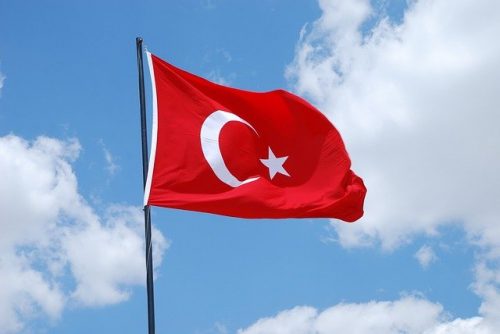
İbrahim Eren, director of the Turkish broadcaster TRT, talks with the EBU about Eurovision. Mr. Eren confirms this news in the Turkish newspaper Miliyet.

Turkey wanted to withdraw already after the contest of 2011, when they did not reach the final. They only participated in 2012 because the contest was held in Azerbaijan, a country Turkey has strong bounds with. The reason of their withdrawal was the expert jury. The former jury system, with 100% televoting, was quite positive for Turkey. As many people with Turkish roots automatically voted for Turkey every year, the country got the 12 points from several Western European countries year by year. The new 50/50 system made an end to it.

In 2015, Turkey added another reason when Austrian Conchita Wurst won the contest. ““As a public broadcaster, we also cannot broadcast live at 9 p.m. — when children are still awake — someone like the bearded Austrian who wore a skirt, do not believe in genders and says that he is both a man and a woman.”, mister İbrahim Eren stated back then.

But now that does not seem to count anymore. Mr. Eren stated that the 2021 contest was a wonderful show. He is now in talk with mr. Marcus Österdahl, the new executive producer of the contest. Whether it’s going to lead to a renewed Turkish participation or not, is of course not known yet. But we keep you updated.


Can Bonomo, the last Turkish representant so far in 2012.

Related news

Eurovision 2026

Road to Vienna: Sweden

Road to Vienna: Sweden.  We cannot wait for the Eurovision Song Contest inVienna. Therefore, we take a closer look at one of the contestants each day. Today, we highlight Sweden.  Felicia Eriksson: From Fröken Snusk to Eurovision. Felicia Eriksson first gained attention as the voice behind Fröken Snusk. The act became a viral Swedish music phenomenon. It was known for cheeky lyrics, party anthems, and a signature face mask. She performed in a pink balaclava. The mask became a key part of her identity and branding. It also added mystery to the project created by producer Rasmus Gozzi. Her 2022 hit “Rid mig som en dalahäst” became one of the most-streamed songs in Sweden. By 2023, she ranked among the top Spotify artists in the country. She also performed more than 300 live shows across the Nordic region. In 2024, she entered Melodifestivalen with “Unga & fria.” The song reached #1 on the Swedish charts after the show. That same year, she won Sweden’s Masked Singer. This confirmed her mainstream breakthrough. Solo Career and New Identity In 2025, Felicia Eriksson left the Fröken Snusk persona. She launched her solo career under her own name. However, she kept the face mask as part of her identity. It also helps her manage social anxiety on stage. She introduced a more authentic image and a modern pop sound. Her debut single “Black Widow” reached #3 on Spotify Sweden. She followed this with tracks like “Sugar High” and “Hard.” She also won the Swedish reality show Spelet. This increased her popularity and media exposure. Melodifestivalen 2026 and Eurovision In 2026, Felicia Eriksson returned to Melodifestivalen as herself. She competed with the electro-pop song “My System.” She won the competition with a total of 161 points. This secured her place at Eurovision 2026 for Sweden. My System My System explores the struggle of letting go of a toxic relationship. It focuses on the feeling of being emotionally and physically attached to someone, even when you know the connection is unhealthy. The narrator tries to appear strong and in control, convincing themselves they have moved on—but the feelings never fully fade. A Cycle of Relapse and Dependency As the story unfolds, old emotions return during vulnerable moments, like nights out or weekends. This creates a repeating cycle. The narrator feels independent at times, but keeps falling back into the same patterns. The connection feels like an addiction that is hard to break. Regret and Growing Awareness After giving in, the narrator is left with regret and frustration. There is a clear sense of self-awareness. They begin to understand that the situation is unhealthy and needs to change. This adds emotional depth and realism to the song. The Core Message The song’s message is simple but powerful. You cannot erase deep feelings overnight. Letting go takes time, effort, and honesty with yourself. It shows that moving on is not just a decision, but a process. Sweden in the Eurovision Song Contest Sweden has a storied history in the Eurovision Song Contest, having participated since 1958. The country boasts seven victories: ABBA‘s “Waterloo” (1974), Herreys‘ “Diggi-Loo Diggi-Ley” (1984), Carola‘s “Fångad av en stormvind” (1991), Charlotte Nilsson‘s “Take Me to Your Heaven” (1999), Loreen‘s “Euphoria” (2012), Måns Zelmerlöw’s “Heroes” (2015), and Loreen’s “Tattoo” (2023). Known for its strong pop music tradition and high-quality entries, Sweden consistently ranks among the top contenders in the competition. The bookmakers It looks like Sweden is set to deliver once again this year. Currently sitting in 6th place with the bookmakers, the country appears well on track for another strong Eurovision result—and a solid Top 10 finish seems well within reach.            

Read More »
Eurovision 2026
Anja Kroeze

Road to Vienna: Sweden

Road to Vienna: Sweden.  We cannot wait for the Eurovision Song Contest inVienna. Therefore, we take a closer look at one of the contestants each day. Today, we highlight Sweden.  Felicia Eriksson: From Fröken Snusk to Eurovision. Felicia Eriksson first gained attention as the voice behind Fröken Snusk. The act became a viral Swedish music phenomenon. It was known for cheeky lyrics, party anthems, and a signature face mask. She performed in a pink balaclava. The mask became a key part of her identity and branding. It also added mystery to the project created by producer Rasmus Gozzi. Her 2022 hit “Rid mig som en dalahäst” became one of the most-streamed songs in Sweden. By 2023, she ranked among the top Spotify artists in the country. She also performed more than 300 live shows across the Nordic region. In 2024, she entered Melodifestivalen with “Unga & fria.” The song reached #1 on the Swedish charts after the show. That same year, she won Sweden’s Masked Singer. This confirmed her mainstream breakthrough. Solo Career and New Identity In 2025, Felicia Eriksson left the Fröken Snusk persona. She launched her solo career under her own name. However, she kept the face mask as part of her identity. It also helps her manage social anxiety on stage. She introduced a more authentic image and a modern pop sound. Her debut single “Black Widow” reached #3 on Spotify Sweden. She followed this with tracks like “Sugar High” and “Hard.” She also won the Swedish reality show Spelet. This increased her popularity and media exposure. Melodifestivalen 2026 and Eurovision In 2026, Felicia Eriksson returned to Melodifestivalen as herself. She competed with the electro-pop song “My System.” She won the competition with a total of 161 points. This secured her place at Eurovision 2026 for Sweden. My System My System explores the struggle of letting go of a toxic relationship. It focuses on the feeling of being emotionally and physically attached to someone, even when you know the connection is unhealthy. The narrator tries to appear strong and in control, convincing themselves they have moved on—but the feelings never fully fade. A Cycle of Relapse and Dependency As the story unfolds, old emotions return during vulnerable moments, like nights out or weekends. This creates a repeating cycle. The narrator feels independent at times, but keeps falling back into the same patterns. The connection feels like an addiction that is hard to break. Regret and Growing Awareness After giving in, the narrator is left with regret and frustration. There is a clear sense of self-awareness. They begin to understand that the situation is unhealthy and needs to change. This adds emotional depth and realism to the song. The Core Message The song’s message is simple but powerful. You cannot erase deep feelings overnight. Letting go takes time, effort, and honesty with yourself. It shows that moving on is not just a decision, but a process. Sweden in the Eurovision Song Contest Sweden has a storied history in the Eurovision Song Contest, having participated since 1958. The country boasts seven victories: ABBA‘s “Waterloo” (1974), Herreys‘ “Diggi-Loo Diggi-Ley” (1984), Carola‘s “Fångad av en stormvind” (1991), Charlotte Nilsson‘s “Take Me to Your Heaven” (1999), Loreen‘s “Euphoria” (2012), Måns Zelmerlöw’s “Heroes” (2015), and Loreen’s “Tattoo” (2023). Known for its strong pop music tradition and high-quality entries, Sweden consistently ranks among the top contenders in the competition. The bookmakers It looks like Sweden is set to deliver once again this year. Currently sitting in 6th place with the bookmakers, the country appears well on track for another strong Eurovision result—and a solid Top 10 finish seems well within reach.            

Read More »
Follow Us: