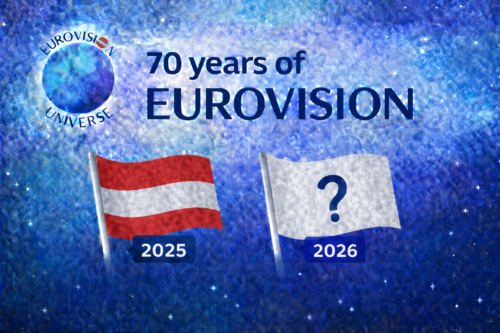
70 years of Eurovision: social media and an operatic voice

The Eurovision Song Contest is celebrating its 70th anniversary. That is a wonderful milestone. We at Eurovision Universe love diving into the history of the contest. That is why we are taking a closer look at the contests of the past 70 years.

2025

Switzerland hosted the Eurovision Song Contest for the third time. The venue was the St. Jakobshalle in Basel, and the contest was presented by Michelle Hunziker, Hazel Brugger, and Sandra Studer. The latter having represented Switzerland at Eurovision herself in 1991. Basel put on a polished, well-organised show. Montenegro returned. Moldova withdrew on the very last moment.

The songs

Montenegro sent Nina Žižić. She had already accompanied the two ‘astronauts’ who represented that country back in 2013. Justyna Steczkowska participated for Poland. She had also done so in 1995. In doing so, she achieved a record: the only contestant ever to participate twice with a gap of 30 years.

Belgium took the lead in the odds at an early stage, but once the entry was announced, the country dropped down the rankings somewhat. However, it remained surprising that the contestant, Red Sebastian, did not make it to the final at all. Against all expectations, the Australian Go-Jo also failed to reach the final.

The final

The one who did make it was Kyle Alessandro. With his song “Lighter”, but especially with his social media videos and his charisma, he went a long way. In those videos, he was invariably in the company of JJ (Austria), Sissal (Denmark), and Miriana Conte (Malta). The latter attracted attention with her lyrics: “I’m serving Kant”, which stood for the Maltese word for singing. But it also sounded very much like an English word that was not allowed to be used on television at the BBC. The lyrics had to be adjusted and became “I’m serving….”.

Tommy Cash, a friend of Joost Klein and Käärijä, participated for Estonia. In a kind of fake Italian, he sang “Espresso Macchiato”. With this, he incurred the wrath of a number of Italians, but became very popular among other groups of Italians. Cash finished third with it.

Væb was the duo that participated for Iceland. A kind of reincarnation of Jedward. The boys were constantly at the bottom of the bookmakers’ odds and turned that into a whole show on social media. It resulted in a place in the final. Less unexpectedly, Erika Vikman from Finland also managed to do the same. Seated on a giant microphone and ending as if she was cumming, she drew attention to herself.

Lucio Corsi from Italy did something special: he played his harmonica live. It was the first time since 1998 that instruments were played live. And then there were the favorites, from Finland but for Sweden. No one had expected that the three gentlemen in a sauna setting would win the Swedish preliminary round against Måns Zelmerlöw. When that did happen, they were immediately the favorites. Everyone was singing “Bara Bada Bastu” at the top of their lungs. Yet, in the end, it was not enough. The group KAJ finished fourth. The French singer Louane also failed to live up to expectations with her song “Maman.” During the act, she doused herself with sand that was actually not sand, but cork. It didn’t help.

Israel

What no one had counted on almost happened. Israel threatened to win the Eurovision Song Contest. Yuval Raphael had no singing career, but he did have a story as a victim of the attacks on October 7, 2023. Calls were made to vote for Israel as much as possible, and instructions were given on how to do so. Although the maximum number of televotes was 20, many who hadn’t even seen the broadcast managed to vote 80 times. Everyone waited in suspense when only Yuval and the Austrian JJ were still in the race. Many were relieved when it turned out that not Israel, but Austria won.

JJ

Austria’s JJ had been a favourite throughout the week, and the final confirmed what the rehearsals had suggested. His performance of “Wasted Love” was one of the most technically accomplished on the night. The professional juries placed him first, and the public gave him enough support to seal the victory. 

The win was warmly received. JJ had brought something genuinely different to the contest: a voice that belonged to the operatic world, applied to a contemporary pop song without compromise. Basel had delivered a memorable host year, and the 2025 contest closed the anniversary decade on a high note, just in time for Eurovision to look ahead to its next seventy years.

 

Related news

Eurovision 2026

Road to Vienna: Malta

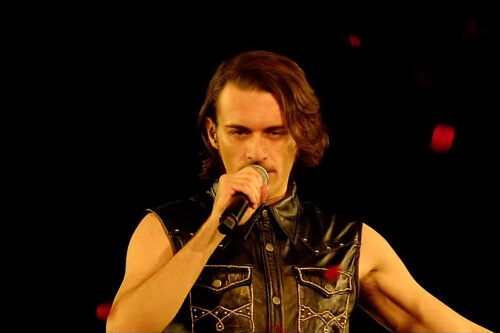
As the Eurovision Song Contest 2026 in Vienna approaches, we continue our daily spotlight on this year’s contestants. Road to Vienna: Malta.   Aidan: Inspired by the Eurovision Song Contest Aidan Cassar, known professionally as Aidan, is a Maltese singer-songwriter born on 17 December 1999 in Żejtun, Malta. Inspired by the Eurovision Song Contest from a young age, he set his sights on performing on that stage early in life. His breakthrough came in 2018 when he competed in the Malta Eurovision Song Contest (MESC) with “Dai Laga,” finishing fourth and launching his music career. Breakthrough and Growing Success Following his debut, Aidan steadily built a strong fanbase in Malta. In 2021, he gained major attention with “Naħseb Fik,” his first Maltese-language song, which won Video of the Year at the Lovin Malta Social Media Awards. His music blends modern pop with Mediterranean influences, helping him stand out in the local music scene. National Fame with “Ritmu” Aidan’s popularity surged in 2022 with “Ritmu,” which finished second at MESC but became a chart-topping hit in Malta. The song’s success established him as one of the country’s leading young pop artists, known for catchy tracks and energetic performances. Challenges and Continued Growth In 2023, Aidan faced a setback when he was disqualified from MESC due to rule violations related to social media promotion. Despite this, he released his debut album This Is Aidan, followed by the EP Wild, Wild, Wild in 2025. By then, he had achieved over ten number-one hits in Malta, confirming his status as a top pop act. Bella: A Multilingual Song with Global Appeal “Bella” is an emotional pop song performed in English, Maltese, and Italian. This multilingual approach gives the track a unique identity while making it accessible to an international audience. By blending languages, Aidan adds depth and authenticity to the song’s storytelling. What “Bella” Is About At its core, “Bella” explores love without closure. The lyrics focus on heartbreak, confusion, and the lingering feelings that remain after a relationship ends. Instead of anger, the song highlights vulnerability and honesty, making it relatable to anyone who has experienced unfinished love. Deep emotional attachment that refuses to fade In “Bella,” Aidan weaves together a story of deep emotional attachment that refuses to fade, even after a relationship has ended. The song captures that lingering sense of longing—where memories and feelings remain vivid despite time or distance. At the same time, there is a quiet but powerful sense of hope running through the track, as it imagines the possibility of reconnecting and finding love again in the future. This emotional narrative is further enriched by the song’s multilingual nature, where English, Maltese, and Italian blend seamlessly. The use of the word “Bella,” meaning “beautiful,” becomes both a symbol of affection and a central emotional thread, enhancing the song’s intimacy and universal appeal Malta in the Eurovision Song Contest Malta has participated in the Eurovision Song Contest 36 times since its debut in 1971. The country’s best results came in 2002 and 2005, achieving second place with Ira Losco‘s “7th Wonder” and Chiara‘s “Angel,” respectively. The most recent success was in 2021, when Destiny‘s “Je me casse” was 7th, after she won her semifinal. The Bookmakers Malta currently stands at a respectable 14th place with the bookmakers—surely a place in the final is within reach. But could a top ten finish be next?  

Read More »
History
Martijn

70 years of Eurovision: social media and an operatic voice

The Eurovision Song Contest is celebrating its 70th anniversary. That is a wonderful milestone. We at Eurovision Universe love diving into the history of the contest. That is why we are taking a closer look at the contests of the past 70 years. 2025 Switzerland hosted the Eurovision Song Contest for the third time. The venue was the St. Jakobshalle in Basel, and the contest was presented by Michelle Hunziker, Hazel Brugger, and Sandra Studer. The latter having represented Switzerland at Eurovision herself in 1991. Basel put on a polished, well-organised show. Montenegro returned. Moldova withdrew on the very last moment. The songs Montenegro sent Nina Žižić. She had already accompanied the two ‘astronauts’ who represented that country back in 2013. Justyna Steczkowska participated for Poland. She had also done so in 1995. In doing so, she achieved a record: the only contestant ever to participate twice with a gap of 30 years. Belgium took the lead in the odds at an early stage, but once the entry was announced, the country dropped down the rankings somewhat. However, it remained surprising that the contestant, Red Sebastian, did not make it to the final at all. Against all expectations, the Australian Go-Jo also failed to reach the final. The final The one who did make it was Kyle Alessandro. With his song “Lighter”, but especially with his social media videos and his charisma, he went a long way. In those videos, he was invariably in the company of JJ (Austria), Sissal (Denmark), and Miriana Conte (Malta). The latter attracted attention with her lyrics: “I’m serving Kant”, which stood for the Maltese word for singing. But it also sounded very much like an English word that was not allowed to be used on television at the BBC. The lyrics had to be adjusted and became “I’m serving….”. Tommy Cash, a friend of Joost Klein and Käärijä, participated for Estonia. In a kind of fake Italian, he sang “Espresso Macchiato”. With this, he incurred the wrath of a number of Italians, but became very popular among other groups of Italians. Cash finished third with it. Væb was the duo that participated for Iceland. A kind of reincarnation of Jedward. The boys were constantly at the bottom of the bookmakers’ odds and turned that into a whole show on social media. It resulted in a place in the final. Less unexpectedly, Erika Vikman from Finland also managed to do the same. Seated on a giant microphone and ending as if she was cumming, she drew attention to herself. Lucio Corsi from Italy did something special: he played his harmonica live. It was the first time since 1998 that instruments were played live. And then there were the favorites, from Finland but for Sweden. No one had expected that the three gentlemen in a sauna setting would win the Swedish preliminary round against Måns Zelmerlöw. When that did happen, they were immediately the favorites. Everyone was singing “Bara Bada Bastu” at the top of their lungs. Yet, in the end, it was not enough. The group KAJ finished fourth. The French singer Louane also failed to live up to expectations with her song “Maman.” During the act, she doused herself with sand that was actually not sand, but cork. It didn’t help. Israel What no one had counted on almost happened. Israel threatened to win the Eurovision Song Contest. Yuval Raphael had no singing career, but he did have a story as a victim of the attacks on October 7, 2023. Calls were made to vote for Israel as much as possible, and instructions were given on how to do so. Although the maximum number of televotes was 20, many who hadn’t even seen the broadcast managed to vote 80 times. Everyone waited in suspense when only Yuval and the Austrian JJ were still in the race. Many were relieved when it turned out that not Israel, but Austria won. JJ Austria’s JJ had been a favourite throughout the week, and the final confirmed what the rehearsals had suggested. His performance of “Wasted Love” was one of the most technically accomplished on the night. The professional juries placed him first, and the public gave him enough support to seal the victory.  The win was warmly received. JJ had brought something genuinely different to the contest: a voice that belonged to the operatic world, applied to a contemporary pop song without compromise. Basel had delivered a memorable host year, and the 2025 contest closed the anniversary decade on a high note, just in time for Eurovision to look ahead to its next seventy years.  

Read More »
Follow Us: