70 years of Eurovision: a child and a double

The Eurovision Song Contest is celebrating its 70th anniversary. That is a wonderful milestone. We at Eurovision Universe love diving into the history of the contest. That is why we are taking a closer look at the contests of the past 70 years.

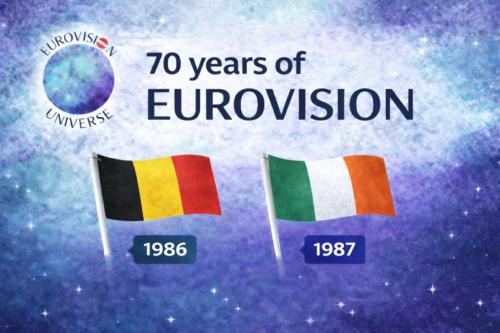
1986

For the first time, Norway was allowed to host the Eurovision Song Contest. Former contestant Åse Kleveland hosted the event at the Grieg Hallen in Bergen. Greece withdrew at a late stage, and Italy was not included either. However, the Netherlands and Yugoslavia were back, and Iceland made its debut!

Elpida, who participated for Greece in 1979, entered the stage for Cyprus. The ladies of the French group Cocktail-Chic had performed in backing choirs many times but had never participated solo.

Debuting Iceland had selected a solo singer for the national final, but internationally he was flanked by two colleagues. Together they formed the group Icy. For Turkey, the group Klips Ve Onlar performed a song about Halley’s Comet. Once again, Dutchman Peter Schön was asked to arrange the music. For the first time, Turkey finished in the top half of the rankings with a respectable 9th place. Also striking was the ballad from Switzerland, a song that might well have won effortlessly in another year: “Pas pour moi”, sung by Daniela Simons. And certainly striking was the Swedish entry “E’ de’ det här du källar kärlek”. Duo partners Lasse Holm and Monica Törnell were already making it a party, but when the delegation leader appeared on stage shirtless, the spectacle was complete.

Sandra Kim

However, no one could match Belgium. Sandra Kim sang that she was 15, said she was 14, and only admitted ten years later that she was actually 13 when she won the song contest. Sandra had already released a single before. With “J’aime la vie”, she effortlessly won the national final and later the Eurovision Song Contest. The question was no longer whether she would win or not, but by how many points she would do so. Immediately after she won, presenter Åse Kleveland promised her a giant ice cream. In the turmoil following the victory, it took a while before she actually received it.

Sandra Kim is still a well-known singer in Belgium. A few years ago, she won the Belgian version of “The Masked Singer”.


1987

In Belgium, the agreement was that the Flemish and Walloon broadcasters would organize the contest in case of a victory. Given the political sensitivity of the time, this went disastrously wrong. Ultimately, it was the Walloon broadcaster that organized the contest. Viktor Lazlo presented the Eurovision Song Contest at the Palace on the Heysel in Brussels. She garnered much praise for this. 

Gary Lux participated for Austria for the third time. The group Wind, finishing second two years earlier, performed for Germany. We saw one of the group members, Rob Pilatus, shortly afterwards as half of the duo Milli Vanilli. The two scored a number of big hits before it came out that they didn’t sing a single note themselves. Alexia was once part of the first group to participate for Cyprus, but now she was alone on stage. She performed the swinging “Aspro mavro”. And then, of course, there was Johnny Logan. For the second time, he was on the Eurovision stage as a singer. He was immediately the big favorite.

Big stars Umberto Tozzi and Raff participated for Italy. Their song, “Gente Di Mare”, came third. People were outraged that the two did not appear in tuxedos, but they certainly had a gigantic hit with the song. By now, we can consider “Gente Di Mare” a Eurovision classic. Also noteworthy were Anne Catherine Herdorff and her backing band Bandjo. Their “En lille melodi” was frequently compared to “Ein bißchen Frieden”. And then there was Novi Fosili, the group that participated for Yugoslavia. Singer Sanja Doležal celebrated her birthday that day, although presenter Viktor Lazlo did not allow you to tell anyone. For group member Rajko Dujmić and his colleague Stevo Cvikić, it was the first entry they wrote, but certainly not the last.

Johnny Logan

The Irishman Johnny Logan, whose real name was Sean Sherrard, won the Eurovision Song Contest back in 1980. After that, just about everything went against him. As an inexperienced artist, he was ripped off by producers and managers. As a result, he took to drinking and ran into financial trouble. The years that followed his Eurovision win were not pleasant for Logan. But the Irishman fought his way back. And when things improved for him, he wanted to go to the Eurovision Song Contest one more time, if only to prove that it *can* be done in a pleasant way. And he did it. Johnny Logan was the overwhelming favorite for the final victory. When it finally came to that, Logan was so emotional that he could barely manage to sing the reprise. He had to stop halfway through, and the final note didn’t come out very cleanly. But that didn’t spoil the fun. Johnny Logan never disappeared from the scene. As a composer, he would even win the Eurovision Song Contest one more time. And anyone who is a loyal visitor to the annual Het Grote Songfestivalfeest in Amsterdam can still see him live every year.


Related news

Eurovision 2026

Road to Vienna: Montenegro

Road to Vienna: Montenegro As the Eurovision Song Contest 2026 in Vienna approaches, we continue our daily spotlight on this year’s contestants. Today, we focus on Montenegro Tamara Živković: from local festivals to the Eurovision stage Tamara Živković is a Montenegrin singer and flutist known for her powerful vocals and emotional performances. She rose to fame through major Balkan music competitions and gained international attention after winning Montesong 2025. This victory secured her place as Montenegro’s representative at the Eurovision Song Contest 2026. Early Life and Musical Education Born in Kotor, Montenegro, Tamara showed musical talent from a young age. She completed both primary and secondary music school, specializing in flute performance. During this time, she won several national and international awards in wind instrument competitions. She later studied at the Faculty of Music Arts in Belgrade, where she refined her classical training. This strong musical foundation plays a key role in her vocal control and stage presence today. From Choir Singer to TV Competitions Tamara began singing at the age of 10 in her school choir, quickly becoming a soloist. She performed at well-known children’s festivals such as Zlatna Pahulja and Naša Radost. Her national breakthrough came in 2016 when she appeared on Pinkove Zvezdice. In the early 2020s, she expanded her audience by competing in Zvezde Granda, one of the most popular music shows in the Balkans. Reaching the finals, she stood out as the only Montenegrin contestant and showcased her versatility across pop, rock, and ethno music. Montesong Journey and Breakthrough Win Tamara first entered Montenegro’s Eurovision selection with Montesong 2024. Performing “Poguban let,” she finished 9th in the final. In 2025, she returned stronger than ever. Competing with “Nova Zora,” Tamara won Montesong 2025, earning top scores from both the jury and the public. This marked a major turning point in her career. With a unique blend of classical training and modern style, Tamara is set to become one of Montenegro’s most exciting music exports. Nova Zora: A Song About Letting Go and New Beginnings Nova Zora tells the story of reaching a personal breaking point and choosing a fresh start. The song focuses on leaving behind toxic relationships, emotional pain, and outside expectations. It delivers a powerful message about reclaiming identity and putting yourself first. Self-Love and Empowerment At its core, the track highlights self-love, resilience, and inner strength. With a strong sense of female empowerment, it emphasizes that true confidence comes from within, not from external validation. The message is clear: growth begins when you choose yourself. Symbolism and Imagery Nature imagery plays a key role in the song. Storms and rain represent emotional struggle and release, while the “new dawn” symbolizes hope, clarity, and renewal. This contrast reinforces the journey from hardship to healing.     Montenegro in the Eurovision Song Contest Montenegro has participated in the Eurovision Song Contest since 2007. The country’s best result came in 2015 when Knez‘s “Adio” reached 13th place in the Grand Final.  The Bookmakers Tamara Živković is currently ranked 33rd with the bookmakers, making a place in the final seem almost out of reach. But could she defy the odds and deliver one of the competition’s biggest surprises?

Read More »
History
Martijn

70 years of Eurovision: a child and a double

The Eurovision Song Contest is celebrating its 70th anniversary. That is a wonderful milestone. We at Eurovision Universe love diving into the history of the contest. That is why we are taking a closer look at the contests of the past 70 years. 1986 For the first time, Norway was allowed to host the Eurovision Song Contest. Former contestant Åse Kleveland hosted the event at the Grieg Hallen in Bergen. Greece withdrew at a late stage, and Italy was not included either. However, the Netherlands and Yugoslavia were back, and Iceland made its debut! Elpida, who participated for Greece in 1979, entered the stage for Cyprus. The ladies of the French group Cocktail-Chic had performed in backing choirs many times but had never participated solo. Debuting Iceland had selected a solo singer for the national final, but internationally he was flanked by two colleagues. Together they formed the group Icy. For Turkey, the group Klips Ve Onlar performed a song about Halley’s Comet. Once again, Dutchman Peter Schön was asked to arrange the music. For the first time, Turkey finished in the top half of the rankings with a respectable 9th place. Also striking was the ballad from Switzerland, a song that might well have won effortlessly in another year: “Pas pour moi”, sung by Daniela Simons. And certainly striking was the Swedish entry “E’ de’ det här du källar kärlek”. Duo partners Lasse Holm and Monica Törnell were already making it a party, but when the delegation leader appeared on stage shirtless, the spectacle was complete. Sandra Kim However, no one could match Belgium. Sandra Kim sang that she was 15, said she was 14, and only admitted ten years later that she was actually 13 when she won the song contest. Sandra had already released a single before. With “J’aime la vie”, she effortlessly won the national final and later the Eurovision Song Contest. The question was no longer whether she would win or not, but by how many points she would do so. Immediately after she won, presenter Åse Kleveland promised her a giant ice cream. In the turmoil following the victory, it took a while before she actually received it. Sandra Kim is still a well-known singer in Belgium. A few years ago, she won the Belgian version of “The Masked Singer”.   1987 In Belgium, the agreement was that the Flemish and Walloon broadcasters would organize the contest in case of a victory. Given the political sensitivity of the time, this went disastrously wrong. Ultimately, it was the Walloon broadcaster that organized the contest. Viktor Lazlo presented the Eurovision Song Contest at the Palace on the Heysel in Brussels. She garnered much praise for this.  Gary Lux participated for Austria for the third time. The group Wind, finishing second two years earlier, performed for Germany. We saw one of the group members, Rob Pilatus, shortly afterwards as half of the duo Milli Vanilli. The two scored a number of big hits before it came out that they didn’t sing a single note themselves. Alexia was once part of the first group to participate for Cyprus, but now she was alone on stage. She performed the swinging “Aspro mavro”. And then, of course, there was Johnny Logan. For the second time, he was on the Eurovision stage as a singer. He was immediately the big favorite. Big stars Umberto Tozzi and Raff participated for Italy. Their song, “Gente Di Mare”, came third. People were outraged that the two did not appear in tuxedos, but they certainly had a gigantic hit with the song. By now, we can consider “Gente Di Mare” a Eurovision classic. Also noteworthy were Anne Catherine Herdorff and her backing band Bandjo. Their “En lille melodi” was frequently compared to “Ein bißchen Frieden”. And then there was Novi Fosili, the group that participated for Yugoslavia. Singer Sanja Doležal celebrated her birthday that day, although presenter Viktor Lazlo did not allow you to tell anyone. For group member Rajko Dujmić and his colleague Stevo Cvikić, it was the first entry they wrote, but certainly not the last. Johnny Logan The Irishman Johnny Logan, whose real name was Sean Sherrard, won the Eurovision Song Contest back in 1980. After that, just about everything went against him. As an inexperienced artist, he was ripped off by producers and managers. As a result, he took to drinking and ran into financial trouble. The years that followed his Eurovision win were not pleasant for Logan. But the Irishman fought his way back. And when things improved for him, he wanted to go to the Eurovision Song Contest one more time, if only to prove that it *can* be done in a pleasant way. And he did it. Johnny Logan was the overwhelming favorite for the final victory. When it finally came to that, Logan was so emotional that he could barely manage to sing the reprise. He had to stop halfway through, and the final note didn’t come out very cleanly. But that didn’t spoil the fun. Johnny Logan never disappeared from the scene. As a composer, he would even win the Eurovision Song Contest one more time. And anyone who is a loyal visitor to the annual Het Grote Songfestivalfeest in Amsterdam can still see him live every year.

Read More »
Follow Us: