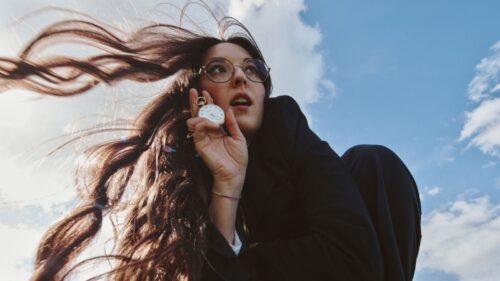
Road to Vienna: Switzerland

Road to Vienna: Switzerland

With the Eurovision Song Contest 2026 in Vienna drawing closer, we’re continuing our daily series highlighting this year’s participants. Today putting the spotlight on Switzerland.

Veronica Fusaro: Singer-Songwriter with a strong reputation

Swiss singer-songwriter Veronica Fusaro has built a strong reputation with her soulful voice and captivating live performances. Born in Thun, she rose to prominence in the mid-2010s and is now set to represent Switzerland at the Eurovision Song Contest 2026.

Early Career and Breakthrough

Fusaro’s breakthrough came in 2016 with her debut EP Lost in Thought, recorded in her parents’ basement. The release earned her “Demo of the Year” at m4music Festival and “Best Talent” from SRF3. These early achievements quickly positioned her as one of Switzerland’s most promising new artists.

Musical Growth and Live Success

She continued her rise with the EPs Ice Cold (2018) and Sunkissed (2019), blending pop, soul, and R&B influences. Known for her strong stage presence, Fusaro has performed over 500 shows and appeared at major events like the Glastonbury Festival and Montreux Jazz Festival. She also supported artists such as Mark Knopfler.

Albums and Artistic Evolution

Her debut album All the Colors of the Sky (2023) reached No. 5 in Switzerland, marking a major milestone. In 2025, she released her second album Looking for Connection, showcasing a more mature sound and modern production style.

Eurovision 2026 Journey

In 2026, Fusaro was internally selected by SRG SSR to represent Switzerland at the Eurovision Song Contest 2026. Chosen from nearly 500 submissions, she will bring her distinctive voice and experience to one of the world’s biggest music stages.

Alice: A Dark Story of Obsession and Control

Alice explores the thin line between love and obsession. What begins as a seemingly gentle and caring tone quickly reveals a one-sided and unsettling connection, where affection feels forced rather than mutual.

When Love Turns Unhealthy

As the song զարգ progresses, it becomes clear that the narrator’s feelings are not grounded in reality. There is a strong sense of delusion, with imagined love replacing genuine emotion. This creates an uncomfortable dynamic built on control rather than trust.

Psychological Depth and Isolation

The track dives into intense psychological themes. The narrator appears disconnected from reality, possibly existing only within Alice’s mind. This adds a surreal and haunting layer, while also highlighting deep loneliness and emotional isolation. At its core, “Alice” is a warning about unhealthy attachment. It shows how love can shift into control and emotional harm when boundaries disappear. The song leaves a lasting impact by exposing the darker side of obsession.

Switzerland in the Eurovision Song Contest

Switzerland has participated in the Eurovision Song Contest since its inception in 1956, achieving victories in 1956 with Lys Assia‘s “Refrain,” in 1988 with Céline Dion‘s “Ne partez pas sans moi,” and in 2024 with Nemo‘s “The Code.” 

The Bookmakers

Switzerland is currently ranked 26th by the bookmakers and just 13th in its semi-final . Qualifying for the final is shaping up to be a tough challenge



Related news

History

70 years of Eurovision: Conchita and other heroes

The Eurovision Song Contest is celebrating its 70th anniversary. That is a wonderful milestone. We at Eurovision Universe love diving into the history of the contest. That is why we are taking a closer look at the contests of the past 70 years. 2014 The B&W Hallerne stood on a remote industrial estate in Copenhagen. That is where the contest was held. Lise Rønne, Nikolaj Koppel, and Pilou Asbæk hosted the song contest. Poland and Portugal participated again. However, Bulgaria, Croatia, Cyprus, and Serbia dropped out. The songs Paula Seling and Ovi participated in the Eurovision Song Contest once again. For the third consecutive time, San Marino sent Valentina Monetta. And although no one believed in it anymore, Valentina surprisingly reached the final. Dressed in primary colors and with long beards, the band Pollapönk, specializing in children’s songs, represented Iceland. They were fan favorites, just like Carl Espen. This Norwegian singer performed a ballad, “Silent Storm,” which made a deep impression on the audience. The Polish group, Donatan and Cleo, did too, but for a completely different reason. Flanked by buxom ladies in traditional attire doing laundry by hand or churning milk, the Polish duo painted a remarkable picture of the country. Sanna Nielsen participated in Melodifestivalen for the seventh time, and with “Undo,” she finally won. The Tolmachevy Sisters, twins, once won the Junior Eurovision Song Contest for Russia. Now they were in the adult version. For the first time, booing was clearly heard as a political statement, this time against Vladimir Putin. Then there was András Kállay-Saunders. He represented Hungary with a song to raise awareness about child abuse. The accompanying act depicted how Kállay-Saunders came to the rescue. And then there were The Common Linnets. The duo from the Netherlands were among the contenders for the final victory. National stars Waylon and Ilse Delange had put their heads together. They created a song in the Americana style and had a slick act. The cameras circled around the two, who stood facing each other. Conchita Wurst But the winner was, of course, Conchita Wurst. Despite a good singing voice, Thomas Neuwirth failed to build a career as himself. But as his alter ego, Conchita Wurst, with a dress and a beard, he succeeded. With class, style, and a fantastic singing voice, Conchita sang her “Rise Like a Phoenix” to first place. She called attention to the emancipation of the LGBTQ+ community. “We are the unstoppables” was what she said when she had won. 2015 Just like this year, the Wiener Stadthalle in Vienna was the venue. There were no fewer than four presenters: Mirjam Weichselbraun, Alice Tumler, Arabella Kiesbauer, and… Conchita Wurst. Conchita could also be heard on the tram. At the stop in front of the Wiener Stadthalle, one could hear her: “Conchita Time! Here you have to go out for the Eurovision Song Contest.” Ukraine skipped a year. Cyprus, the Czech Republic, and Serbia returned. Australia made its debut. Because it was the 60th festival, the country that had been watching enthusiastically for years was now allowed to send an entry of its own. It was supposed to be a one-off, but Australia stayed. The songs Armenia sent the group Genealogy. One of the group members had also sung for Armenia in 2009. Elnur Hüseynov had already participated in 2008 for the then-debuting Azerbaijan; now he got to do it again. The group Pertti Kurikan Nimipäivät was particularly striking: a rock band consisting of members with an intellectual disability. At 1:27, their “Aina mun pitää” was the shortest Eurovision song ever. The men walked around as if they had already won. However, they finished last in their semi-final. Bojana Stamenov became one of the fan favorites with “Beauty Never Lies”. The phrase “Finally I can say I am different and it’s okay” was sung along to loudly, in particular. The Norwegian Mørland and Debrah Scarlett performed “A Monster Like Me”, a song entirely in the style of “Where The Wild Roses Grow”. The Australian contestant Guy Sebastian also put on a great show. He was among the contenders. If Australia were to win, a European country would take over the organization. Sebastian finished fifth. Loïc Nottet from Belgium finished exactly one place higher. With his “Rythm Inside”, and the slick dance act that accompanied it, Nottet made a big impression. And then there was Aminata from Latvia with a style entirely her own. Polina Gagarina from Russia sang a peace song that made your teeth ache. Il Volo from Italy won the televote with a classical-style song, “Grande Amore”. Måns Zelmerlöw It was already Måns Zelmerlöw’s fifth attempt to go to the Eurovision Song Contest. In 2015, he finally succeeded with “Heroes”. Aided by virtual reality, with figurines meant to represent his heroes, Måns impressed. Because the televoters awarded him a high ranking and the jury placed him first, Måns won. After Eurovision, he remained a loyal visitor to broadcasts and Eurovision related events. In 2016, he even hosted the Eurovision Song Contest. In 2025, he narrowly missed winning Melodifestivalen.

Read More »
Eurovision 2026
Anja Kroeze

Road to Vienna: Switzerland

Road to Vienna: Switzerland With the Eurovision Song Contest 2026 in Vienna drawing closer, we’re continuing our daily series highlighting this year’s participants. Today putting the spotlight on Switzerland. Veronica Fusaro: Singer-Songwriter with a strong reputation Swiss singer-songwriter Veronica Fusaro has built a strong reputation with her soulful voice and captivating live performances. Born in Thun, she rose to prominence in the mid-2010s and is now set to represent Switzerland at the Eurovision Song Contest 2026. Early Career and Breakthrough Fusaro’s breakthrough came in 2016 with her debut EP Lost in Thought, recorded in her parents’ basement. The release earned her “Demo of the Year” at m4music Festival and “Best Talent” from SRF3. These early achievements quickly positioned her as one of Switzerland’s most promising new artists. Musical Growth and Live Success She continued her rise with the EPs Ice Cold (2018) and Sunkissed (2019), blending pop, soul, and R&B influences. Known for her strong stage presence, Fusaro has performed over 500 shows and appeared at major events like the Glastonbury Festival and Montreux Jazz Festival. She also supported artists such as Mark Knopfler. Albums and Artistic Evolution Her debut album All the Colors of the Sky (2023) reached No. 5 in Switzerland, marking a major milestone. In 2025, she released her second album Looking for Connection, showcasing a more mature sound and modern production style. Eurovision 2026 Journey In 2026, Fusaro was internally selected by SRG SSR to represent Switzerland at the Eurovision Song Contest 2026. Chosen from nearly 500 submissions, she will bring her distinctive voice and experience to one of the world’s biggest music stages. Alice: A Dark Story of Obsession and Control Alice explores the thin line between love and obsession. What begins as a seemingly gentle and caring tone quickly reveals a one-sided and unsettling connection, where affection feels forced rather than mutual. When Love Turns Unhealthy As the song զարգ progresses, it becomes clear that the narrator’s feelings are not grounded in reality. There is a strong sense of delusion, with imagined love replacing genuine emotion. This creates an uncomfortable dynamic built on control rather than trust. Psychological Depth and Isolation The track dives into intense psychological themes. The narrator appears disconnected from reality, possibly existing only within Alice’s mind. This adds a surreal and haunting layer, while also highlighting deep loneliness and emotional isolation. At its core, “Alice” is a warning about unhealthy attachment. It shows how love can shift into control and emotional harm when boundaries disappear. The song leaves a lasting impact by exposing the darker side of obsession. Switzerland in the Eurovision Song Contest Switzerland has participated in the Eurovision Song Contest since its inception in 1956, achieving victories in 1956 with Lys Assia‘s “Refrain,” in 1988 with Céline Dion‘s “Ne partez pas sans moi,” and in 2024 with Nemo‘s “The Code.”  The Bookmakers Switzerland is currently ranked 26th by the bookmakers and just 13th in its semi-final . Qualifying for the final is shaping up to be a tough challenge    

Read More »
Follow Us: