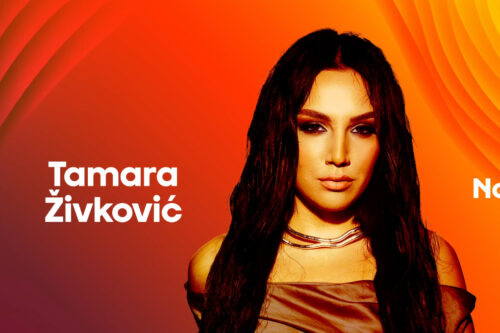
Road to Vienna: Montenegro

Road to Vienna: Montenegro

As the Eurovision Song Contest 2026 in Vienna approaches, we continue our daily spotlight on this year’s contestants. Today, we focus on Montenegro

Tamara Živković: from local festivals to the Eurovision stage

Tamara Živković is a Montenegrin singer and flutist known for her powerful vocals and emotional performances. She rose to fame through major Balkan music competitions and gained international attention after winning Montesong 2025. This victory secured her place as Montenegro’s representative at the Eurovision Song Contest 2026.

Early Life and Musical Education

Born in Kotor, Montenegro, Tamara showed musical talent from a young age. She completed both primary and secondary music school, specializing in flute performance. During this time, she won several national and international awards in wind instrument competitions.

She later studied at the Faculty of Music Arts in Belgrade, where she refined her classical training. This strong musical foundation plays a key role in her vocal control and stage presence today.

From Choir Singer to TV Competitions

Tamara began singing at the age of 10 in her school choir, quickly becoming a soloist. She performed at well-known children’s festivals such as Zlatna Pahulja and Naša Radost.

Her national breakthrough came in 2016 when she appeared on Pinkove Zvezdice. In the early 2020s, she expanded her audience by competing in Zvezde Granda, one of the most popular music shows in the Balkans. Reaching the finals, she stood out as the only Montenegrin contestant and showcased her versatility across pop, rock, and ethno music.

Montesong Journey and Breakthrough Win

Tamara first entered Montenegro’s Eurovision selection with Montesong 2024. Performing “Poguban let,” she finished 9th in the final.

In 2025, she returned stronger than ever. Competing with “Nova Zora,” Tamara won Montesong 2025, earning top scores from both the jury and the public. This marked a major turning point in her career. With a unique blend of classical training and modern style, Tamara is set to become one of Montenegro’s most exciting music exports.

Nova Zora: A Song About Letting Go and New Beginnings

Nova Zora tells the story of reaching a personal breaking point and choosing a fresh start. The song focuses on leaving behind toxic relationships, emotional pain, and outside expectations. It delivers a powerful message about reclaiming identity and putting yourself first.

Self-Love and Empowerment

At its core, the track highlights self-love, resilience, and inner strength. With a strong sense of female empowerment, it emphasizes that true confidence comes from within, not from external validation. The message is clear: growth begins when you choose yourself.

Symbolism and Imagery

Nature imagery plays a key role in the song. Storms and rain represent emotional struggle and release, while the “new dawn” symbolizes hope, clarity, and renewal. This contrast reinforces the journey from hardship to healing.


Montenegro in the Eurovision Song Contest

Montenegro has participated in the Eurovision Song Contest since 2007. The country’s best result came in 2015 when Knez‘s “Adio” reached 13th place in the Grand Final. 

The Bookmakers

Tamara Živković is currently ranked 33rd with the bookmakers, making a place in the final seem almost out of reach. But could she defy the odds and deliver one of the competition’s biggest surprises?

Related news

History

70 years of Eurovision: the singing deodorants

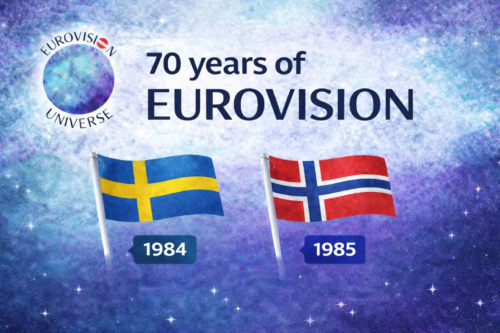
The Eurovision Song Contest is celebrating its 70th anniversary. That is a wonderful milestone. We at Eurovision Universe love diving into the history of the contest. That is why we are taking a closer look at the contests of the past 70 years. 1984 Luxembourg was known for its venues being too small. This time, Desirée Nosbusch hosted the Eurovision Song Contest from the Teatre Municipal in the capital. She did this in an inimitable manner, effortlessly switching languages three times in a single sentence. Israel was once again absent due to a memorial day. Greece was not present either. Ireland was back. Isolda, one half of the Yugoslavian duo Ida & Vlado, had also participated two years earlier. Mary Roos, who had also participated in 1972, was making a return appearance as well. An ABBA-like group, Bravo, participated for Spain. Johnny Logan wrote the Irish entry, “Terminal 3”, for Linda Martin. The duo Hot Eyes for Denmark was also striking. In the Danish national final, they jumped into the pool; that was of course not possible in Luxembourg. At the time, no one knew that Kirsten, the female half of the duo, was pregnant. Another striking duo was Alice and Franco Battiato for Italy. The two were accompanied by a small opera choir. Their “I treni di tozeur” came fifth, and became an international hit. By now, the song is a Eurovision classic. The Herreys It remained very exciting for a long time, particularly between Ireland and Sweden. In the end, it was Sweden that won. Three brothers, Mormons who had been living in the United States for quite some time, sang the song “Diggy-loo Diggy-ley”. There was a lot of criticism in their own country after winning the national final. The brothers were dismissed as ‘the singing deodorants’. Yet it worked; with polo shirts in primary colors and golden boots, the three won the hearts of all of Europe. Once again, the winner of the Eurovision Song Contest was a major European hit. 1985 The Eurovision circus moved to Sweden, more precisely to Gothenburg. Lill Lindfors presented the contest in the Skandinaviumhallen. She garnered much praise for that task. One clip still makes it into all kinds of song festival compilations. After the entre act, Lill stepped on her dress with her heel, which then tore. For a moment, Lill, standing in her underwear, seemed to panic; then she unclipped two clips on her shoulder and discovered she was wearing a completely different dress. “I just wanted you to wake up a little” was her explanation. The Netherlands and Yugoslavia did not participate. Both countries had a day of remembrance that day. Israel and Greece were back. Many artists had participated before. Hot Eyes competed for Denmark, just like the year before. Former winner Izhar Cohen represented Israel. The now very famous duo Al Bano & Romina Power represented Italy. The Bobbysocks from Norway had both participated before. Hanne Krogh as a child star in 1971, Elisabeth Andreasson as half of the duo Chips in 1982. Notably: the other half of Chips, Kikki Danielsson, represented Sweden! Furthermore, there were Mariella Farré and Pino Gasparini, who had both competed for Switzerland separately before, and Gary Lux, who competed for Austria for the second time. Ireen Sheer took the stage for Luxembourg for the third time. Turkey received help from the Netherlands. The trio MFÖ sang “Didai Didai Dai”. The Dutch composer Peter Schön had written the arrangement. The Luxembourg entry was also special: three duos, a French, a German, and a British duo, sang the song “Children, Kinder, enfants”. A small detail: the French duo consisted of a Belgian and a Dutch singer. Bobbysocks As mentioned, both Bobbysocks had participated before. During the national final, jury member Tony Visconti was very clear: “If this wins, Norway certainly won’t win the Eurovision Song Contest.” He was way off. After an exciting battle with Germany, it was ultimately Norway that won. The Bobbysocks were ecstatic, and the whole country with them. After a long road of entries without points and places at the bottom of the leaderboard, they finally succeeded! “La det swinge” became the very first Norwegian winner. As “Let It Swing,” it became an international hit. The Bobbysocks remained big names in Norway, but not outside of it. In 2025, they participated in the Norwegian national final again, without success.

Read More »
Eurovision 2026
Anja Kroeze

Road to Vienna: Montenegro

Road to Vienna: Montenegro As the Eurovision Song Contest 2026 in Vienna approaches, we continue our daily spotlight on this year’s contestants. Today, we focus on Montenegro Tamara Živković: from local festivals to the Eurovision stage Tamara Živković is a Montenegrin singer and flutist known for her powerful vocals and emotional performances. She rose to fame through major Balkan music competitions and gained international attention after winning Montesong 2025. This victory secured her place as Montenegro’s representative at the Eurovision Song Contest 2026. Early Life and Musical Education Born in Kotor, Montenegro, Tamara showed musical talent from a young age. She completed both primary and secondary music school, specializing in flute performance. During this time, she won several national and international awards in wind instrument competitions. She later studied at the Faculty of Music Arts in Belgrade, where she refined her classical training. This strong musical foundation plays a key role in her vocal control and stage presence today. From Choir Singer to TV Competitions Tamara began singing at the age of 10 in her school choir, quickly becoming a soloist. She performed at well-known children’s festivals such as Zlatna Pahulja and Naša Radost. Her national breakthrough came in 2016 when she appeared on Pinkove Zvezdice. In the early 2020s, she expanded her audience by competing in Zvezde Granda, one of the most popular music shows in the Balkans. Reaching the finals, she stood out as the only Montenegrin contestant and showcased her versatility across pop, rock, and ethno music. Montesong Journey and Breakthrough Win Tamara first entered Montenegro’s Eurovision selection with Montesong 2024. Performing “Poguban let,” she finished 9th in the final. In 2025, she returned stronger than ever. Competing with “Nova Zora,” Tamara won Montesong 2025, earning top scores from both the jury and the public. This marked a major turning point in her career. With a unique blend of classical training and modern style, Tamara is set to become one of Montenegro’s most exciting music exports. Nova Zora: A Song About Letting Go and New Beginnings Nova Zora tells the story of reaching a personal breaking point and choosing a fresh start. The song focuses on leaving behind toxic relationships, emotional pain, and outside expectations. It delivers a powerful message about reclaiming identity and putting yourself first. Self-Love and Empowerment At its core, the track highlights self-love, resilience, and inner strength. With a strong sense of female empowerment, it emphasizes that true confidence comes from within, not from external validation. The message is clear: growth begins when you choose yourself. Symbolism and Imagery Nature imagery plays a key role in the song. Storms and rain represent emotional struggle and release, while the “new dawn” symbolizes hope, clarity, and renewal. This contrast reinforces the journey from hardship to healing.     Montenegro in the Eurovision Song Contest Montenegro has participated in the Eurovision Song Contest since 2007. The country’s best result came in 2015 when Knez‘s “Adio” reached 13th place in the Grand Final.  The Bookmakers Tamara Živković is currently ranked 33rd with the bookmakers, making a place in the final seem almost out of reach. But could she defy the odds and deliver one of the competition’s biggest surprises?

Read More »
Follow Us: