Basel Bulletin: Rehearsals, statements and odds

Rehearsals, statements and odds: that is what it is all about today. All the participants of the first semifinal have their second rehearsal. We have no liveblog from EBU, however we are expecting 30 seconds videos later today. We also have pictures.

🇮🇸 Iceland

Following their first rehearsal in Basel, Icelandic duo VÆB expressed immense satisfaction with their performance. Speaking to RÚV, they shared, “Everything went perfectly! We’re only now realizing that we’re in Eurovision.” The delegation echoed this sentiment; Head of Press Rúnar Freyr Gíslason praised the artists’ work, noting only minor adjustments were needed. Staging director Selma Björnsdóttir added that the duo appeared very comfortable and confident on stage, with results exceeding expectations. (source: RÙV)

VÆB’s performance features a two-part white wooden boat, dynamic LED visuals with neon red and blue geometric landscapes, and silver-themed costumes for both the duo and their backing dancers. The staging aims to enhance the song’s narrative and visual appeal. Currently, Iceland ranks 36th in the betting odds for Eurovision 2025.

📷 EBU/Corinne Cummings

🇵🇱 Poland

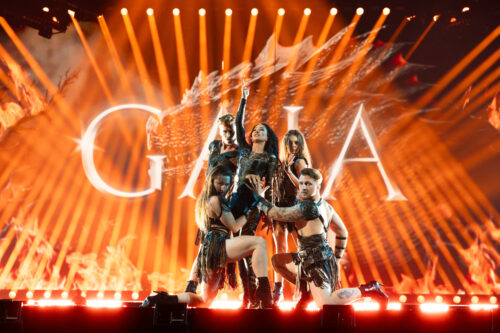
Following her first rehearsal in Basel, Poland’s Eurovision 2025 representative, Justyna Steczkowska, shared her excitement about the performance. She described the experience as “electrifying,” emphasizing the powerful staging and intricate choreography. Justyna highlighted the visual elements, noting the dynamic LED displays featuring cosmic imagery, including spinning planets and elemental visuals like water, lightning, and lava, which aim to convey the song’s theme of creation and transformation.

According to betting odds, Poland has an 80% chance of qualifying from Semi-Final 1, indicating strong support for Justyna’s entry.
📷 EBU/Corinne Cumming

🇸🇮 Slovenia

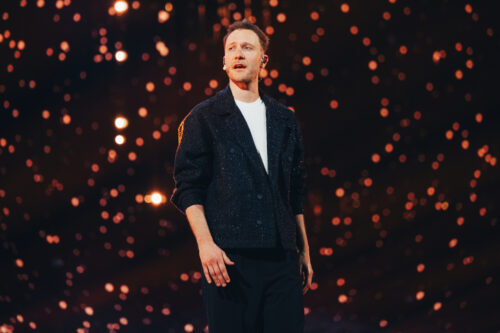
In a press conference with RTV SLO, Klemen discussed the intense preparations for his performance of “How Much Time Do We Have Left.” He revealed that he has been practicing daily handstands against a wall to acclimate himself to being upside down during the performance, aiming to prevent dizziness and ensure a smooth execution of the staging concept. 

Regarding the song’s message, Klemen emphasized its deeply personal nature, inspired by his wife’s battle with illness. He expressed a desire for the audience to perceive the song as a positive message, focusing on love and resilience in the face of adversity. 

As for the betting odds, Slovenia is currently ranked 28th in the Eurovision 2025 betting odds, indicating a modest chance of winning the contest.
📷 EBU/Sarah Louise Bennett

🇪🇪 Estonia

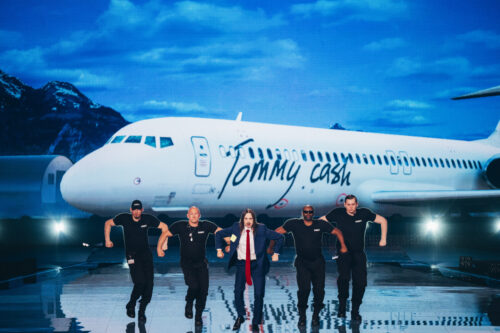
Following his first rehearsal in Basel on May 3, Estonia’s Eurovision 2025 representative, Tommy Cash, shared his reflections in various interviews. He expressed enthusiasm about the performance, stating, “We’re excited and getting ready,” and noted that the stage visuals had impressed even seasoned professionals. source: ERR

In a recent interview, Tommy discussed the controversy surrounding his song “Espresso Macchiato,” which some have criticized for perpetuating Italian stereotypes. He responded by saying, “I love Italy and have the utmost respect for the country,” emphasizing that he never intended to offend. 

Regarding betting odds, Estonia’s position has seen some fluctuation. Initially, after the selection of “Espresso Macchiato,” Estonia rose from seventh to fourth place in the betting tables. However, as of now, Estonia’s odds have stabilized at a 9th place, ranging between 13 and 15 times the bet, indicating a modest chance of winning the contest.
📷 EBU/Sarah Louise Bennett

🇺🇦 Ukraine

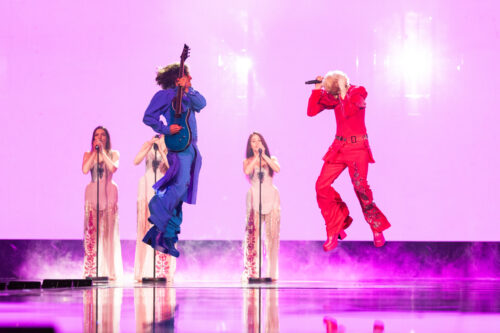
Following their first rehearsal on May 3 in Basel, Ukraine’s Eurovision 2025 representatives, Ziferblat, have shared insights into their performance and recent events impacting the band.

On May 6, Khrystyna Starykova, a member of Ziferblat, revealed that her home in Myrnohrad was partially destroyed by a Russian missile strike. She shared images of the damaged building on social media, expressing her sorrow and stating, “I dreamed so much of returning home.” Fortunately, her family and friends are safe. Khrystyna emphasized her commitment to performing at Eurovision, stating she would do so “for the good of our country” and to demonstrate the resilience of the Ukrainian people. source: ElHuffPost

Ziferblat’s performance of “Bird of Pray” features a blend of alternative rock with traditional Ukrainian elements, presented in both Ukrainian and English. The staging, directed by Maria Korostelova, is described as a significant departure from their national selection performance, aiming to convey the song’s themes of separation and hope. Designer Ivan Frolov, known for his work with previous Ukrainian Eurovision acts, has crafted the band’s outfits. 

Also Eurovision Universe talked to Ziferblat:

As of early May, Ukraine’s odds of winning Eurovision 2025 have fluctuated. Initially among the top contenders, Ukraine has since moved to 11th place in the betting odds. Current odds for Ukraine’s victory range between 66/1 and 80/1, indicating a moderate chance of winning. 
📷 EBU/Corinne Cumming

🇸🇪 Sweden

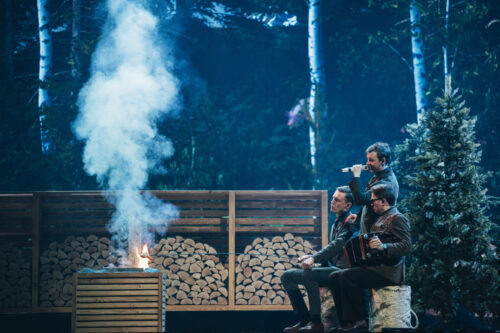
Following their first rehearsal in Basel on May 3, Sweden’s Eurovision 2025 representatives, KAJ, have been actively engaging with media and fans. The trio, known for their comedic-folk-pop style, is representing Sweden with the song “Bara Bada Bastu,” marking the country’s first Swedish-language entry since 1998.

In a recent interview, KAJ discussed the inspiration behind their song and performance. They emphasized the importance of bringing a sense of joy and cultural identity to the Eurovision stage, stating, “We wanted to create something that resonates with our roots and brings a smile to people’s faces.” The group also highlighted their unique position as a Finnish-born trio representing Sweden, aiming to bridge cultural connections through music. source: Sortiraparis

On social media, KAJ has been sharing behind-the-scenes glimpses of their Eurovision journey. A recent Instagram reel from May 3 humorously posed the question, “Can Basel handle the sauna heat?” referencing their song’s theme and their energetic performance. The post garnered significant attention, with over 22,000 likes and numerous comments from fans expressing excitement for their act. source: Instagram

Regarding betting odds, KAJ is currently a strong contender in the Eurovision 2025 lineup. As of early May, they are leading in both the betting odds and the Eurovoix Model, indicating a high probability of success in the competition. source: Eurovoix
📷 EBU/Sarah Louise Bennett

 

Related news

History

70 years of Eurovision: Céline Dion and…. eh… who?

The Eurovision Song Contest is celebrating its 70th anniversary. That is a wonderful milestone. We at Eurovision Universe love diving into the history of the contest. That is why we are taking a closer look at the contests of the past 70 years. 1988 For the second time, the Royal Dublin Society was the venue. Two hosts were in charge: Pat Kenny and Michelle Rocca. Cyprus had to withdraw. The Cypriot entry turned out to have already participated in the national final four years earlier. That came out so late that Cyprus could not find a new song in time. Tommy Körberg participated for Sweden. He did that back in 1969 as well. Back then, there were two winners in the national final: Tommy and Jan Malmsjö. After a runoff, Tommy was allowed to go to the Eurovision Song Contest. And lo and behold, in 1988 he was the replacement for…. that very same Jan Malmsjö! Yardena Arazi participated for Israel. She did so in 1976, but in 1979 she was the host. It is the first and only time that a former host participated. MFÖ represented Turkey for the second time. Furthermore, the duo Hot Eyes was present for the third time. This time, singer Kirsten Siggaard was pregnant for no less than eight months! And then there was Dora. She had participated for Portugal before, and now again. Many big stars traveled to Dublin. Scott Fitzgerald had already had a worldwide hit with “If I Had Words” and now sang “Go” for the United Kingdom. Gerard Joling, who had just completed a tour of Asia, was the Dutch candidate. And France also came up with a big star: Gérard Lenorman. Unfortunately, there was little attention for his “Chanteur de charme”. And then there was the Belgian Lara Fabian. She represented Luxembourg with the song “Croire”. At that time she was still unknown; later she would score many hits.   Céline Dion It was nail-bitingly exciting. The United Kingdom and Switzerland constantly swapped first place. Until the very last point, it was unclear who would win. It was ultimately Céline Dion for Switzerland. This Canadian singer sang “Ne partez pas sans moi”. It didn’t become a big hit everywhere. But a year later, she got to open the festival and sang “Where Does My Heart Beat Now”. It became her first international hit, but certainly not the last. Her absolute biggest success was “My Heart Will Go On”, but she scored many hits. Due to illness, she was unable to perform for a long time. So there was admiration when she did sing during the Olympic Games in Paris. And recently she announced that she will start performing again. 1989 The Eurovision Song Contest was held in Lausanne. Once again, there was a duo presentation: Jacques Descheneaux and Lolita Morena. Cyprus was back after a long absence. Not a single participant had been on the Eurovision stage before. However, two very young participants were striking and controversial. 12-year-old Gili Netanel participated for Israel as half of the duo Gili & Galit. For France, the even younger, 11-year-old Nathalie Pâque took the stage. This makes her the youngest soloist ever. Many people disagreed with the participation of such young children. A year later, a minimum age was therefore introduced. The show opened with the occasional duo Anna Oxa and Fausto Leali. Two big names in Italian music, who now finished ninth together with “Avrei voluto”. One of the favorites competed for the Netherlands: Justine Pelmelay. But Justine missed a high final note and did not finish as high as expected at all. Birthe Kjær (Denmark) and Anneli Saaristo (Finland) had both tried to represent their country several times before. Now that the time had finally come, both were very successful. With a bright red dress and a swinging song, Birthe came third. Anneli was accompanied by Spanish guitar sounds and sang her song to a seventh place. The Icelandic Daníel was also notable. During the national final, then still with a shaved head, he seemed unable to crack a smile after his victory. As if participating in the Eurovision Song Contest was a severe punishment for the Icelandic singer. Once in Lausanne, now with hair, the Icelander failed to secure even a single point. Riva For the third consecutive time, the duo Stevo Cvikić and Rajko Dujmić wrote the entry. Always following the same recipe: a group with a female singer and a cheerful trifle. As there was no other clear favorite, the group Riva won for Yugoslavia with “Rock Me”. In Yugoslavia, people were happy, but in the rest of Europe, incomprehension prevailed. This wasn’t the best song, was it? What had the jury done!? During the afterparty, a number of participating artists huddled together for a jam session. Among those on stage were the Spanish Nina and the Dutch Justine. Friend and foe alike agreed that this was all much better than the winning song.

Read More »
2026
Anja Kroeze

Road to Vienna: Germany

Road to Vienna: Germany We cannot wait for the Eurovision Song Contest in Vienna. Therefore, we take a closer look at one of the contestants each day. Today, we highlight Germany Sarah Engels: From Talent Show Contestant to Eurovision 2026 Sarah Engels was born on October 15, 1992, in Cologne and raised in Hürth. She discovered her passion for music early, performing at school events and local festivals. Despite taking singing lessons for years, her first attempts at Deutschland sucht den Superstar in 2009 and 2010 ended in early elimination. Still, these setbacks helped shape her determination. Breakthrough on DSDS and Chart Success Her breakthrough came in 2011 during her third attempt at DSDS. After an initial elimination, she returned to the competition and finished as runner-up behind Pietro Lombardi. Soon after, she achieved major chart success with “Call My Name” and “I Miss You,” while her debut album Heartbeat reached number 2 in Germany and earned an Echo nomination. Expanding Career in Music and Television Following DSDS, Sarah Engels built a strong presence in both music and TV. Together with Pietro Lombardi, she released successful duo albums. At the same time, she became a familiar TV personality, finishing second on Let’s Dance and winning shows like The Masked Singer. This phase expanded her audience beyond music. From 2018 onward, Sarah explored a broader sound with albums like Zurück zu mir and Im Augenblick. She blended pop, schlager, and modern radio music, proving her ability to evolve. Her participation in the Free European Song Contest 2020 further strengthened her position in the German music scene. Acting, Musical Theatre, and New Projects In addition to music, Sarah moved into acting and voice work. She appeared in Das Traumschiff and voiced a character in Miraculous: Ladybug & Cat Noir – Der Film. In 2025, she released Strong Girls Club and took on a leading role in the musical Moulin Rouge! in Cologne, highlighting her versatility as a performer. Eurovision 2026: Representing Germany In 2026, Sarah Engels reached a new milestone by winning Germany’s national selection for the Eurovision Song Contest 2026 with her song “Fire.” The track delivers a message of empowerment and self-confidence. Her journey—from early setbacks to international representation—shows her growth into a complete artist. Fire: A Bold Message About Honesty   Fire is a powerful pop track about confronting lies in a relationship. With a catchy chorus and direct lyrics, the song captures the moment someone refuses to accept dishonesty any longer. From the start, the lyrics show strength and clarity. The singer rejects emotional games and chooses honesty over pretending. This creates a relatable message about self-respect and emotional independence. The Meaning Behind “Fire” The recurring image of “fire” symbolizes inner strength, passion, and confidence. In contrast, the “vampire” metaphor highlights a dishonest partner who hides the truth. Together, these images make the song emotionally impactful and easy to connect with. More Than a Breakup Song Fire goes beyond heartbreak. It focuses on self-worth and personal growth. The message is clear: don’t repeat toxic patterns and know when to walk away.     Germany in the Eurovision Song Contest Germany has been a steadfast participant in the Eurovision Song Contest since its inception in 1956, missing only one edition in 1996 due to elimination in a pre-qualification round. The country has secured two victories: in 1982 with Nicole‘s “Ein bißchen Frieden” and in 2010 with Lena‘s “Satellite.” In recent years, Germany has faced challenges, often placing lower on the scoreboard, with notable exceptions like Michael Schulte‘s fourth-place finish in 2018. As a member of the “Big Five,” Germany automatically qualifies for the Grand Final. The Bookmakers This year as well, the outlook for Germany isn’t very promising. Currently sitting at 23rd place with the bookmakers, it seems likely that Germany could once again finish in the lower ranks of the scoreboard.

Read More »
Follow Us: