đŸ‡©đŸ‡° Road to Basel: Denmark

Road to Basel: Denmark

Road to Basel: Denmark! As the Eurovision Song Contest 2025 in Basel approaches, we continue our daily spotlight on this year’s contestants. Today, we focus on Denmark.

photo: Lola Paex

Sissal

Sissal JĂłhanna Norðberg Niclasen, known mononymously as Sissal, is a 30-year-old Faroese singer born in TĂłrshavn, Faroe Islands. She began her musical journey at a young age, winning the Faroese children’s singing competition NĂłsa Barnaprix in 2005. Sissal has since developed a distinctive pop style, drawing inspiration from Scandinavian artists like Robyn and Dagny. In 2020, she moved to Copenhagen to further her music career and has released several singles leading up to her Eurovision entry. ​

“Hallucination”

Denmark’s Eurovision entry, “Hallucination,” is a dance-pop track co-written by Sissal alongside Chris Rohde-Frisk, Lina Spangsberg, Linnea Deb, Malthe Johansen, Marcus Winther-John, and Melanie Gabriella Hayrapetian. The song explores the surreal feeling of an intense connection with someone, blurring the lines between reality and illusion. Released on 6 February 2025, “Hallucination” has been praised for its catchy melody and emotive lyrics. ​

Dansk Melodi Grand Prix 2025

Denmark’s national selection for Eurovision 2025 was conducted through Dansk Melodi Grand Prix 2025. The competition featured eight entries competing in a televised final held on 1 March 2025 at the Jyske Bank Boxen in Herning. After two rounds of voting, combining jury and public votes, Sissal’s “Hallucination” emerged victorious in the superfinal, securing her spot to represent Denmark in Basel.

  1. Sissal, “Hallucination
  2. Tim Schou, “Proud
  3. Adel the Second, “The Unluckiest Boy Alive
Denmark in the Eurovision Song Contest

Denmark has participated in the Eurovision Song Contest 52 times since its debut in 1957. The country has won the contest three times: in 1963 with “Dansevise” by Grethe and JĂžrgen Ingmann, in 2000 with “Fly on the Wings of Love” by the Olsen Brothers, and in 2013 with “Only Teardrops” by Emmelie de Forest. The last few years Denmark didn’t manage to reach the final, so the Danes seriously hope for a change with Sissal.​

A Random Danish Entry

Reflecting on Denmark’s Eurovision history, random.org chose the 2012 entry. Soluna Samay represented the country with “Should’ve Known Better”. Soluna, who lives in Denmark, has the Swiss nationality. However, she was born in Guatemala. How international can you be?

Betting Odds

As of now, Sissal’s “Hallucination” is 27th in the odds in order to win the Eurovision Song Contest. In the odds for the 2nd semifinal, Sissal is 12th. One can say that it is gonna be a hard time for Denmark. However, it seems to be a fan favourite.

We eagerly await the Eurovision Song Contest in Basel and look forward to witnessing Sissal’s performance on the grand stage.

Related news

Uncategorized

70 years of Eurovision: An audio selection and a hit

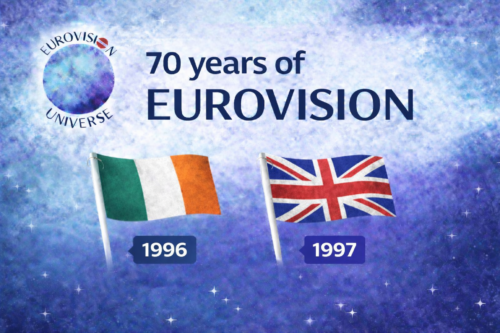
The Eurovision Song Contest is celebrating its 70th anniversary. That is a wonderful milestone. We at Eurovision Universe love diving into the history of the contest. That is why we are taking a closer look at the contests of the past 70 years. 1996 Thirty countries wanted to participate in the Eurovision Song Contest in Oslo. That did not happen. All countries, except host country Norway, therefore had to fight for a spot. This took place via an audio selection round. Denmark, Germany, Hungary, Israel, debuting Macedonia, Romania, and Russia did not make it through. The contest was presented by Ingvild Bryn and the famous Morten Harkett, singer of A-ha. During the broadcast, extensive use was made of virtual reality, allowing Ingvild Bryn to easily walk between the sections of the scoreboard, or even through it. The songs Marianna Efstratou participated for Greece for the second time. Elisabeth Andreassen performed for no less than the fourth time, but for the first time solo. Notable was LĂșcia Moniz, who represented Portugal. Her “O meu coração nĂŁo tem cor” finished sixth, which for a long time was the best score ever for the Portuguese. Maarja-Liis Illus and Ivo Linna really caught the eye of Estonia. She was 15, he 46. The duo sang a sweet song titled “Kaelakee hÀÀl”. And what Finland failed to achieve in all those years, Estonia did effortlessly: walking straight into the top 5 with a song in a Finno-Ugric language. There was also a major difference between the two Dutch duo partners, Maxine and Franklin Brown. However, in this case, it concerned the length. The Dutch entry “De eerste keer” is one of the few that rose in the rankings ĂĄfter the Eurovision Song Contest. The Spanish jury had, or so people thought, said “Poland, 6 points”. But the somewhat nasal-speaking jury chairwoman had said “Holland, 6 points”. People only found out about that later. It is not for nothing that this country ought to be called The Netherlands. Austria (“Weil’s dr guat got” in Vorarlberg) and France “Diwanit bugale” in Breton both sang in a minority language. The new generation after ABBA was also making its appearance. Peter Grönvall was one of the members of the group One More Time. And he was the son of Benny Andersson of ABBA. The group had already had a major hit in Europe with “Highland”. Singer Nanne Grönvall would participate in the Swedish Melodifestivalen a number of times, and even once in the British national final. Eimear Quinn Around this time, the Belgian documentary filmmaker Herman Molle made a documentary titled “How do I win the Eurovision Song Contest?”. Molle’s main recommendation: become Irish. Because Ireland won again. Eimear Quinn had sung with AnĂșna, the choir that accompanied River Dance. With her song “The Voice”, she effortlessly secured the seventh victory for Ireland. “You’re bringing it back too soon,” Morten Harkett grumbled briefly. But the party in Ireland was no less big for it. Nor was the nervous breakdown among the people at the Irish broadcaster RTÉ. 1997 The Eurovision Song Contest practically resided in the Point Theatre in Dublin. However, the audio pre-selection had been scrapped. The relegation zone was back, so a number of countries swapped places again. Italy returned after a three-year absence. Also new: televoting. In five countries, the public was allowed to cast their vote. The Eurovision Song Contest was presented by Carrie Crowley and, once again, someone from a boy band: Ronan Keating of Boyzone. The songs ƞebnem Parker participated for Turkey for the second consecutive time. Her “Dinle” was roughly at the bottom in the odds, but surprisingly finished third in the final ranking. Celebrations in Turkey, which now finally dared to dream of a victory. Young Maarja-Liis Illus from Estonia also returned after a year, this time solo. And Alma ČardĆŸić from Bosnia and Herzegovina also took a second try. Tor Endresen participated for Norway. He had competed in the Norwegian national final almost every year and had finally won. How disappointing that he finished with zero points. The duo Jalisse competed for Italy. The two finished fourth. It didn’t really help: Italy dropped out immediately afterwards. Bianca Shomburg had won the Soundmixshow in Germany, where she imitated Celine Dion. However, she did not do that in terms of the result at the Eurovision Song Contest. Russia sent the country’s biggest star. For years, Alla Pugacheva had been unmatched. There was no sign of that at the Eurovision Song Contest. The rest of Europe appreciated her with a fifteenth place. And then there was Paul Oscar. He represented Iceland. Lying on a sofa, surrounded by female beauty (which he had no eye for in real life), he sang his song. At the end of the song, he made a ‘gun gesture’ with his hand, shooting himself in the mouth. It was striking that Oscar received points exclusively from televoting countries. Katrina & The Waves An unwritten rule is that when an established name participates, they can finish very high but do not win. Katrina & The Waves did not adhere to this. In the 80s, they had a big hit with “Walking On Sunshine”. The song “Love Shine A Light” was originally intended as an anthem for Samaritans in recognition of the thirtieth anniversary of the Swindon branch of that organization. Nevertheless, it ended up at the Eurovision Song Contest, where it won effortlessly. Katrina & The Waves had an international hit with it. The song remains a Eurovision classic to this day. In 2020, it took center stage in the replacement broadcast for the canceled Song Contest: Eurovision Shine A Light.

Read More »
Uncategorized
Martijn

70 years of Eurovision: An audio selection and a hit

The Eurovision Song Contest is celebrating its 70th anniversary. That is a wonderful milestone. We at Eurovision Universe love diving into the history of the contest. That is why we are taking a closer look at the contests of the past 70 years. 1996 Thirty countries wanted to participate in the Eurovision Song Contest in Oslo. That did not happen. All countries, except host country Norway, therefore had to fight for a spot. This took place via an audio selection round. Denmark, Germany, Hungary, Israel, debuting Macedonia, Romania, and Russia did not make it through. The contest was presented by Ingvild Bryn and the famous Morten Harkett, singer of A-ha. During the broadcast, extensive use was made of virtual reality, allowing Ingvild Bryn to easily walk between the sections of the scoreboard, or even through it. The songs Marianna Efstratou participated for Greece for the second time. Elisabeth Andreassen performed for no less than the fourth time, but for the first time solo. Notable was LĂșcia Moniz, who represented Portugal. Her “O meu coração nĂŁo tem cor” finished sixth, which for a long time was the best score ever for the Portuguese. Maarja-Liis Illus and Ivo Linna really caught the eye of Estonia. She was 15, he 46. The duo sang a sweet song titled “Kaelakee hÀÀl”. And what Finland failed to achieve in all those years, Estonia did effortlessly: walking straight into the top 5 with a song in a Finno-Ugric language. There was also a major difference between the two Dutch duo partners, Maxine and Franklin Brown. However, in this case, it concerned the length. The Dutch entry “De eerste keer” is one of the few that rose in the rankings ĂĄfter the Eurovision Song Contest. The Spanish jury had, or so people thought, said “Poland, 6 points”. But the somewhat nasal-speaking jury chairwoman had said “Holland, 6 points”. People only found out about that later. It is not for nothing that this country ought to be called The Netherlands. Austria (“Weil’s dr guat got” in Vorarlberg) and France “Diwanit bugale” in Breton both sang in a minority language. The new generation after ABBA was also making its appearance. Peter Grönvall was one of the members of the group One More Time. And he was the son of Benny Andersson of ABBA. The group had already had a major hit in Europe with “Highland”. Singer Nanne Grönvall would participate in the Swedish Melodifestivalen a number of times, and even once in the British national final. Eimear Quinn Around this time, the Belgian documentary filmmaker Herman Molle made a documentary titled “How do I win the Eurovision Song Contest?”. Molle’s main recommendation: become Irish. Because Ireland won again. Eimear Quinn had sung with AnĂșna, the choir that accompanied River Dance. With her song “The Voice”, she effortlessly secured the seventh victory for Ireland. “You’re bringing it back too soon,” Morten Harkett grumbled briefly. But the party in Ireland was no less big for it. Nor was the nervous breakdown among the people at the Irish broadcaster RTÉ. 1997 The Eurovision Song Contest practically resided in the Point Theatre in Dublin. However, the audio pre-selection had been scrapped. The relegation zone was back, so a number of countries swapped places again. Italy returned after a three-year absence. Also new: televoting. In five countries, the public was allowed to cast their vote. The Eurovision Song Contest was presented by Carrie Crowley and, once again, someone from a boy band: Ronan Keating of Boyzone. The songs ƞebnem Parker participated for Turkey for the second consecutive time. Her “Dinle” was roughly at the bottom in the odds, but surprisingly finished third in the final ranking. Celebrations in Turkey, which now finally dared to dream of a victory. Young Maarja-Liis Illus from Estonia also returned after a year, this time solo. And Alma ČardĆŸić from Bosnia and Herzegovina also took a second try. Tor Endresen participated for Norway. He had competed in the Norwegian national final almost every year and had finally won. How disappointing that he finished with zero points. The duo Jalisse competed for Italy. The two finished fourth. It didn’t really help: Italy dropped out immediately afterwards. Bianca Shomburg had won the Soundmixshow in Germany, where she imitated Celine Dion. However, she did not do that in terms of the result at the Eurovision Song Contest. Russia sent the country’s biggest star. For years, Alla Pugacheva had been unmatched. There was no sign of that at the Eurovision Song Contest. The rest of Europe appreciated her with a fifteenth place. And then there was Paul Oscar. He represented Iceland. Lying on a sofa, surrounded by female beauty (which he had no eye for in real life), he sang his song. At the end of the song, he made a ‘gun gesture’ with his hand, shooting himself in the mouth. It was striking that Oscar received points exclusively from televoting countries. Katrina & The Waves An unwritten rule is that when an established name participates, they can finish very high but do not win. Katrina & The Waves did not adhere to this. In the 80s, they had a big hit with “Walking On Sunshine”. The song “Love Shine A Light” was originally intended as an anthem for Samaritans in recognition of the thirtieth anniversary of the Swindon branch of that organization. Nevertheless, it ended up at the Eurovision Song Contest, where it won effortlessly. Katrina & The Waves had an international hit with it. The song remains a Eurovision classic to this day. In 2020, it took center stage in the replacement broadcast for the canceled Song Contest: Eurovision Shine A Light.

Read More »
Follow Us: