🇫🇷 Road to Basel: France

Road to Basel: France. We cannot wait for the Eurovision Song Contest in Basel. Therefore, we take a closer look at one of the contestants each day. Today, we highlight France.

Louane

Louane Emera, known simply as Louane, is a beloved French singer-songwriter and actress whose heartfelt music and captivating stage presence have earned her widespread acclaim. After rising to fame through her participation in The Voice: la plus belle voix in 2013, Louane quickly established herself as one of France’s most promising young talents. Subsequently, her debut album, Chambre 12, became a chart-topping success, showcasing her ability to blend emotional depth with accessible pop melodies. Furthermore, known for hits such as “Avenir,” Louane effortlessly conveys vulnerability and strength in her music. Consequently, her performances are praised for authenticity and warmth, qualities that resonate deeply with audiences across generations. Additionally, Louane’s diverse talents extend to acting; notably, she received a CĂ©sar Award for her role in La Famille BĂ©lier.

Maman (what does AI say?)

Louane’s 2025 release, “Maman,” is a heartfelt and introspective ballad that elegantly captures the emotional complexities of motherhood, memory, and identity. Co-written by Louane and Tristan Salvati, the song is deeply personal, drawing inspiration from Louane’s own experiences of loss and becoming a mother. Moreover, with delicate melodies and poignant lyrics, “Maman” reflects the powerful bond between parent and child, bridging the past and the future. Additionally, Louane’s vulnerable yet powerful vocal performance enriches the song’s universal appeal, profoundly resonating with listeners. Through “Maman,” Louane explores themes of love, reflection, and generational continuity, showcasing her artistic maturity and emotional authenticity.

Internal selection

In 2025, France TĂ©lĂ©visions opted for an internal selection process to choose their Eurovision representative. Consequently, on January 30, 2025, they announced Louane as the chosen artist. Subsequently, Louane unveiled her song “Maman” during a live performance at the Stade de France on March 15, 2025, coinciding with the halftime show of the Six Nations rugby match between France and Scotland. As a result of being a member of the “Big Five,” France automatically qualifies for the Eurovision Grand Final, scheduled for May 17, 2025, in Basel, Switzerland.

France in the Eurovision Song Contest

France has participated in the Eurovision Song Contest since its inception in 1956. Soon after joining, the country achieved its first victory in 1958 with AndrĂ© Claveau’s “Dors, mon amour.” France subsequently won four more times: Jacqueline Boyer with “Tom Pillibi” (1960), Isabelle Aubret with “Un premier amour” (1962), Frida Boccara singing “Un jour, un enfant” (1969, a four-way tie), and Marie Myriam’s “L’oiseau et l’enfant” (1977), which remains their latest victory.

Moreover, other notable entries include Amina’s “C’est le dernier qui a parlĂ© qui a raison,” which tied for first place but finished second after a tie-break in 1991, and Barbara Pravi‘s “VoilĂ ,” which achieved second place in 2021. Consistently, France competes as part of the “Big Five,” granting automatic qualification for the final.
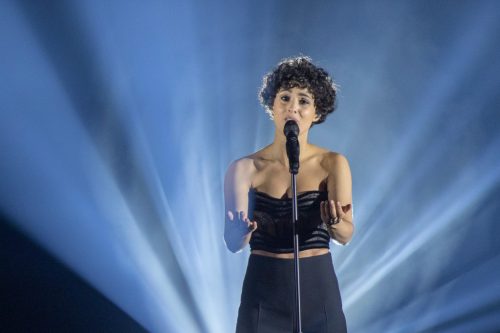
A random French entry

We let the website random.org select a French entry from Eurovision history. It is the 1958 winning song, “Dors Mon Amour”, sung by AndrĂ© Claveau. With the money, he didn’t buy a car or a yacht. No, he bought a cow!

Betting odds

Currently, France takes a third place in the betting odds for winning the Eurovision Song Contest. That means only two entries make more change to win the whole thing. If this comes true, it would be one of the better scores for France, especially in the last few years.

We can not wait for the Eurovision Song Contest in Basel.


Related news

Eurovision 2026

Road to Vienna: Estonia

Road to Vienna: Estonia As we eagerly anticipate the Eurovision Song Contest in Basel, we continue our daily spotlight on this year’s contestants. Today, we focus on Estonia Vanilla Ninja: A Pop-Rock Comeback Story Vanilla Ninja is an Estonian girl band formed in 2002 in Tallinn. The original lineup—Maarja Kivi, Lenna Kuurmaa, Katrin Siska, and Piret Järvis—quickly gained attention with their energetic pop-rock sound. Their 2003 debut album introduced hits like “Club Kung Fu,” which became a fan favorite and boosted their popularity across Estonia and Central Europe. Eurovision Breakthrough and International Fame With the release of “Traces of Sadness” in 2004, the band expanded its reach. After a lineup change, they represented Switzerland at the Eurovision Song Contest 2005 with “Cool Vibes,” finishing 8th. Their third album, “Blue Tattoo,” and singles like “Tough Enough” helped establish them as one of Estonia’s biggest music exports. Lineup Changes and Musical Evolution Following more lineup changes, Vanilla Ninja continued as a trio and released “Love Is War” (2006), showcasing a more mature rock sound. Despite continued releases and performances, including the single “Crashing Through the Doors,” the band slowed down and went on hiatus by 2008. Hiatus and Solo Careers (2009–2019) During their long break from 2009 ’till 2019, members pursued individual careers. Lenna Kuurmaa found success as a solo artist and actress, while Maarja Kivi reinvented herself as rock singer Marya Roxx. Fans remained loyal, keeping hopes for a reunion alive. Reunion and New Music  Vanilla Ninja reunited in 2020, releasing their comeback album “Encore” in 2021. After further lineup changes, the band continued as a trio and remained active, releasing new music like. Eurovision Return (2026) In 2026, Vanilla Ninja made a major comeback by winning Eesti Laul with “Too Epic To Be True,” earning them a spot at the Eurovision Song Contest once again. To Epic to be true: A Love That Feels Larger Than Life To Epic to be true  tells the story of a romance that feels almost unreal. The narrator experiences a deep emotional connection that seems guided by fate. Love, destiny, and intensity are at the heart of the track, creating a cinematic and powerful atmosphere. Vulnerability and Self-Doubt Alongside passion, the song explores uncertainty. The narrator questions whether their feelings are too impulsive or naĂŻve. Despite these doubts, they choose to trust their emotions, highlighting themes of honesty, risk, and emotional courage. From Chaos to Clarity A key element of the song is personal growth. The narrator reflects on a previously chaotic life, now transformed by love and stability. This contrast adds depth and shows how meaningful relationships can bring clarity and direction. A Story of Transformation By blending romance with self-discovery, the track delivers a relatable message. It shows how intense love can reshape identity and turn uncertainty into belief, making it both emotional and inspiring for listeners.   Estonia in the Eurovision Song Contest Estonia has participated in the Eurovision Song Contest since 1994 and secured its only victory in 2001 with “Everybody” performed by Tanel Padar, Dave Benton, and 2XL. Another top-3 songs was “Runaway” by Sahlene. She became 3rd. Over the years, Estonia has showcased a diverse range of musical styles, often earning praise for its innovative and bold entries. The country’s commitment to promoting its artists on the international stage remains steadfast, with Eesti Laul serving as a platform for both established and emerging talents. Last years entry, “Espresso Machiato” ended on place 3, in the grand final in Basel.  The Bookmakers Bookmakers are showing little confidence this year, with Estonia currently sitting at the bottom of the rankings. Their chances of reaching the final look quite slim.

Read More »
Eurovision 2026
Anja Kroeze

Road to Vienna: Estonia

Road to Vienna: Estonia As we eagerly anticipate the Eurovision Song Contest in Basel, we continue our daily spotlight on this year’s contestants. Today, we focus on Estonia Vanilla Ninja: A Pop-Rock Comeback Story Vanilla Ninja is an Estonian girl band formed in 2002 in Tallinn. The original lineup—Maarja Kivi, Lenna Kuurmaa, Katrin Siska, and Piret Järvis—quickly gained attention with their energetic pop-rock sound. Their 2003 debut album introduced hits like “Club Kung Fu,” which became a fan favorite and boosted their popularity across Estonia and Central Europe. Eurovision Breakthrough and International Fame With the release of “Traces of Sadness” in 2004, the band expanded its reach. After a lineup change, they represented Switzerland at the Eurovision Song Contest 2005 with “Cool Vibes,” finishing 8th. Their third album, “Blue Tattoo,” and singles like “Tough Enough” helped establish them as one of Estonia’s biggest music exports. Lineup Changes and Musical Evolution Following more lineup changes, Vanilla Ninja continued as a trio and released “Love Is War” (2006), showcasing a more mature rock sound. Despite continued releases and performances, including the single “Crashing Through the Doors,” the band slowed down and went on hiatus by 2008. Hiatus and Solo Careers (2009–2019) During their long break from 2009 ’till 2019, members pursued individual careers. Lenna Kuurmaa found success as a solo artist and actress, while Maarja Kivi reinvented herself as rock singer Marya Roxx. Fans remained loyal, keeping hopes for a reunion alive. Reunion and New Music  Vanilla Ninja reunited in 2020, releasing their comeback album “Encore” in 2021. After further lineup changes, the band continued as a trio and remained active, releasing new music like. Eurovision Return (2026) In 2026, Vanilla Ninja made a major comeback by winning Eesti Laul with “Too Epic To Be True,” earning them a spot at the Eurovision Song Contest once again. To Epic to be true: A Love That Feels Larger Than Life To Epic to be true  tells the story of a romance that feels almost unreal. The narrator experiences a deep emotional connection that seems guided by fate. Love, destiny, and intensity are at the heart of the track, creating a cinematic and powerful atmosphere. Vulnerability and Self-Doubt Alongside passion, the song explores uncertainty. The narrator questions whether their feelings are too impulsive or naĂŻve. Despite these doubts, they choose to trust their emotions, highlighting themes of honesty, risk, and emotional courage. From Chaos to Clarity A key element of the song is personal growth. The narrator reflects on a previously chaotic life, now transformed by love and stability. This contrast adds depth and shows how meaningful relationships can bring clarity and direction. A Story of Transformation By blending romance with self-discovery, the track delivers a relatable message. It shows how intense love can reshape identity and turn uncertainty into belief, making it both emotional and inspiring for listeners.   Estonia in the Eurovision Song Contest Estonia has participated in the Eurovision Song Contest since 1994 and secured its only victory in 2001 with “Everybody” performed by Tanel Padar, Dave Benton, and 2XL. Another top-3 songs was “Runaway” by Sahlene. She became 3rd. Over the years, Estonia has showcased a diverse range of musical styles, often earning praise for its innovative and bold entries. The country’s commitment to promoting its artists on the international stage remains steadfast, with Eesti Laul serving as a platform for both established and emerging talents. Last years entry, “Espresso Machiato” ended on place 3, in the grand final in Basel.  The Bookmakers Bookmakers are showing little confidence this year, with Estonia currently sitting at the bottom of the rankings. Their chances of reaching the final look quite slim.

Read More »
Follow Us: