🇸🇮 Road to Malmö: Slovenia

We can not wait for the Eurovision Song Contest in Malmö. Therefore, we have a closer look at one of the contestants every day. Today: Slovenia.

Raiven

Sara Briški Cirman, famously known as Raiven, is a distinguished Slovenian mezzo-soprano, pop artist, and harpist. Born on April 26, 1996, in Brežice, Slovenia, Raiven has excelled in intertwining the realms of classical and pop music. Her musical journey saw a significant leap when she nearly clinched the ticket to represent Slovenia at the Eurovision Song Contest in 2016 with “Črno bel,” securing second place at the national final Evrovizijska Melodija (EMA). Her continued efforts at EMA, including a third-place finish in 2017 with “Zažarim” and a second-place in 2019 with “Kaos,” culminated in her being selected to represent Slovenia in the Eurovision Song Contest 2024 with “Veronika.”

Raiven’s debut album, “Magenta,” released in 2017, won record of the year from Zlata piščal, highlighting her innovative musical approach. Her collaboration with London’s Metropolis Studios for the EP “REM” further showcased her versatility and garnered widespread acclaim. Raiven has also performed at significant events and with prestigious orchestras, demonstrating her dynamic stage presence and performance skills. In 2021, her song “Vokovi” won the Grand Audience Award at Popevka 21, reinforcing her stature in the music industry.

Educated in classical music from a young age, Raiven has amassed several awards in music competitions and holds a master’s degree in opera solo singing. She has explored various roles in opera and theater, showcasing her broad talent spectrum. In 2023, Raiven was announced as Slovenia’s Eurovision representative with “Veronika,” a testament to her enduring appeal and artistic evolution.

Veronika

Veronika of Desenice, whose tragic tale intertwines with the history of the Counts of Celje, remains a poignant figure in Slovenian cultural memory. Originating from the village of Desinić, her marriage to Frederick II, Count of Celje, sparked controversy due to her lesser social standing, leading to vehement opposition from Frederick’s father, Hermann II. This union set the stage for a harrowing narrative of love, persecution, and eventual murder. Despite being acquitted of witchcraft charges by the court, Veronika’s fate was sealed; she was imprisoned and drowned on the orders of Hermann II in 1425. Her story did not end with her death; Frederick later moved her remains to the Carthusian monastery at Jurklošter, making an endowment in her memory.
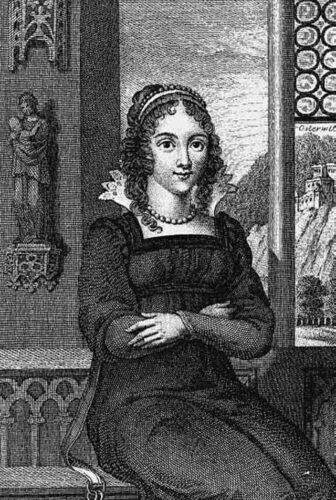
Veronika, Wikimedia Commons

Veronika’s life and untimely demise have inspired numerous literary and artistic works, reflecting on themes of innocence, power, and the enduring nature of love amidst adversity. Her legacy continues to influence Slovenian literature, theater, and music, serving as a muse for creations spanning from the 19th to the 20th century. Additionally, her name graces the Veronika Poetry Award and the Veronika Festival, ensuring her memory lives on in Slovenian culture and beyond.

Slovenia in the Eurovision Song Contest

On 6 occasions, RTV Ljubljana submitted the Yugoslav entry for the Eurovision Song Contest. In 1962, Lola Novaković even reached a 4th place with “Ne pali svetlo u sumrak”. As an independent country, Slovenia started to participate in 1993. Best scoring songs were “Prisluhni mi” by Darja Švajger in 1995 and “Engergy” by Nuša Derenda in 2001. The last few years, high scores were not meant for Slovenia. However, Joker Out, who reached the final last year, managed to do some very succesful tours throughout Europe.

The Bookmakers

Slovenia currently has a 21st place at the bookmakers, which makes Raiven a serious contender to reach the final. And as everything changes as soon as the final is there, a good score might be very well possible for the country.

The song

And this is “Veronika”.

Related news

Eurovision 2026

Vienna 12 points: From MUSEXPO to Musical

Several countries start their second rehearsals in Vienna. As we still don’t have access to the rehearsals, we will do something else. Per entry, we highlight one subject and give you some more information. That can be something about the artist, the song, the lyrics or even something completely different.  Switzerland — Veronica Fusaro, “Alice” Running order: 7 | Rehearsal: 8 May, 15:00–15:25 CEST MUSEXPO is one of the music industry’s key meeting places, where artists, labels, publishers, managers and media professionals come together to discover new talent and discuss the future of music. Founded by A&R Worldwide, the event combines panels, networking sessions, awards and live showcases. It has been held in Los Angeles and has also had European editions, including London, making it a truly international platform. For Eurovision fans, MUSEXPO is interesting because it often gives rising artists a stage before a wider breakthrough. Singer Veronica Fusaro performed at MUSEXPO in London and Los Angeles, showing how the event can connect young talent with influential people from the global music business. Unlike a traditional festival, MUSEXPO is mainly aimed at professionals. Its goal is not only entertainment, but also discovery, cooperation and new opportunities across the music, media and technology world, especially for artists ready to grow internationally today.  Cyprus — Antigoni, “Jalla” Running order: 8 | Rehearsal: 8 May, 15:35–16:00 CEST Tsifteteli is a lively dance style from Greece, Cyprus, Turkey and the wider eastern Mediterranean. The name comes from the Turkish çiftetelli, often linked to a “double string” musical style. In Greek culture, tsifteteli is known for fluid hip movements, expressive arms and a sensual, celebratory feeling. It is often compared with belly dancing, but it also belongs to everyday social life: people dance it at parties, weddings and festivals, not only on stage. That background gives extra colour to Antigoni’s Eurovision lyric “Shake my hips to tsifteteli”. As a British artist with Greek-Cypriot roots, she uses the word as a cultural reference, not just as a dance instruction. In “Jalla”, tsifteteli helps create a Mediterranean party atmosphere, mixing modern pop energy with sounds and movements that many Greek and Cypriot listeners will instantly recognise. For international fans, it is a small word with big cultural meaning at Eurovision 2026 in Vienna.  Latvia — Atvara, “Ēnā” Running order: 9 | Rehearsal: 8 May, 16:10–16:35 CEST Ēnā meaning is central to Latvia’s Eurovision 2026 entry by Atvara. In Latvian, ēna means “shadow” or “shade”, while ēnā means “in the shadow” or “in the shade”. That small grammatical change gives the title extra weight, because the song places its main character inside darkness, not just near it. The lyrics show someone losing confidence, hiding feelings and drifting away from the light. Atvara links this image to the pain of growing up around another person’s addiction, which gives “Ēnā” a personal and emotional meaning. For Eurovision viewers, the title explains the dark atmosphere of Latvia’s entry. This song does not tell a simple story about sadness. It explores fear, family pressure and the courage someone needs to step out of darkness in Vienna at Eurovision 2026. That makes it a strong title for a dramatic performance. “Ēnā” proves how one Latvian word can carry emotion, memory and resilience.  Denmark — Søren Torpegaard Lund, “Før vi går hjem” Running order: 10 | Rehearsal: 8 May, 16:45–17:10 CEST Matador musical brings one of Denmark’s best-loved classics to the stage. The story comes from DR’s “Matador”, with scripts by Lise Nørgaard and direction by Erik Balling, and takes audiences back to the fictional town of Korsbæk. There, banker Hans Christian Varnæs and newcomer Mads Skjern represent two families, two social worlds and a changing Denmark before and during the Second World War. In 2024, One & Only Musicals presented a new original version with songs by Lise Cabble and Burhan G. The production mixed nostalgia, humour, ambition and family drama with a fresh musical sound. Søren Torpegaard Lund played Daniel Skjern, the son of Mads and Ingeborg Skjern. His role gave him a touching solo moment with “En dreng som mig”, a song about expectations and identity. For Eurovision fans, Matador shows the theatre background behind Denmark’s 2026 artist and adds context to his performance skills on the Eurovision stage in Vienna.  

Read More »
Eurovision 2026
Martijn

Vienna 12 points: From MUSEXPO to Musical

Several countries start their second rehearsals in Vienna. As we still don’t have access to the rehearsals, we will do something else. Per entry, we highlight one subject and give you some more information. That can be something about the artist, the song, the lyrics or even something completely different.  Switzerland — Veronica Fusaro, “Alice” Running order: 7 | Rehearsal: 8 May, 15:00–15:25 CEST MUSEXPO is one of the music industry’s key meeting places, where artists, labels, publishers, managers and media professionals come together to discover new talent and discuss the future of music. Founded by A&R Worldwide, the event combines panels, networking sessions, awards and live showcases. It has been held in Los Angeles and has also had European editions, including London, making it a truly international platform. For Eurovision fans, MUSEXPO is interesting because it often gives rising artists a stage before a wider breakthrough. Singer Veronica Fusaro performed at MUSEXPO in London and Los Angeles, showing how the event can connect young talent with influential people from the global music business. Unlike a traditional festival, MUSEXPO is mainly aimed at professionals. Its goal is not only entertainment, but also discovery, cooperation and new opportunities across the music, media and technology world, especially for artists ready to grow internationally today.  Cyprus — Antigoni, “Jalla” Running order: 8 | Rehearsal: 8 May, 15:35–16:00 CEST Tsifteteli is a lively dance style from Greece, Cyprus, Turkey and the wider eastern Mediterranean. The name comes from the Turkish çiftetelli, often linked to a “double string” musical style. In Greek culture, tsifteteli is known for fluid hip movements, expressive arms and a sensual, celebratory feeling. It is often compared with belly dancing, but it also belongs to everyday social life: people dance it at parties, weddings and festivals, not only on stage. That background gives extra colour to Antigoni’s Eurovision lyric “Shake my hips to tsifteteli”. As a British artist with Greek-Cypriot roots, she uses the word as a cultural reference, not just as a dance instruction. In “Jalla”, tsifteteli helps create a Mediterranean party atmosphere, mixing modern pop energy with sounds and movements that many Greek and Cypriot listeners will instantly recognise. For international fans, it is a small word with big cultural meaning at Eurovision 2026 in Vienna.  Latvia — Atvara, “Ēnā” Running order: 9 | Rehearsal: 8 May, 16:10–16:35 CEST Ēnā meaning is central to Latvia’s Eurovision 2026 entry by Atvara. In Latvian, ēna means “shadow” or “shade”, while ēnā means “in the shadow” or “in the shade”. That small grammatical change gives the title extra weight, because the song places its main character inside darkness, not just near it. The lyrics show someone losing confidence, hiding feelings and drifting away from the light. Atvara links this image to the pain of growing up around another person’s addiction, which gives “Ēnā” a personal and emotional meaning. For Eurovision viewers, the title explains the dark atmosphere of Latvia’s entry. This song does not tell a simple story about sadness. It explores fear, family pressure and the courage someone needs to step out of darkness in Vienna at Eurovision 2026. That makes it a strong title for a dramatic performance. “Ēnā” proves how one Latvian word can carry emotion, memory and resilience.  Denmark — Søren Torpegaard Lund, “Før vi går hjem” Running order: 10 | Rehearsal: 8 May, 16:45–17:10 CEST Matador musical brings one of Denmark’s best-loved classics to the stage. The story comes from DR’s “Matador”, with scripts by Lise Nørgaard and direction by Erik Balling, and takes audiences back to the fictional town of Korsbæk. There, banker Hans Christian Varnæs and newcomer Mads Skjern represent two families, two social worlds and a changing Denmark before and during the Second World War. In 2024, One & Only Musicals presented a new original version with songs by Lise Cabble and Burhan G. The production mixed nostalgia, humour, ambition and family drama with a fresh musical sound. Søren Torpegaard Lund played Daniel Skjern, the son of Mads and Ingeborg Skjern. His role gave him a touching solo moment with “En dreng som mig”, a song about expectations and identity. For Eurovision fans, Matador shows the theatre background behind Denmark’s 2026 artist and adds context to his performance skills on the Eurovision stage in Vienna.  

Read More »
Follow Us: