đŸ‡©đŸ‡° Road To Malmö: Denmark

We can not wait for the Eurovision Song Contest in Malmö. Therefore, we have a closer look at one of the contestants every day. Today: Denmark.

Saba

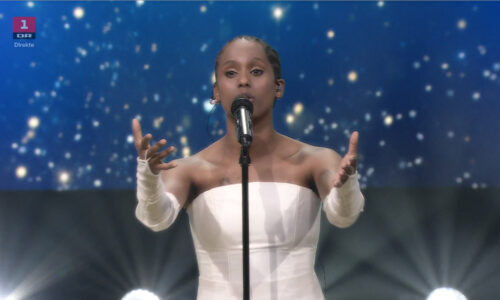
Saba, whose real name is Anna Saba Lykke OehlenschlĂŠger, is a singer, actor, and model from Denmark. She and her twin sister were adopted from Ethiopia when they were just eight months old and grew up in a place called RingkĂžbing in Denmark. Saba has had a challenging journey; she shared that she has bipolar I disorder and has been in the hospital many times until 2020. She talked about these struggles in a documentary called “My Insane Twin.” She also works to help others as an ambassador for the Danish Depression Association.

Saba left high school early and moved to Copenhagen with her sister. She started working as a model and in the teeth whitening business. Her sister chose singing and musical theater. Saba’s big moment in acting came in 2023 when she played Dionne in the musical “Hair,” taking over for her sister who was pregnant.

In 2024, Saba’s music career took off when she won a big competition in Denmark with her song “Sand.” This win means she will represent Denmark in the Eurovision Song Contest, a huge international music competition.

Dansk Melodi Grand Prix

Since the first moment Denmark took part in the Eurovision Song Contest, Melodi Grand Prix was the national final. In Denmark, it’s almost always a one evening event. This year, eight contestants competed. Among them, former Eurovision participant Basim. In a superfinal with three songs, jury and televoter chose the winner. Saba was the favourite of the jury, while Basim was the televoter’s winner. Overall, Saba had the highest amount of points.

Denmark in the Eurovision Song Contest

Denmark debuted in the Eurovision Song Contest with “Skibet skal sejle i nat”, sung by Birthe Wilke and Gustav Winckler. The duo ended the song with a long and passionate kiss. So many years later, that kiss is still the talk of the town. 

The first Danish victory came in 1963 with Grethe and JĂžrgen Ingmann and their “Dansevise”. Denmark quit the contest after 1966, unsatisfied with the blockvoting. They only returned in 1978, and despite high scores, they had to wait until 2000. The Olsen Brothers won the contest with the song “Fly on the wings of love”. A third victory followed in 2013 with Emmelie De Forrest‘s “Only teardrops”. It’s already since 2019 that Denmark reached the final, so there is a task for Saba.

The Bookmakers

Currently, Saba is no. 25 in the odds for the winner of the Eurovision Song Contest. For the semifinal, her song “Sand” has an 11th place. That means it’s gonna be exciting for Denmark according to the bookmakers.

The song

And this is the song:

Related news

Eurovision 2026

Eurovision 2026 reactions after second semi-final

The Eurovision 2026 reactions continued immediately after Thursday night’s second semi-final in Vienna. Bulgaria, Ukraine, Norway, Australia, Romania, Malta, Cyprus, Albania, Denmark and Czechia qualified for Saturday’s Grand Final. Azerbaijan, Luxembourg, Armenia, Switzerland and Latvia did not make it through. Since Eurovision will only reveal the detailed ranking after the final, the “winners” of the night are again the ten qualifiers. Social media quickly filled with tears, hugs and short messages from the green room. Qualifiers celebrate their Grand Final place Bulgaria’s DARA was the first name announced, and her disbelief was clear. In a filmed reaction, she said she “could not believe” it, while also underlining how much she loved being on stage with “Bangaranga”. Ukraine’s LELÉKA reacted with a softer kind of joy. She said she felt happy, hopeful and “lightful” after taking “Ridnym” to the final. Australia’s Delta Goodrem also moved quickly into gratitude mode. After qualifying with “Eclipse”, she called the moment “pure magic” and thanked fans for every vote, message and bit of love. Norway’s Jonas Lovv sounded equally relieved. Speaking to Norwegian press, he said the result felt “insanely” good and joked that his celebration plan was to go straight to bed. Malta’s AIDAN gave one of the most emotional reactions of the night. He said he was “genuinely so happy” and pointed out that the Maltese language was back on the Eurovision stage after 54 years. Denmark’s Sþren Torpegaard Lund described himself as overwhelmed and happy, while Czechia’s Daniel Zizka said he was grateful, tired and still trying to understand what had happened. Albania’s Alis also remained emotional after “Nñn” reached the final. Cyprus’ Antigoni thanked everyone who supported “JALLA” and said she had felt confident Cyprus could qualify. Romania’s Alexandra Căpitănescu also celebrated online after “Choke Me” secured Romania a place in the Grand Final. For all ten qualifiers, the mood immediately shifted from nerves to preparation for Saturday. Non-qualifiers thank fans and look back For the five non-qualifiers, the Eurovision 2026 reactions were more reflective. Luxembourg’s Eva Marija looked back with pride after “Mother Nature” missed the final. She said she had given everything, was proud of herself and felt grateful for the Eurovision adventure. Azerbaijan’s JIVA ended her performance by thanking Europe, but “Just Go” did not qualify. Armenia’s SIMÓN, Switzerland’s Veronica Fusaro and Latvia’s Atvara also stayed in the semi-final. Their latest Eurovision messages focused on the performance itself, the meaning behind their songs and the support around them. That made their reactions quieter, but not less meaningful. The second semi-final therefore showed the familiar two sides of Eurovision: pure celebration for the qualifiers and gratitude, disappointment and pride for those whose Vienna journey ended before Saturday.

Read More »
Eurovision 2026
Martijn

Eurovision 2026 reactions after second semi-final

The Eurovision 2026 reactions continued immediately after Thursday night’s second semi-final in Vienna. Bulgaria, Ukraine, Norway, Australia, Romania, Malta, Cyprus, Albania, Denmark and Czechia qualified for Saturday’s Grand Final. Azerbaijan, Luxembourg, Armenia, Switzerland and Latvia did not make it through. Since Eurovision will only reveal the detailed ranking after the final, the “winners” of the night are again the ten qualifiers. Social media quickly filled with tears, hugs and short messages from the green room. Qualifiers celebrate their Grand Final place Bulgaria’s DARA was the first name announced, and her disbelief was clear. In a filmed reaction, she said she “could not believe” it, while also underlining how much she loved being on stage with “Bangaranga”. Ukraine’s LELÉKA reacted with a softer kind of joy. She said she felt happy, hopeful and “lightful” after taking “Ridnym” to the final. Australia’s Delta Goodrem also moved quickly into gratitude mode. After qualifying with “Eclipse”, she called the moment “pure magic” and thanked fans for every vote, message and bit of love. Norway’s Jonas Lovv sounded equally relieved. Speaking to Norwegian press, he said the result felt “insanely” good and joked that his celebration plan was to go straight to bed. Malta’s AIDAN gave one of the most emotional reactions of the night. He said he was “genuinely so happy” and pointed out that the Maltese language was back on the Eurovision stage after 54 years. Denmark’s Sþren Torpegaard Lund described himself as overwhelmed and happy, while Czechia’s Daniel Zizka said he was grateful, tired and still trying to understand what had happened. Albania’s Alis also remained emotional after “Nñn” reached the final. Cyprus’ Antigoni thanked everyone who supported “JALLA” and said she had felt confident Cyprus could qualify. Romania’s Alexandra Căpitănescu also celebrated online after “Choke Me” secured Romania a place in the Grand Final. For all ten qualifiers, the mood immediately shifted from nerves to preparation for Saturday. Non-qualifiers thank fans and look back For the five non-qualifiers, the Eurovision 2026 reactions were more reflective. Luxembourg’s Eva Marija looked back with pride after “Mother Nature” missed the final. She said she had given everything, was proud of herself and felt grateful for the Eurovision adventure. Azerbaijan’s JIVA ended her performance by thanking Europe, but “Just Go” did not qualify. Armenia’s SIMÓN, Switzerland’s Veronica Fusaro and Latvia’s Atvara also stayed in the semi-final. Their latest Eurovision messages focused on the performance itself, the meaning behind their songs and the support around them. That made their reactions quieter, but not less meaningful. The second semi-final therefore showed the familiar two sides of Eurovision: pure celebration for the qualifiers and gratitude, disappointment and pride for those whose Vienna journey ended before Saturday.

Read More »
Follow Us: