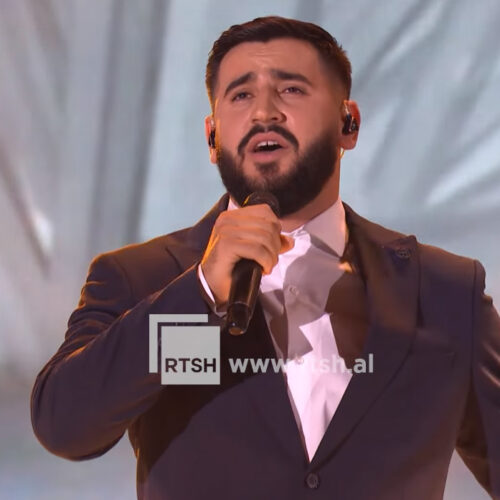
đŸ‡ŠđŸ‡± Tonight is the night for Albania

Happy FiKmas, that is what Eurovision fans wish eachother at the end of December. FiK stands for Festivali i Këngës. And tonight, the final will be held. Just as last year, the expert jury will decide who wins Festivali i Këngës 2023. However, a televoting jury will pick the Eurovision participant.

The show starts at 21.00 CET and you can watch it here, here and on YouTube. These are the 22 participants, in alfabetical order:

Andi Tanko Hëre pas here
Anduel Kovaci Nan’
Arsi Bako Zgjohu
Besa KokĂ«dhima ZemrĂ«n n’dorĂ«
Besa Krasniqi Esenciale
Big Basta & Vesa Luma Mbinatyrale
Eldis Arrnjeti Një kujtim
Elsa Lila Mars
Erina & The Elementals JetĂ«n n’Skaj
Festina Mejzini Melos
Irma Lepuri MĂ« prit
Kastro Zizo 2073
Kleansa Susaj Pikturë
Mal Retkoceri Çmendur
Martina Serreqi Vetëm ty
Melodajn Mancaku Nuk jemi ne
Michela Paluca Për veten
Olimpia Smajlaj Asaj
PeterPan Quartet Edhe një hëre
Sergio Hajdini Uragan
Shpat Depa S’mund tĂ« fitoj pa ty
Tiri Gjoci Në ëndërr

Andi Tanko took part in the 2016 semifinal.
Arsi Bako took part in the 2023 semifinal.
Besa Kokëdhima
 already took part in 2009 (4th) and 2011 (8th).
Besa Krasniqi took part in 2016 (final).
Elsa Lila won Festivali i Këngës last year, but the choice of the televoters went to Eurovision.
Festina Mejzini was present in 2017 (semifinal), 2018 (final) and 2021 (3rd).
Kastro Zizo participated in 2020 (semifinal), 2021 (final) and 2022 (semifinal).
Melodajn Mancaku and Sergio Hajdini both reached the final in 2023.
Olimpia Smajlaj reached the final in 2022.
Tiri Gjoci participated in 2018 (final) and 2020 (final).
Vesa Luma took part in 2005 (final), 2008 (semifinal) and 2013 (15th).

Related news

History

70 years of Eurovision: holding up signs

The Eurovision Song Contest is celebrating its 70th anniversary. That is a wonderful milestone. We at Eurovision Universe love diving into the history of the contest. That is why we are taking a closer look at the contests of the past 70 years. 1971 Sweden, Finland, Norway, Austria, and Portugal returned. Malta made its debut. Enthused by the 1970 festival, everyone dared to give it another try. The scoring system changed drastically. Each country had two jurors; one over 25 and one under. They indicated their votes by holding up signs live on television. It all took place in Dublin, where everything was held at the Gaiety Theatre. That is not entirely true: all sorts of things happened just outside the theatre. Almost every protest group to be found in Ireland was standing there. From Irish feminists and people opposed to hunting and Irish people against color television, to an action group promoting the Irish language. They didn’t like the Eurovision Song Contest. “Very low level pop music,” one of the protesters called it when asked. The Belgian duo Nicole and Hugo were very unlucky. Although they had won the national final, the two could not travel to Dublin because Nicole contracted jaundice. They were replaced by Jacques Raymond and Lily Castel. This duo had to practice the dance steps in their hotel room. For Austria, Marianne Mendt sang in a Viennese dialect. The 15-year-old Norwegian Hanne Krogh sang her song with a small parasol. We would see her again more often in the future. And then there was Clodagh Rodgers for the United Kingdom. It wasn’t fun for her in Dublin. As a Catholic Northern Irish lady, she received many threats, including death threats. Fortunately, there is also a cheerful note about her: she and her song “Jack in the Box” starred in an episode of ‘Monty Python’s Flying Circus’. SĂ©verine It was Monaco that walked away with the trophy. The French singer SĂ©verine represented the principality. By doing so, she comfortably beat the Spanish Karina and the German Katja Ebstein. “Un banc, un arbre, une rue” was her song. The song became a huge hit, even reaching number 1 in Belgium. She also finished in the top 3 in Ireland and Norway. SĂ©verine later participated in national finals in Germany twice more but did not win them. 1972 The same countries as in 1971 participated. The jury was now strictly guarded and was not allowed to leave Edinburgh Castle, where they awarded the points. The festival itself took place in the Usher Hall. Surprisingly, not Cathy Boyle, but Moira Shearer was the presenter. Vicky Leandros returned for Luxembourg. The Family Four represented Sweden for the second time. Tereza, who once participated for Monaco, now sang for her native country, Yugoslavia. We do not want to leave Ireland unmentioned: for the first and only time, the country sang in its regional language, Gaelic. Sandra and Andres participated for the Netherlands. They also came up with something new: they got the audience happily clapping along to their song. The duo ultimately finished fourth. The two were overtaken by Mary Roos, who participated on behalf of Germany and mainly complained that she was staying in such a cold hotel. The New Seekers were the favorites. Their song “Beg, Steal or Borrow” became an international hit. The duo representing Malta, Helen & Joseph, were promised a statue on the island if they won. Spoiler: the statue never materialized, as the two finished last. Vicky Leandros Vicky Leandros won by a considerable margin. “AprĂšs Toi” was the undisputed winner of the festival. Yves Dessca wrote the lyrics, and the composers were Klaus Munro and Mario Panas. The latter was actually secretly Leo Leandros, Vicky’s father, under a pseudonym. The story goes that Vicky had first offered the songs from her album to Germany, but the German broadcaster politely declined. She then translated all the songs into French and asked Luxembourg if they were interested. The rest is history. 1973 Austria and Malta dropped out. However, there were still 17 countries because Israel made its debut. This did mean, however, that the Nouveau Théùtre Municipal in Luxembourg was very heavily guarded. In this impregnable fortress, Helga Guitton hosted the 1973 Eurovision Song Contest. Nicole and Hugo were allowed to participate for Belgium this time. In bright purple suits, they finished last with their “Baby Baby.” They did, however, achieve immortal status with it, as the two appear in just about every compilation of Eurovision songs. The Finnish Marion Rung made a comeback, improving her own record for Finland (from seventh to sixth place). Massimo Ranieri also participated for Italy for a second time. And yes, Cliff Richard was back too. With “Power To All Our Friends,” he was once again the favorite, yet once again he failed to win. The Spanish group Mocedades also failed to do so, securing second place and a worldwide hit with their “Eres Tu.” We also do not want to leave The Nova from Sweden unmentioned. In their home country, they had defeated Abba in the national selection. At the time, the duo was still called The Malta. To avoid confusion with the country, they changed their name. The lyrics were striking, to say the least: “Oh your breasts are like swallows a nestling,” the duo sang enthusiastic. But anyway, Nicole and Hugo sang in their song “Een vrouw kan niets alleen” (A woman can do nothing alone). 1973 was not a very woman-friendly year. Anne-Marie David It was, however, the year of a girl from the Camargue who loved horses: Anne-Marie David. She participated for host country Luxembourg and she won with “Tu te reconnaĂźtras”. Although the entire team was French, there was still a real Luxembourgish touch to it: conductor Pierre CaĂł was a true Luxemburger. But whether the Luxembourg broadcaster was happy that the country won again is doubtful. Anne-Marie David would return to the Eurovision Song Contest six years later and still enjoys performing

Read More »
History
Martijn

70 years of Eurovision: holding up signs

The Eurovision Song Contest is celebrating its 70th anniversary. That is a wonderful milestone. We at Eurovision Universe love diving into the history of the contest. That is why we are taking a closer look at the contests of the past 70 years. 1971 Sweden, Finland, Norway, Austria, and Portugal returned. Malta made its debut. Enthused by the 1970 festival, everyone dared to give it another try. The scoring system changed drastically. Each country had two jurors; one over 25 and one under. They indicated their votes by holding up signs live on television. It all took place in Dublin, where everything was held at the Gaiety Theatre. That is not entirely true: all sorts of things happened just outside the theatre. Almost every protest group to be found in Ireland was standing there. From Irish feminists and people opposed to hunting and Irish people against color television, to an action group promoting the Irish language. They didn’t like the Eurovision Song Contest. “Very low level pop music,” one of the protesters called it when asked. The Belgian duo Nicole and Hugo were very unlucky. Although they had won the national final, the two could not travel to Dublin because Nicole contracted jaundice. They were replaced by Jacques Raymond and Lily Castel. This duo had to practice the dance steps in their hotel room. For Austria, Marianne Mendt sang in a Viennese dialect. The 15-year-old Norwegian Hanne Krogh sang her song with a small parasol. We would see her again more often in the future. And then there was Clodagh Rodgers for the United Kingdom. It wasn’t fun for her in Dublin. As a Catholic Northern Irish lady, she received many threats, including death threats. Fortunately, there is also a cheerful note about her: she and her song “Jack in the Box” starred in an episode of ‘Monty Python’s Flying Circus’. SĂ©verine It was Monaco that walked away with the trophy. The French singer SĂ©verine represented the principality. By doing so, she comfortably beat the Spanish Karina and the German Katja Ebstein. “Un banc, un arbre, une rue” was her song. The song became a huge hit, even reaching number 1 in Belgium. She also finished in the top 3 in Ireland and Norway. SĂ©verine later participated in national finals in Germany twice more but did not win them. 1972 The same countries as in 1971 participated. The jury was now strictly guarded and was not allowed to leave Edinburgh Castle, where they awarded the points. The festival itself took place in the Usher Hall. Surprisingly, not Cathy Boyle, but Moira Shearer was the presenter. Vicky Leandros returned for Luxembourg. The Family Four represented Sweden for the second time. Tereza, who once participated for Monaco, now sang for her native country, Yugoslavia. We do not want to leave Ireland unmentioned: for the first and only time, the country sang in its regional language, Gaelic. Sandra and Andres participated for the Netherlands. They also came up with something new: they got the audience happily clapping along to their song. The duo ultimately finished fourth. The two were overtaken by Mary Roos, who participated on behalf of Germany and mainly complained that she was staying in such a cold hotel. The New Seekers were the favorites. Their song “Beg, Steal or Borrow” became an international hit. The duo representing Malta, Helen & Joseph, were promised a statue on the island if they won. Spoiler: the statue never materialized, as the two finished last. Vicky Leandros Vicky Leandros won by a considerable margin. “AprĂšs Toi” was the undisputed winner of the festival. Yves Dessca wrote the lyrics, and the composers were Klaus Munro and Mario Panas. The latter was actually secretly Leo Leandros, Vicky’s father, under a pseudonym. The story goes that Vicky had first offered the songs from her album to Germany, but the German broadcaster politely declined. She then translated all the songs into French and asked Luxembourg if they were interested. The rest is history. 1973 Austria and Malta dropped out. However, there were still 17 countries because Israel made its debut. This did mean, however, that the Nouveau Théùtre Municipal in Luxembourg was very heavily guarded. In this impregnable fortress, Helga Guitton hosted the 1973 Eurovision Song Contest. Nicole and Hugo were allowed to participate for Belgium this time. In bright purple suits, they finished last with their “Baby Baby.” They did, however, achieve immortal status with it, as the two appear in just about every compilation of Eurovision songs. The Finnish Marion Rung made a comeback, improving her own record for Finland (from seventh to sixth place). Massimo Ranieri also participated for Italy for a second time. And yes, Cliff Richard was back too. With “Power To All Our Friends,” he was once again the favorite, yet once again he failed to win. The Spanish group Mocedades also failed to do so, securing second place and a worldwide hit with their “Eres Tu.” We also do not want to leave The Nova from Sweden unmentioned. In their home country, they had defeated Abba in the national selection. At the time, the duo was still called The Malta. To avoid confusion with the country, they changed their name. The lyrics were striking, to say the least: “Oh your breasts are like swallows a nestling,” the duo sang enthusiastic. But anyway, Nicole and Hugo sang in their song “Een vrouw kan niets alleen” (A woman can do nothing alone). 1973 was not a very woman-friendly year. Anne-Marie David It was, however, the year of a girl from the Camargue who loved horses: Anne-Marie David. She participated for host country Luxembourg and she won with “Tu te reconnaĂźtras”. Although the entire team was French, there was still a real Luxembourgish touch to it: conductor Pierre CaĂł was a true Luxemburger. But whether the Luxembourg broadcaster was happy that the country won again is doubtful. Anne-Marie David would return to the Eurovision Song Contest six years later and still enjoys performing

Read More »
Follow Us: