About
Biography
Early Band Years and Musical Beginnings
Mikel Herzog is a Spanish singer and songwriter from the Basque Country. He began his music career in the late 1970s and spent the 1980s performing with several bands. He even formed his own pop-rock group called Ébano during that time. Herzog later moved to Madrid and joined more prominent acts. He served briefly as the drummer for the band Cadillac, which had represented Spain at Eurovision 1986. By the end of the decade, he became a member of the popular ensemble La Década Prodigiosa, known for representing Spain at Eurovision 1988. These early experiences on stage helped Herzog develop his talent and prepared him for a successful solo career.
Songwriting Breakthroughs in the 1990s
During his time with bands, Herzog also discovered a passion for songwriting. After leaving La Década Prodigiosa, he focused on writing songs for other artists. In the early 1990s he penned “Tractor amarillo,” a catchy novelty tune that became a major radio hit in Spain in 1993. Moreover, he co-wrote two hit songs, “La Puerta del Colegio” (1991) and “Mi Amada” (1993), for the Mexican pop group Magneto, alongside his collaborator Alberto Estébanez. He even contributed to a track for a young Ricky Martin, adapting a song for the Latin pop star early in his career. These songwriting successes earned Herzog recognition in the Latin pop music scene and demonstrated his versatility as an artist.
Launch of Solo Career and Albums
By 1992, Mikel Herzog was ready to step into the spotlight as a solo artist. He released his debut album Bienvenidos al paraíso in 1992. The album marked the beginning of his journey as a singer-songwriter in his own right. Two years later, he followed up with a second album titled Un regalo de amor in 1994. That same year, Herzog recorded a duet called “Hasta el final del mundo” with pop diva Mónica Naranjo for the soundtrack of the animated film The Swan Princess. In 1996, Herzog entered the Benidorm Song Festival, with a powerful ballad, “La magia del amor.” He earned second place and won the Silver Siren award at Benidorm. The song’s success inspired the title of his third album, La magia del amor, released in 1996. By this point, Herzog had established himself as a notable solo act with a distinctive romantic pop style.
Eurovision Song Contest 1998
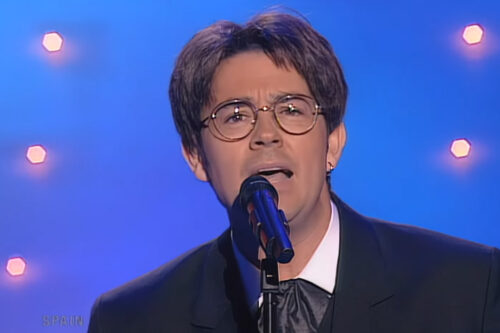
In early 1998, Herzog achieved a career milestone when broadcaster TVE internally selected him to represent Spain at the Eurovision Song Contest. He wrote and performed the song “¿Qué voy a hacer sin ti?” (“What Will I Do Without You?”) on the Eurovision stage in Birmingham on May 9, 1998. There were high hopes for this ballad. However, the competition was tough that year. Herzog’s song finished in 16th place out of 25 entries in the final ranking. Despite the result, his Eurovision appearance brought him widespread visibility across Europe. The experience also led to the release of an album named ¿Qué voy a hacer sin ti? in 1998, which featured his Eurovision song and other tracks for his fans.
Later Career, Television and More Albums
After Eurovision, Herzog continued to stay active in music and media. In 1999 he delivered another studio album, En tu mano está, further expanding his discography. Around the same time, he maintained a close friendship and touring partnership with fellow Spanish singer Serafín Zubiri, whom he had assisted at Eurovision 1992. A few years later, Herzog found a new avenue for his talents on television.
In 2001, he joined the team of the hit TV talent show Operación Triunfo, which was designed to select Spain’s next Eurovision entrant. He worked as the post-academy director, mentoring young singers after their elimination and preparing them for tour performances. This high-profile role on a prime-time show gave his career a boost and connected him with a new generation of artists. In 2006, Herzog released his sixth solo album, Cómo pasa el tiempo, after a brief recording hiatus. Not only did this album mark his return to the studio, but it also had a philanthropic side. He dedicated part of the proceeds to an Alzheimer’s disease foundation. The following year, in 2007, Herzog was back in the Eurovision sphere as one of the five jurors on Misión Eurovisión 2007, Spain’s national selection show. His expertise and experience as a former contestant made him a valuable judge.
Recent Years and Legacy
By the 2010s, Mikel Herzog began to shift his focus away from the hectic music industry. In 2010, he decided to take charge of a family-run maritime logistics company, seeking more stability after decades in show business. He admitted that he was a bit tired of the music world’s ups and downs and found a new passion in the business realm. However, Herzog has never completely left music behind. It has become more of a beloved hobby for him now. He occasionally collaborates with old friends. For instance, he has helped his colleague Serafín Zubiri produce live music shows in Spain. In addition, he has taken on the role of mentor at home, guiding the budding musical careers of his two children, who have also pursued music. Over the years, Mikel Herzog has released six solo albums in total and has worn many hats in the music industry.
Entries
¿Qué voy a hacer sin ti?
Backings
Esmeralda Cayuelas
Andrea Bronston
Sol Pilas
Adolfo Rodríguez
José María Guzmán
Results
Points: 21
Position: 16
Running order: 4