About
Biography
Marcos Llunas biography
Marcos Llunas is a Spanish singer-songwriter with a long career in Spain and Latin America. Born Marcos Gómez Llunas in Madrid on 29 September 1971, he grew up in Barcelona in a musical family. He is the son of singer Dyango, but he created his own place in pop music at a young age. In 1993, he released his first album, Marcos Llunas. The record became a gold album in much of Latin America, and songs such as “Para reconquistarte” and “Por amor” gave him early success. Very quickly, he became known in markets such as Mexico, Peru, Chile, and Spain.
Early breakthrough in the 1990s
After that strong debut, Llunas kept moving forward. In the mid-1990s, he recorded Piel a piel, a key album produced by Juan Carlos Calderón. Around the same time, he reached one of the first big peaks of his career. In 1995, he won the OTI Festival for Spain with the song “Eres mi debilidad.” That victory gave him even more visibility across the Spanish-speaking world. Then, in 1996, he released Vida, another important album in his catalogue. By then, Marcos Llunas was a steady name in Latin pop.
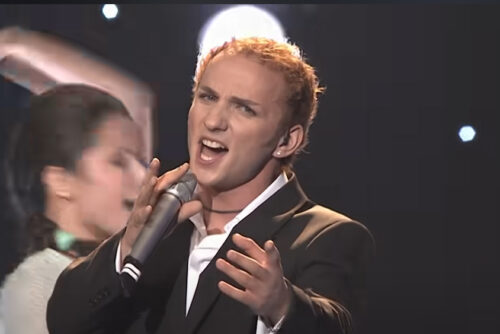
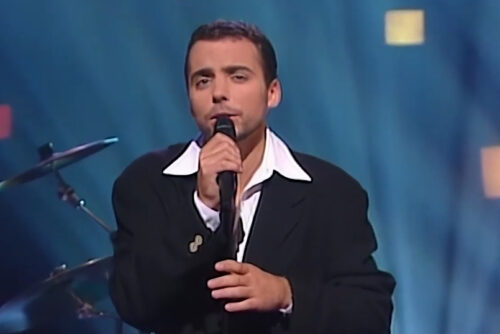
In 1997, he added another major chapter to his story. He released the album Mi historia and represented Spain at the Eurovision Song Contest with “Sin rencor.” He finished sixth in Dublin. However, Eurovision worked as a high-profile international moment inside a much broader path. He continued to record, tour, and expand his audience after the contest.
New albums and a wider career
Llunas did not slow down after Eurovision. In 1999, he released Pluja d’estels, his first album in Catalan. In the same year, he also issued Desnudo, a project that showed him as a singer, composer, producer, and interpreter. Later, he added Me gusta in 2002, Hechicera in 2003, and Mi retrato in 2004. These records showed a singer who wanted to keep developing instead of living only on earlier hits. At the same time, he stayed especially popular in Latin America, where his romantic pop style kept a loyal audience.
His work also moved beyond albums. In 2001, he performed at the White House during Hispanic Heritage celebrations. He also collaborated on a world music project by Emilio Estefan. Soon after, he appeared on Spanish television as part of the jury on Operación Triunfo and Lluvia de estrellas. In Mexico, he later joined the program Disco de Oro. He also studied opera and composed and performed a song for FC Barcelona. These projects showed a career with many directions, not just one formula.
Latin America, television, and tribute projects
In the 2010s, Marcos Llunas strengthened his ties with Latin America again. In 2012, he released A la voz del alma, a tribute album to his father Dyango. The project became another important step in his mature career, and his official biography states that it achieved gold status in Peru. In the same period, he worked on television as a coach on Chile’s El Mejor de Chile alongside Myriam Hernández and Américo. He also worked as a coach on La Voz Perú. Therefore, he stayed visible both as a recording artist and as a television figure.
He also recorded songs for television drama. In 2013, he recorded “Para Siempre” with Rommy Marcovich for the soundtrack of the Peruvian telenovela Al Fondo Hay Sitio. By 2015, he released “Rosa sin Espinas” with Paolo Meneguzzi. He also recorded a new duet version of “Corazón mágico” with David Cavazos. His single “Que te vaya bien” became part of the soundtrack of the telenovela Mis tres Marías. Then, in 2016, he released “No te vayas,” a single with bachata elements. A year later, he sang the main theme for the Peruvian telenovela Colorina. In 2018, he returned with the album Latinísimo.
Marcos Llunas today
His later career has remained active. After celebrating 25 years in music with a tour across several Latin American countries, he continued to perform in Chile, Mexico, and Peru in 2019 and 2020. He also kept releasing collaborations and singles. In 2020, he appeared on “Sentir” and “Resistiré, la Salsa Nos Une.” In 2024, he released “Para Reconquistarte,” “Reconquistarte,” and “No Dejo de Pensarte.” Then, in 2025, he added “Te vas,” “La Navidad Llegó a Tu Casa,” and “El primer beso,” the last one with Dyango. Today, Marcos Llunas remains an active artist whose career reaches far beyond one Eurovision appearance. He built it through hit songs, festival success, television work, and a lasting connection with Latin American audiences.