Weekly Update

It’s Tuesday, March 10, 2026, and time for another weekly Eurovision update! The past week was one of the busiest yet on the road to Vienna. Nine countries revealed their entries for Eurovision 2026, adding fresh songs and artists to the line-up. Sweden launched a new preview show to hype up the contest, and two countries released revamped versions of their songs. Czechia also confirmed its representative. Meanwhile, the betting odds shifted as new favorites emerged. Here are this week’s top stories:

New Eurovision Entries Confirmed
🇷🇴 Romania

Alexandra Căpitănescu won Romania’s Selecția Națională 2026 with her power ballad “Choke Me,” earning her the ticket to Eurovision 2026 in Vienna.

🇮🇱 Israel

Israel revealed its entry “Michelle,” which Noam Bettan will perform in Vienna. Noam secured his spot by winning HaKokhav Haba (The Next Star), and the upbeat track features lyrics in Hebrew, English, and French.

🇬🇧 United Kingdom

The BBC internally selected electronic artist Look Mum No Computer (Sam Battle) to represent the UK. His song “Eins Zwei Drei” premiered this week, bringing an experimental electro-pop flair to Britain’s 2026 entry.

🇫🇷 France

France Télévisions announced that 17-year-old singer Monroe will represent France with the song “Regarde !”. This theatrical pop track blends elements of opera and modern pop, delivering a universal love message. Its reveal also shot France up the betting rankings.

🇸🇲 San Marino

San Marino is sending a familiar face. Senhit will represent the nation for a third time, this round featuring ’80s pop icon Boy George. They won Una Voce per San Marino and will perform the synth-pop song “Superstar” in the second semifinal.

🇸🇪 Sweden

Melodifestivalen 2026 concluded with Felicia taking the crown. Her catchy pop song “My System” won the jury and public vote (161 points total). Felicia will fly the Swedish flag in Vienna, aiming to continue Sweden’s strong Eurovision track record.

🇵🇹 Portugal

Folk group Bandidos do Cante triumphed at Festival da Canção 2026 with their song “Rosa.” Despite pre-contest rumors that some acts might decline the ticket, Bandidos do Cante confirmed they will proudly represent Portugal in Eurovision 2026.

🇵🇱 Poland

Poland chose Alicja as its act for Vienna. The 22-year-old singer-songwriter will perform her emotive song “Pray,” which she co-wrote. Alicja was originally set to be Poland’s entrant in 2020, making this a long-awaited second chance on the Eurovision stage.

🇦🇿 Azerbaijan

Azerbaijan completed its Eurovision 2026 line-up by internally selecting singer JIVA (Jamila Hashimova) and releasing her entry “Just Go.” It’s an emotional ballad about love and inner strength that adds intensity to this year’s contest.

🇸🇪 Sweden Launches Eurovisionklubben Preview Show

Sweden’s broadcaster SVT has launched a new weekly TV program called Eurovisionklubben. This Eurovision preview show airs every Wednesday evening on SVT Play and serves as a “club” for fans to obsess over all things Eurovision. Hosts Torbjörn Averås Skorup and Tina Mehrafzoon invite experts and enthusiasts to chat about the latest news, entries, and predictions. Eurovisionklubben marks the first dedicated Eurovision preview series on SVT since 2016, ramping up the excitement in Sweden as the contest approaches. source: Instagram Melodifestivalen

🇲🇪 Montenegro Releases Revamped “Nova Zora”

Montenegro released a revamped version of “Nova Zora,” its Eurovision entry performed by Tamara Živković. The final version of the song debuted on March 8 (International Women’s Day), a date Tamara deliberately chose for its significance. The revamp features enhanced production and a richer sound to better suit the big stage in May. Tamara notes that “Nova Zora” (“New Dawn”) carries an empowering message for women, making the song’s new arrangement even more impactful. Montenegro will present this updated power ballad live in the first semi-final on May 12.

🇺🇦 Ukraine Unveils Updated “Ridnym”

Ukraine’s Eurovision entry “Ridnym” by LELÉKA has undergone a makeover. The Ukrainian broadcaster Suspilne released an updated version of the song, now with an even stronger bandura presence – a traditional Ukrainian harp-like instrument. The new arrangement amplifies the folk elements of “Ridnym” to emphasize its cultural roots and emotional depth. LELÉKA, who won Vidbir 2026 to earn the ticket to Vienna, says the Eurovision version of “Ridnym” brings the song “closer to home.” Ukraine will showcase this refreshed track in the second semi-final on May 14.

🇨🇿 Czechia Selects Daniel Zizka

Czechia has confirmed its representative for Eurovision 2026. ČT (Czech Television) announced that 23-year-old Daniel Zizka will carry the Czech flag in Vienna. Daniel is set to perform the song “Crossroads,” with the track due out on March 11. The artist reveal has generated buzz – Daniel Zizka has earned praise for his soulful voice and authentic style. The Czech delegation noted that when Daniel first performed “Crossroads” in the studio, the room fell silent. They hint that the entry will be a powerful one. source: eurovision.com

📷 Hana Kinzova/EBU

Betting Odds Update

With nearly all songs now revealed, the betting markets are shifting daily. As of March 10, Finland remains the odds-on favorite to win Eurovision 2026. This status is thanks to the buzz around Linda Lampenius & Pete Parkkonen’s rock-violin track “Liekinheitin.” France has surged into second place after Monroe’s “Regarde !” came out late last week, overtaking Denmark. Denmark’s entry (Søren Torpegaard Lund’s Danish ballad) now sits in third. Rounding out the current top five are Greece (Akylas with “Ferto”) and Australia (pop star Delta Goodrem with “Eclipse”). Sweden and Israel are just outside that upper tier. With two months until showtime, fans are watching the odds closely. But anything can still change on the Eurovision stage.

Agenda
Date Country National Final Time Watch here:
11 March Czechia Song 00:00 YouTube
  Switzerland Song 12:00 YouTube Eurovision
  Georgia Song ? YouTube
Nobody knows Armenia Song/Artist ? ?!?!?!?!?!?!?

Related news

Uncategorized

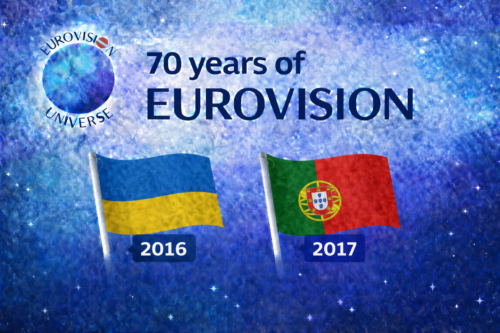
70 years of Eurovision: politics and heart problems

The Eurovision Song Contest is celebrating its 70th anniversary. That is a wonderful milestone. We at Eurovision Universe love diving into the history of the contest. That is why we are taking a closer look at the contests of the past 70 years. 2016 Måns Zelmerlöw hosted the 2016 Eurovision Song Contest together with the inevitable Petra Meede. The contest was held at the Globe Arena in Stockholm. Bulgaria, Croatia, Bosnia and Herzegovina, and Ukraine returned. Portugal and Romania did not participate. The songs Bojan Jovović of the Montenegrin group No Name returned in a different band, Highway. Greta Salomé took the stage for Iceland for the second time. The Bosnian Deen also participated for a second time. Kaliopi was once again the Macedonian candidate. Bulgaria sent Poli Genova again, who was much more successful with “If Love Was A Crime” than during her first participation. Poli managed to achieve a record for Bulgaria: a fourth place. Donny Montell tried for a second time for Lithuania, and Ira Losco took the stage for Malta again. The latter set aside her winning national final song in search of a better track, and found it in “Walk on Water”. All in all, a festival with a lot of experience. There were famous names as well. Ireland sent Nicky Byrne, former member of the boy band Westlife. In vain; he did not make it to the final. Sergey Lazarev was already a huge star in Russia and the surrounding countries. The fact that he participated was therefore remarkable. He was also considered the favorite for the final victory. The images on the LED screens made it seem as if Sergey was in a kind of music video. While singing “You Are The Only One,” it looked as if he was sitting on boulders and jumping from one block to another. The Belarusian Ivan attracted attention. He wanted to appear on stage naked and with a wolf. The EBU did not allow that. Eventually, the wolf appeared on the LED screen. Ivan did too, naked, but neatly covered. Mental health issues plagued the Norwegian singer Agnete: she did not appear at press conferences. And perhaps she didn’t mind too much that she didn’t make it to the final. She called her performance a victory in itself. The final The final was opened by Laura Tesoro from Belgium. No one in Belgium had any confidence in a good outcome for Laura. That is, until they saw Laura’s act and confident performance in Stockholm. Laura achieved a respectable tenth place. The Dutchman Douwe Bob did something special during his performance. In the song “Slow Down,” he inserted a ten-second silence to emphasize the lyrics. Swedish participant Frans managed to score a modest European hit with his song “If I Were Sorry.” The Pole Michał Szpak scored surprisingly high with the televoter, something that caused much grumbling about the Polish diaspora. South Korean-born Dami Im represented Australia, where she had lived for almost her entire life. “Sound of Silence” was in contention for the final victory right up to the very end. Zoë also stood out; this Austrian sang her song “Loin d’Ici” entirely in French. Final Battle The EBU had decided to change the voting method. Those exciting ‘twelve points’ were now the points from the professional jury. The televoter points were added together and announced by the presenters from bottom to top. This kept the festival exciting until the very last moment. The Australian Dami Im was the favorite with the professional jury, but the Russian Sergey Lazarev won with the televoter. Ultimately, the country that came second with both juries won: Ukraine. Jamala The Ukrainian Jamala had previously participated in the national final. With her song “1944”, she won for the first time. This song was about the deportation and murder of the Crimean Tatars by Stalin in 1944. “When strangers are coming, they come to your house, they kill you all and say: we’re not guilty”. Ukraines song was about a historical fact but could hardly be viewed separately from the Russian occupation of Crimea in 2014. The Russians were of course not amused that this particular song prevented them from achieving a second victory. 2017 Eurovision went to Kyiv again. The event was held at the International Exhibition Centre. For the first time, three men hosted it: Oleksandr Skichko, Volodymyr Ostapchuk, and Timur Miroshnychenko. Portugal and Romania participated again, but Bosnia and Herzegovina withdrew. Russia was going to participate, but Ukraine presented a list of Russian artists who had performed in Crimea. By doing so, they had violated Ukrainian law and were not allowed into the country. It took some searching, but eventually the Russians found someone who *had* performed in Crimea but was not on the list. The singer was the severely physically disabled Julia Samoylova. It was thought that the Ukrainians would not refuse someone in a wheelchair at the border. However, Samoylova was not allowed into the country. The Russians subsequently withdrew. The songs Tamara Gachechiladze had almost participated before, as a member of the group 3G. At the time, she sang “We Don’t Wanna Put In”. Now she was allowed to participate. Omar Naber already competed for Slovenia in 2005, and now again. And for the second time, he failed to reach the final. Valentina Monetta participated for San Marino for no less than the fourth time. The Estonian duo had also participated before, but not together: Koit Toome in 1998, Laura Põldvere in 2005. The ‘epic sax guy’ also competed once again as a member of The Sunstroke Project. With a 4th place finish, the group was very successful this time. Francesco Gabbani from Italy was number 1 in the odds for a long time. His “Occidentali’s Karma” and the monkey act were perhaps starting to wear thin. He finished only sixth. There was another country with an animal (or part of an animal) on stage. The Azerbaijani Dihaj was accompanied by a dancer with a

Read More »
Uncategorized
Martijn

70 years of Eurovision: politics and heart problems

The Eurovision Song Contest is celebrating its 70th anniversary. That is a wonderful milestone. We at Eurovision Universe love diving into the history of the contest. That is why we are taking a closer look at the contests of the past 70 years. 2016 Måns Zelmerlöw hosted the 2016 Eurovision Song Contest together with the inevitable Petra Meede. The contest was held at the Globe Arena in Stockholm. Bulgaria, Croatia, Bosnia and Herzegovina, and Ukraine returned. Portugal and Romania did not participate. The songs Bojan Jovović of the Montenegrin group No Name returned in a different band, Highway. Greta Salomé took the stage for Iceland for the second time. The Bosnian Deen also participated for a second time. Kaliopi was once again the Macedonian candidate. Bulgaria sent Poli Genova again, who was much more successful with “If Love Was A Crime” than during her first participation. Poli managed to achieve a record for Bulgaria: a fourth place. Donny Montell tried for a second time for Lithuania, and Ira Losco took the stage for Malta again. The latter set aside her winning national final song in search of a better track, and found it in “Walk on Water”. All in all, a festival with a lot of experience. There were famous names as well. Ireland sent Nicky Byrne, former member of the boy band Westlife. In vain; he did not make it to the final. Sergey Lazarev was already a huge star in Russia and the surrounding countries. The fact that he participated was therefore remarkable. He was also considered the favorite for the final victory. The images on the LED screens made it seem as if Sergey was in a kind of music video. While singing “You Are The Only One,” it looked as if he was sitting on boulders and jumping from one block to another. The Belarusian Ivan attracted attention. He wanted to appear on stage naked and with a wolf. The EBU did not allow that. Eventually, the wolf appeared on the LED screen. Ivan did too, naked, but neatly covered. Mental health issues plagued the Norwegian singer Agnete: she did not appear at press conferences. And perhaps she didn’t mind too much that she didn’t make it to the final. She called her performance a victory in itself. The final The final was opened by Laura Tesoro from Belgium. No one in Belgium had any confidence in a good outcome for Laura. That is, until they saw Laura’s act and confident performance in Stockholm. Laura achieved a respectable tenth place. The Dutchman Douwe Bob did something special during his performance. In the song “Slow Down,” he inserted a ten-second silence to emphasize the lyrics. Swedish participant Frans managed to score a modest European hit with his song “If I Were Sorry.” The Pole Michał Szpak scored surprisingly high with the televoter, something that caused much grumbling about the Polish diaspora. South Korean-born Dami Im represented Australia, where she had lived for almost her entire life. “Sound of Silence” was in contention for the final victory right up to the very end. Zoë also stood out; this Austrian sang her song “Loin d’Ici” entirely in French. Final Battle The EBU had decided to change the voting method. Those exciting ‘twelve points’ were now the points from the professional jury. The televoter points were added together and announced by the presenters from bottom to top. This kept the festival exciting until the very last moment. The Australian Dami Im was the favorite with the professional jury, but the Russian Sergey Lazarev won with the televoter. Ultimately, the country that came second with both juries won: Ukraine. Jamala The Ukrainian Jamala had previously participated in the national final. With her song “1944”, she won for the first time. This song was about the deportation and murder of the Crimean Tatars by Stalin in 1944. “When strangers are coming, they come to your house, they kill you all and say: we’re not guilty”. Ukraines song was about a historical fact but could hardly be viewed separately from the Russian occupation of Crimea in 2014. The Russians were of course not amused that this particular song prevented them from achieving a second victory. 2017 Eurovision went to Kyiv again. The event was held at the International Exhibition Centre. For the first time, three men hosted it: Oleksandr Skichko, Volodymyr Ostapchuk, and Timur Miroshnychenko. Portugal and Romania participated again, but Bosnia and Herzegovina withdrew. Russia was going to participate, but Ukraine presented a list of Russian artists who had performed in Crimea. By doing so, they had violated Ukrainian law and were not allowed into the country. It took some searching, but eventually the Russians found someone who *had* performed in Crimea but was not on the list. The singer was the severely physically disabled Julia Samoylova. It was thought that the Ukrainians would not refuse someone in a wheelchair at the border. However, Samoylova was not allowed into the country. The Russians subsequently withdrew. The songs Tamara Gachechiladze had almost participated before, as a member of the group 3G. At the time, she sang “We Don’t Wanna Put In”. Now she was allowed to participate. Omar Naber already competed for Slovenia in 2005, and now again. And for the second time, he failed to reach the final. Valentina Monetta participated for San Marino for no less than the fourth time. The Estonian duo had also participated before, but not together: Koit Toome in 1998, Laura Põldvere in 2005. The ‘epic sax guy’ also competed once again as a member of The Sunstroke Project. With a 4th place finish, the group was very successful this time. Francesco Gabbani from Italy was number 1 in the odds for a long time. His “Occidentali’s Karma” and the monkey act were perhaps starting to wear thin. He finished only sixth. There was another country with an animal (or part of an animal) on stage. The Azerbaijani Dihaj was accompanied by a dancer with a

Read More »
Follow Us: