Road to Vienna: Finland

Road to Vienna: Finland

As the Eurovision Song Contest 2026 in Vienna approaches, we continue our daily spotlight on this year’s contestants. Today, we focus on Finland.​

Linda Lampenius & Pete Parkkonen

Linda Lampenius: Violin Star Across Genres

Linda Lampenius grew up between a theatre family in Helsinki and a farm in Lapinjärvi. At age five, she chose the violin, and by eight she was already touring internationally with the Helsinki Strings. Her early television appearances, combined with a scholarship, highlighted both her strong classical training and natural stage presence.

Studies and International Career

Lampenius studied at the Sibelius Academy and performed with the Finnish National Opera Orchestra before launching her solo career. Soon, her work expanded internationally, including collaborations with Andrew Lloyd Webber and major orchestras.

Pop, Classical and Media Success

Lampenius broke into pop with her 1997 debut and achieved global classical success with Linda Brava (1999), released by EMI Classics. Over time, she continued blending styles while building a media career through shows like X Factor Finland and Let’s Dance.

Pete Parkkonen: From Idols to Finnish Pop Star

Pete Parkkonen grew up in Pihtipudas, Finland, where music was part of everyday life. He began as a drummer but switched to singing as a teenager after stepping in for a missing band vocalist. That unexpected moment shaped his path, leading to experience in bands and live performances.

Breakthrough with Idols and Chart Success

Parkkonen rose to fame in 2008, finishing third in Idols Finland. His debut single “Girl In a Uniform” became a hit, while his first album The First Album (2009) reached number one in Finland. Follow-up releases and TV appearances quickly established him as a major new artist.

Finding His Sound and Expanding Career

After early English-language releases, Parkkonen shifted to Finnish pop with hits like “Mitä mä teen,” featuring JVG. He also gained wider attention by winning Dancing with the Stars Finland and Tähdet, tähdet, proving his versatility.

Continued Success and Media Presence

In later years, Parkkonen released multiple hit singles and the album PETE (2018). He remained a strong presence in Finnish pop, including appearances on Vain elämää, where he showcased his range across different musical styles.

Liekinheitin: A Story of Passion and Emotional Conflict

“Liekinheitin” explores intense desire mixed with emotional instability, focusing on a relationship driven by chemistry rather than balance.

Passion Without Stability

The track highlights a powerful physical connection that feels exciting and addictive. At the same time, that intensity brings risk, as the volatile dynamic suggests emotional harm is never far away.

Mixed Signals and Inner Conflict

Contradiction plays a central role. The connection feels real in private but distant in public, creating confusion. This push-and-pull dynamic keeps the narrator emotionally invested, despite the lack of clarity or security.

A Story of Temptation and Risk

Ultimately, “Liekinheitin” portrays a toxic yet irresistible bond, capturing the tension between logic and desire—choosing passion even when it may lead to pain.


Related news

History

70 years of Eurovision: a couple of big hits

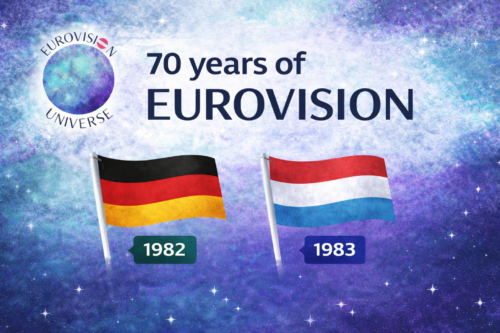
The Eurovision Song Contest is celebrating its 70th anniversary. That is a wonderful milestone. We at Eurovision Universe love diving into the history of the contest. That is why we are taking a closer look at the contests of the past 70 years. 1982 ‘Harrogate, where?’ was the question raised at the beginning of the broadcast. For the small British seaside town was the venue for the 1982 Eurovision Song Contest. Jan Leeming hosted the event. France did not participate because the Minister of Culture considered the standard too low. Greece did have an entry, but ultimately withdrew it. Here, too, there was interference from a Minister of Culture. The song was deemed not good enough. Jahn Teigen and Anita Skorgan participated for Norway for the second and third time, respectively. By now married, they sang a quiet ballad. Sally Ann Tripplet, a member of the group Prima Donna in 1980, was also back for the United Kingdom; now as half of the duo Bardo. Anna Vissi, who competed for Greece in 1980, now represented Cyprus. Her “Mono I agapi” finished fifth, for a long time the best score for Cyprus. And then there was Stella: with Hearts of Soul she competed for the Netherlands in 1970, with Dream Express for Belgium in 1977, and now solo, also for Belgium. She also did well with a fourth place. We must not fail to mention the Finnish candidate: Kojo. He didn’t score a single point with a song against the neutron bomb. Unsurprisingly: the song was not very suitable for the general public. Israel sent Avi Toledano with a cheerful song called “Hora”. He came second with it. Nicole And that was actually what the competition was about. Because Germany won with a landslide. Nicole, 17 years old, wearing a black polka-dot dress, sitting on a stool with a guitar in her hand. This is how she sang her peace song “Ein bißchen Frieden”. There was a great deal of consensus regarding this entry. Nicole achieved the highest score up to that point. She managed to generate applause by singing her song not only in German but also in English, French, and Dutch. Later, she also released a Danish version of the song. 1983 The Olympic Stadium in Munich was the venue. More precisely, the Rudi Sedlmayer Halle, a basketball hall. The host was Marlène Charell. That poor presenter faced the impossible task of pronouncing just about every comma in three languages. Greece, France, and Italy were back, but Ireland skipped a year. This brought the total number of participants to twenty. Guy Bonnet had the honor of opening the festival for France. He had participated before, in 1970. Jahn Teigen was also returning for Norway, with his wife Anita Skorgan in the choir. The Norwegian conductor was Sigurd Jansen. Marlène Charell didn’t have that on her cue card. She only found out when she had to announce the man. So she just made up a name on the spot, “Johannes Skorgan”. 16-year-old Carola Häggkvist competed for Sweden. Her song “Främling” came third and Carola managed to score a big hit. She released the song not only in English, but also in German and Dutch. Another international hit was that of Yugoslavia. Back home, the big stars were quite angry that they had lost the national final to Daniel, but he achieved the best score for the country up to that point with his song “Džuli”. Ofra Haza participated for Israel. She came second with the song “Chai”. Later, she had a hit throughout Europe with “Im nin’alu”. In 2000, Haza died of AIDS. A notable act participated for Belgium: the group Pas De Deux with the song “Rendez-vous”, with the full lyrics “Rendez-vous, but enough is enough and I’m done”. When that song won the Belgian national final, half the audience left the hall. The rest stayed to boo and otherwise yell through the song and make their anger known. Corinne Hermes The winner was once again a French singer participating for Luxembourg: Corinne Hermes. The ballad “Si la vie est cadeau” may have made the biggest impression on the jury members, but certainly not on the record-buying public. Carola from Sweden and Daniel from Yugoslavia had the big international hits. Corinne Hermes had more trouble selling her song. But, all in all, several major hits emerged from the 1983 Eurovision Song Contest.  

Read More »
Eurovision 2026
Anja Kroeze

Road to Vienna: Finland

Road to Vienna: Finland As the Eurovision Song Contest 2026 in Vienna approaches, we continue our daily spotlight on this year’s contestants. Today, we focus on Finland.​ Linda Lampenius & Pete Parkkonen Linda Lampenius: Violin Star Across Genres Linda Lampenius grew up between a theatre family in Helsinki and a farm in Lapinjärvi. At age five, she chose the violin, and by eight she was already touring internationally with the Helsinki Strings. Her early television appearances, combined with a scholarship, highlighted both her strong classical training and natural stage presence. Studies and International Career Lampenius studied at the Sibelius Academy and performed with the Finnish National Opera Orchestra before launching her solo career. Soon, her work expanded internationally, including collaborations with Andrew Lloyd Webber and major orchestras. Pop, Classical and Media Success Lampenius broke into pop with her 1997 debut and achieved global classical success with Linda Brava (1999), released by EMI Classics. Over time, she continued blending styles while building a media career through shows like X Factor Finland and Let’s Dance. Pete Parkkonen: From Idols to Finnish Pop Star Pete Parkkonen grew up in Pihtipudas, Finland, where music was part of everyday life. He began as a drummer but switched to singing as a teenager after stepping in for a missing band vocalist. That unexpected moment shaped his path, leading to experience in bands and live performances. Breakthrough with Idols and Chart Success Parkkonen rose to fame in 2008, finishing third in Idols Finland. His debut single “Girl In a Uniform” became a hit, while his first album The First Album (2009) reached number one in Finland. Follow-up releases and TV appearances quickly established him as a major new artist. Finding His Sound and Expanding Career After early English-language releases, Parkkonen shifted to Finnish pop with hits like “Mitä mä teen,” featuring JVG. He also gained wider attention by winning Dancing with the Stars Finland and Tähdet, tähdet, proving his versatility. Continued Success and Media Presence In later years, Parkkonen released multiple hit singles and the album PETE (2018). He remained a strong presence in Finnish pop, including appearances on Vain elämää, where he showcased his range across different musical styles. Liekinheitin: A Story of Passion and Emotional Conflict “Liekinheitin” explores intense desire mixed with emotional instability, focusing on a relationship driven by chemistry rather than balance. Passion Without Stability The track highlights a powerful physical connection that feels exciting and addictive. At the same time, that intensity brings risk, as the volatile dynamic suggests emotional harm is never far away. Mixed Signals and Inner Conflict Contradiction plays a central role. The connection feels real in private but distant in public, creating confusion. This push-and-pull dynamic keeps the narrator emotionally invested, despite the lack of clarity or security. A Story of Temptation and Risk Ultimately, “Liekinheitin” portrays a toxic yet irresistible bond, capturing the tension between logic and desire—choosing passion even when it may lead to pain.           Finland in the Eurovision Song Contest Finland has participated in the Eurovision Song Contest 57 times since its debut in 1961. They never made it to the top-5 until 2006. The country achieved its only victory in that year with Lordi‘s “Hard Rock Hallelujah.” The bookmakers Finland has been dominating the bookmakers’ odds for weeks, firmly holding the number one spot. Could this be the year they secure their second victory in Eurovision history?        

Read More »
Follow Us: