Weekly Update

It’s time for another weekly Eurovision update. The host city race for Eurovision 2026 is heating up in Austria, Eurovision 2025 champion JJ receives a prestigious honor in Vienna, and Swedish Eurovision icon Björn Skifs announces his retirement after a storied career.

Host City Battle: Innsbruck Council Backs Eurovision Bid
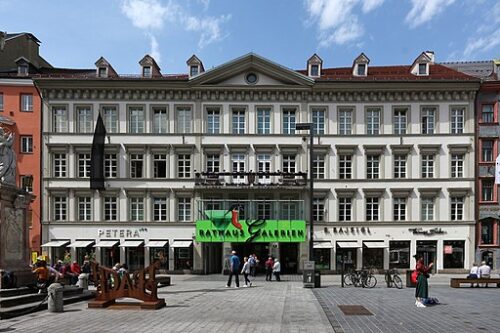
📷 Simon Legner, Wikimedia Commons

Innsbruck’s municipal council has officially approved funding for a potential Eurovision Song Contest 2026 host city bid, moving the host city battle into its final stage. The council voted 22–18 in favor of allocating a budget framework of nearly €20 million for hosting the contest. One-third of it would be covered by the city and the rest by regional tourism and business partners. Mayor Johannes Anzengruber welcomed the decision. He explained that with private partners contributing a larger share than the city, the plan is “manageable and feasible”. Otherwise Innsbruck alone could not afford to host.

Not everyone was on board: opposition parties in the council voted against the Eurovision bid. Some call it a “financial disaster” and criticize a lack of a transparent financial plan. Despite this, Innsbruck is now fully in the running and hopes to become the first city outside Austria’s capital to ever host the contest. The Tyrolean city’s proposal centers on the Olympiahalle arena and the slogan “Together on Top”. Innsbruck’s main rival Vienna has also submitted a strong bid (with the Stadthalle as venue). Broadcaster ORF is expected to decide between Vienna and Innsbruck by early August. source: vol.at

Eurovision 2025 Winner JJ Receives Goldener Rathausmann

📷 EBU/Corinne Cumming

Vienna honored its latest Eurovision hero this week. Mayor Michael Ludwig presented JJ (Johannes Pietsch) with the Goldener Rathausmann – a prestigious golden statuette awarded by the city – in recognition of his Eurovision victory for Austria. JJ won the Eurovision Song Contest 2025 with the power ballad “Wasted Love”. Mayor Ludwig praised the 24-year-old singer as an “exceptional talent”. He noted that JJ is the first Austrian artist to achieve over one million streams in one week. The mayor also stated that JJ now joins past Austrian Eurovision champions (Udo Jürgens and Conchita Wurst) who have received the same honor. JJ expressed gratitude for the award. He called it a milestone he’ll never forget. And, as a proud Viennese, he added that he’d love to see the Song Contest return to Vienna in 2026. source: ots.at

Björn Skifs Ends Music Career
Retirement

Swedish singer Björn Skifs – who represented Sweden twice at Eurovision – announced that he is retiring from music after an illustrious 50+ year career. The 78-year-old veteran revealed he has been diagnosed with frontotemporal dementia. In a heartfelt statement he admitted the news “is not easy to take in” for him or his loved ones. Skifs reflected that he has “lived a rich and amazing life, filled with music, love and laughter”. He thanked everyone who has been part of his journey, and said that now “it’s time to slow down and take one day at a time”.

Hooked on a Feeling

Skifs’s career began in the 1960s and reached global heights in the 1970s. As the lead singer of the band Blue Swede, he scored an international #1 hit in 1974 with the pop classic “Hooked on a Feeling” – making him one of the few Swedish artists to top the US charts. He also took part in Sweden’s Eurovision selection Melodifestivalen several times. In 1975, for example, he competed with the song “Michelangelo.” Despite finishing 5th in the national final, the song became a major hit that stayed at #1 on Sweden’s singles chart for seven weeks.

Björn Skifs in Eurovision

Skifs eventually went on to represent Sweden at the Eurovision Song Contest twice. He won Melodifestivalen 1978 and performed “Det blir alltid värre framåt natten” at Eurovision in Paris, finishing 14th. He returned to the Eurovision stage in 1981 with “Fångad i en dröm”, this time achieving 10th place in Dublin. 

Even outside of Eurovision, Björn Skifs remained an active and beloved entertainer. He appeared as “The Arbiter” on the original 1984 concept album of the musical Chess, and in 2010 he performed the duet “When You Tell the World You’re Mine” with singer Agnes at the royal wedding of Sweden’s Crown Princess Victoria. More recently, Eurovision fans saw Skifs return to the spotlight at the Eurovision 2024 Grand Final in Malmö – he made a surprise appearance performing “Hooked on a Feeling” as part of the opening act of the show. With his retirement, Skifs leaves behind a remarkable legacy in music and in Eurovision history.

That’s all for this weekly update. Stay tuned for another roundup next week. The road to Eurovision 2026 continues!



Related news

History

Austria in the Eurovision Song Contest, part 6

This year’s Eurovision Song Contest has been won by Austria. It was the 57th Austrian entry. Reason for us to go back to all the Austrian entries in history! For the sixth episode, we look back at the nineties. With Tony Wegas’ double, and a total of three top-10 scores, the hard times began for Austria in the Eurovision Song Contest. 1992: Tony Wegas – “Zusammen geh’n” Tony Wegas, an Austrian singer and television actor, represented Austria at Eurovision 1992 with the power ballad “Zusammen geh’n”. Dieter Bohlen composed the music and Joachim Horn-Bernges wrote the lyrics, giving the song a classic pop-ballad style. Wegas delivered an emotive performance of this German-language track on the Malmö stage. “Zusammen geh’n” earned 63 points, securing a 10th place finish for Austria at the 1992 contest. 1993: Tony Wegas – “Maria Magdalena” Tony Wegas returned in 1993 to represent Austria with “Maria Magdalena,” a dramatic pop song with biblical references. He was selected internally, and presented 7 songs. Wegas, known for his singing career and TV acting, gave an engaging performance of this German-language track about Mary Magdalene. Christian Kolonovits and Johann Bertl composed the music, while Thomas Spitzer penned the lyrics, infusing the song with theatrical flair. Despite its uptempo style compared to the previous year, “Maria Magdalena” scored 32 points and placed 14th out of 25 entries at Eurovision 1993. 1994: Petra Frey – “Für den Frieden der Welt” Eight artists and songs competed in the national final. Simone participated but did not win. Petra Frey, only 16 years old at the time, represented Austria at Eurovision 1994 in Dublin with the ballad “Für den Frieden der Welt” (translated as “For the Peace of the World”). Alfons Weindorf composed the music, and brothers Karl & Johann Brunner wrote the lyrics, creating a heartfelt pop ballad calling for world peace. The song showcased Frey’s strong vocals, honed from her early schlager music career, and delivered a sincere message on stage. Austria’s 1994 entry earned 19 points, finishing in 17th place among 25 countries. 1995: Stella Jones – “Die Welt dreht sich verkehrt” Stella Jones, an Austrian singer with jazz and soul roots, took the stage in 1995 with “Die Welt dreht sich verkehrt” (meaning “The World Turns Upside Down”). Jones delivered a funky, blues-infused pop performance that reflected her versatile musical background. Michael W. Krausz both wrote the lyrics and composed the music for this entry, a song which stood out amid a contest often dominated by ballads. The Austrian entry scored 67 points, achieving a 13th place finish in the 1995 Eurovision final. 1996: George Nussbaumer – “Weil’s dr guat got” George Nussbaumer, a blind Austrian blues musician, brought a unique gospel-blues flair to Eurovision 1996 with “Weil’s dr guat got”. Sung in his native Vorarlberg dialect (the title roughly means “Because You’re Doing Well”), the song blended upbeat soul and pop elements. Nussbaumer co-wrote the entry himself. He composed the music and co-authored the lyrics with Michael W. Krausz and infused it with authentic blues style. His uplifting performance in Oslo resonated with the juries, as Austria earned 68 points and a 10th place finish at the 1996 contest. 1997: Bettina Soriat – “One Step” Bettina Soriat, an Austrian singer and stage performer, stepped into the spotlight in 1997 with “One Step.” Having been a backing vocalist for Austria’s 1996 entry, Soriat brought an upbeat dance-pop routine to Eurovision 1997. Marc Berry (stage name of Marcus Dlugaiczyk) wrote the song’s lyrics and co-composed the music with Ina Siber, crafting a catchy tune with playful choreography. Despite the energetic performance and its fun pop appeal, “One Step” received just 12 points, placing 21st out of 25 entries in the Dublin final. 1999: Bobbie Singer – “Reflection” Bobbie Singer (born Tina Schosser), an 18-year-old Austrian pop singer, returned for Eurovision 1999 after Austria’s one-year absence. She performed “Reflection,” a contemporary English-language pop song that projected a youthful, radio-friendly vibe. Dave Moskin wrote and composed “Reflection”, providing a modern pop sound accompanied by a live band on stage. Bobbie’s engaging performance in Jerusalem gave Austria a fresh image in the contest. The entry scored 65 points, achieving a 10th place finish out of 23 countries – Austria’s best Eurovision result of the 1990s.        

Read More »
History
Martijn

Austria in the Eurovision Song Contest, part 6

This year’s Eurovision Song Contest has been won by Austria. It was the 57th Austrian entry. Reason for us to go back to all the Austrian entries in history! For the sixth episode, we look back at the nineties. With Tony Wegas’ double, and a total of three top-10 scores, the hard times began for Austria in the Eurovision Song Contest. 1992: Tony Wegas – “Zusammen geh’n” Tony Wegas, an Austrian singer and television actor, represented Austria at Eurovision 1992 with the power ballad “Zusammen geh’n”. Dieter Bohlen composed the music and Joachim Horn-Bernges wrote the lyrics, giving the song a classic pop-ballad style. Wegas delivered an emotive performance of this German-language track on the Malmö stage. “Zusammen geh’n” earned 63 points, securing a 10th place finish for Austria at the 1992 contest. 1993: Tony Wegas – “Maria Magdalena” Tony Wegas returned in 1993 to represent Austria with “Maria Magdalena,” a dramatic pop song with biblical references. He was selected internally, and presented 7 songs. Wegas, known for his singing career and TV acting, gave an engaging performance of this German-language track about Mary Magdalene. Christian Kolonovits and Johann Bertl composed the music, while Thomas Spitzer penned the lyrics, infusing the song with theatrical flair. Despite its uptempo style compared to the previous year, “Maria Magdalena” scored 32 points and placed 14th out of 25 entries at Eurovision 1993. 1994: Petra Frey – “Für den Frieden der Welt” Eight artists and songs competed in the national final. Simone participated but did not win. Petra Frey, only 16 years old at the time, represented Austria at Eurovision 1994 in Dublin with the ballad “Für den Frieden der Welt” (translated as “For the Peace of the World”). Alfons Weindorf composed the music, and brothers Karl & Johann Brunner wrote the lyrics, creating a heartfelt pop ballad calling for world peace. The song showcased Frey’s strong vocals, honed from her early schlager music career, and delivered a sincere message on stage. Austria’s 1994 entry earned 19 points, finishing in 17th place among 25 countries. 1995: Stella Jones – “Die Welt dreht sich verkehrt” Stella Jones, an Austrian singer with jazz and soul roots, took the stage in 1995 with “Die Welt dreht sich verkehrt” (meaning “The World Turns Upside Down”). Jones delivered a funky, blues-infused pop performance that reflected her versatile musical background. Michael W. Krausz both wrote the lyrics and composed the music for this entry, a song which stood out amid a contest often dominated by ballads. The Austrian entry scored 67 points, achieving a 13th place finish in the 1995 Eurovision final. 1996: George Nussbaumer – “Weil’s dr guat got” George Nussbaumer, a blind Austrian blues musician, brought a unique gospel-blues flair to Eurovision 1996 with “Weil’s dr guat got”. Sung in his native Vorarlberg dialect (the title roughly means “Because You’re Doing Well”), the song blended upbeat soul and pop elements. Nussbaumer co-wrote the entry himself. He composed the music and co-authored the lyrics with Michael W. Krausz and infused it with authentic blues style. His uplifting performance in Oslo resonated with the juries, as Austria earned 68 points and a 10th place finish at the 1996 contest. 1997: Bettina Soriat – “One Step” Bettina Soriat, an Austrian singer and stage performer, stepped into the spotlight in 1997 with “One Step.” Having been a backing vocalist for Austria’s 1996 entry, Soriat brought an upbeat dance-pop routine to Eurovision 1997. Marc Berry (stage name of Marcus Dlugaiczyk) wrote the song’s lyrics and co-composed the music with Ina Siber, crafting a catchy tune with playful choreography. Despite the energetic performance and its fun pop appeal, “One Step” received just 12 points, placing 21st out of 25 entries in the Dublin final. 1999: Bobbie Singer – “Reflection” Bobbie Singer (born Tina Schosser), an 18-year-old Austrian pop singer, returned for Eurovision 1999 after Austria’s one-year absence. She performed “Reflection,” a contemporary English-language pop song that projected a youthful, radio-friendly vibe. Dave Moskin wrote and composed “Reflection”, providing a modern pop sound accompanied by a live band on stage. Bobbie’s engaging performance in Jerusalem gave Austria a fresh image in the contest. The entry scored 65 points, achieving a 10th place finish out of 23 countries – Austria’s best Eurovision result of the 1990s.        

Read More »
Follow Us: