Basel Bulletin: odds, opinions and social media

Odds, opinions and social media; that is what we talk about these days. The last seven participants of the second semifinal have their second rehearsal. We have no liveblog from EBU, however we are expecting 30 seconds videos later today. We also have pictures.

🇬🇪 Georgia

Georgian representative Mariam Shengelia has shared several updates in the lead-up to her first rehearsal in Basel. She posted from the airport with her delegation, thanking supporters and expressing excitement for the week ahead. On Instagram, Mariam wrote that she was “ready to carry Georgia with pride,” alongside behind-the-scenes photos and a short clip of her vocal warm-up. Her tone has remained positive and focused, and Georgian media outlets have echoed that optimism with supportive coverage.

Mariam’s first rehearsal of “Freedom” featured dramatic staging centred on a large rock prop and traditional Georgian elements. She began the performance elevated on the rock, joined by dancers in chokha coats and surrounded by fog and flag choreography. Reactions from the press were largely positive. Fans praised the visual transformation, especially the costume reveal near the end, while others noted similarities to Greece’s staging. The performance was described as theatrical and culturally rooted. Despite strong staging, Georgia remains low in the odds, currently around 36th place, down slightly from pre-rehearsal rankings. The impact of the performance on qualification chances remains uncertain.

đź“· EBU/Alma Bengtsson

🇩🇰 Denmark

Over the past few days, Denmark’s Sissal has been active on social media as she headed to Basel. She shared travel updates carrying a Faroese flag (a nod to her roots) and expressed excitement for rehearsals (twitter.com). In Basel, she’s posted Instagram stories with her dance crew and tweeted appreciation for fans waiting outside the venue. The vibe is upbeat and engaging, with Sissal showing behind-the-scenes glimpses and thanking supporters for “all the love” during her journey.

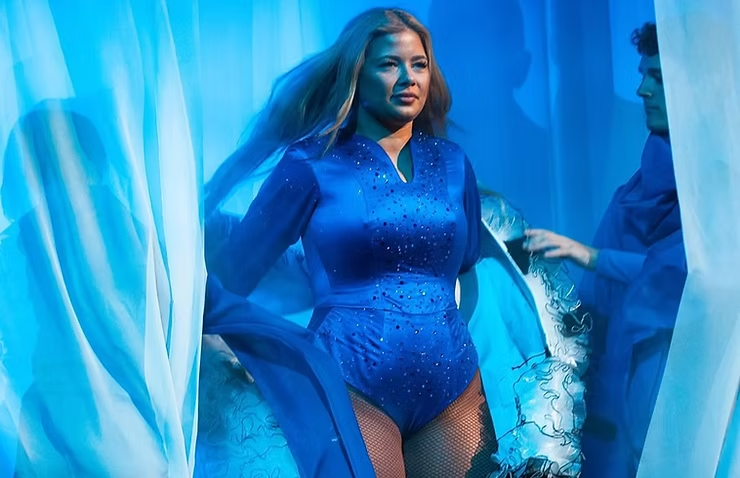
Eurovision press and fans got their first look at “Hallucination” during Sissal’s initial rehearsal. She had promised a revamped show for Basel – and delivered. The staging now features a wind-blown transparent curtain and neon tunnel, plus a high-fashion blue outfit reveal mid-song. No pyro was used in this performance. Fan communities praised her, though some felt the entry is a dated EDM (Electronic Dance Music) throwback, dubbing it an “Euphoria leftover”. In the betting markets, Denmark still sits near the bottom (about 27th place with <1% win chance), and that hasn’t significantly improved post-rehearsal.
đź“· EBU/Sarah Louise Bennett

🇨🇿 Czechia

Czechia’s ADONXS has kept fans in the loop online, sharing his Basel experiences over the last 3–4 days. He posted Instagram photos from the arena, captioned with gratitude for the support. ADONXS also took time to reply to fans on Twitter, joking that he’s ready to “kiss kiss hello” to the Eurovision stage. His social media presence shows confidence and camaraderie with other contestants, which fans have warmly received.

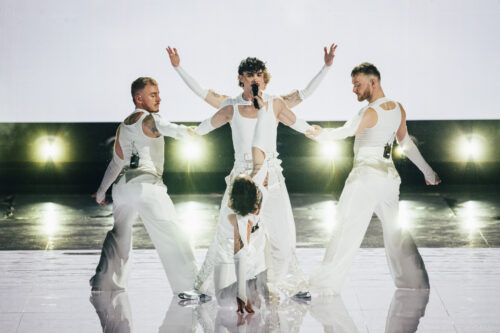
At his first rehearsal in St. Jakobshalle, ADONXS delivered a polished performance that Eurovision outlets described as “clean” and “elegant,” focusing on his charm. The staging starts minimalistic and white, with sleek LED patterns evoking an Inception-like vibe. By the second verse, four dancers in matching white join him, and a burst of red strobe lighting during the dance break “momentarily takes your breath away”, according to the EBU. The Eurovision press and fan bloggers were impressed by the visual transition and ADONXS’s effortless stage presence. Many fans on forums are now touting Czechia as a potential dark horse. In the betting odds, Czechia currently ranks in the top ten (around 6th with ~3% chance to win) – a position that held steady, if not slightly strengthened, after the strong first rehearsal.
đź“· EBU/Sarah Louise Bennett

🇱🇺 Luxembourg

Luxembourg’s Laura Thorn has been sharing her Eurovision journey on social media as the country returns to the contest after decades. In the past few days, she posted a heartfelt photo arriving in Basel, thanking fans for the “incredible welcome.” Eurovision fan pages noted that Laura was “looking marvellous” in her rehearsal attire, and clips of her meeting other artists backstage have circulated on Instagram. The general social media buzz among Luxembourgers is proud and nostalgic, with Laura engaging followers by saying she’s honored to bring her nation back to Eurovision.

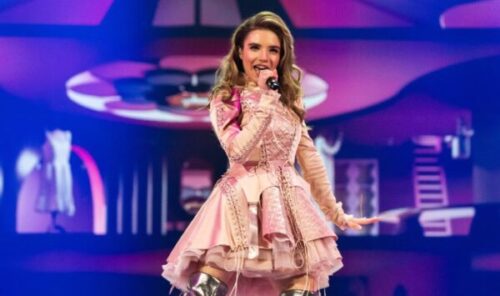
During her first rehearsal, Laura delivered a performance that pays homage to Eurovision history. She kept the doll-inspired concept from the national final but scaled it up dramatically for Basel. Laura begins the act inside a life-sized pink-and-red dollhouse, with animated giant hands helping “position” her like a puppet. Five male dancers in red velvet suits bring 60s go-go moves, transitioning Laura from stiff doll-like poses into lively choreography. Massive LED projections and the retro set have “taken the performance to an entirely new level”. The Eurovision press applauded the creative staging and Laura’s strong vocals, and fans in the arena cheered seeing Luxembourg’s nostalgic French-pop style back on stage. However, at the bookmakers Luxembourg remains a long-shot – currently in the bottom five with well under a 1% chance of winning. That position hasn’t budged post-rehearsal, but the feel-good reception suggests Luxembourg’s comeback is already a win.
đź“· EBU/Corinne Cumming

🇮🇱 Israel

Israel’s Yuval Raphael has been very visible on social media ahead of her Basel rehearsals. In the last few days, the young singer posted an emotional video message before flying out, saying she is “beyond excited” and grateful for the chance to represent Israel. Upon arriving in Switzerland on Monday, Yuval shared photos at the venue and a selfie with Israeli fans who greeted her at the airport. 

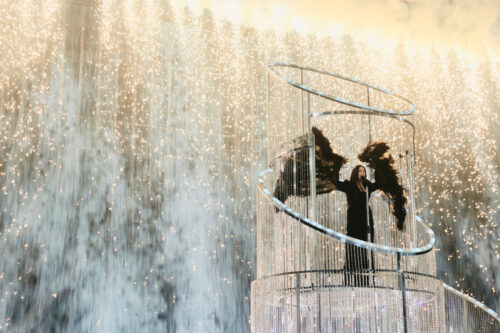
Yuval performs alone on stage with no dancers, delivering vocals while climbing a chandelier’s steps. The Israeli delegation reported that she “astonished the production team” with her performance, especially given that Yuval only began performing live six months ago. In the betting odds, Israel remains firmly among the frontrunners (currently ~4th with about a 6% chance to win). That ranking has been reinforced after the rehearsal.
đź“· EBU/Alma Bengtsson

🇷🇸 Serbia

Serbia’s representative, Princ, has kept a relatively low online profile, but he’s still shared moments from Basel. Earlier this week, the official Eurovision Instagram gave a royal welcome, noting Princ arrived “in a princely manner” to the host city. On his own social media, Princ posted a selfie captioned “Hello Basel!” and thanked supporters back home, writing that Eurovision fans are “the true soul of Eurovision” and he “can’t wait to see you in Basel”. These interactions, alongside a short a cappella clip he uploaded from rehearsals, have rallied Serbian fans, even as Princ stays focused on preparation.

Princ’s first rehearsal in Basel made headlines for unexpected reasons. During the run-through of his ballad “Mila,” some onlookers misinterpreted the stage’s black-and-red color scheme as an allusion to the Albanian flag. The Serbian delegation clarified afterward that the colors were chosen to symbolize sorrow (black) and passion (red) in the song’s emotional narrative – not any political statement. Once the dust settled, attention returned to Princ’s performance itself: a stripped-down presentation with Princ alone on stage. Eurovision commentators noted his poise under pressure and the raw emotion he brought to “Mila.” Fan reaction in the Eurovision community has been sympathetic and positive about Princ’s talent. In the betting odds, however, Serbia is still an underdog – currently around 30th place with less than a 1% chance of winning. That hasn’t shifted post-rehearsal.

đź“· EBU/Corinne Cumming

🇫🇮 Finland

Finland’s pop provocateur Erika Vikman has been lighting up social media in the lead-up to her Eurovision performance. In the last few days, she’s shared flashy Instagram reels from Basel – strutting in her rehearsal outfit and tagging it #BossBitchEnergy – and posed for selfies with fans who gathered outside her hotel. Notably, Erika made waves by leaving a “spicy” comment on Eurovision’s official post about her rehearsal photos, a tongue-in-cheek nod to the double entendre of her song “Ich komme.” The playful interaction went viral among Eurovision devotees, reinforcing Erika’s image as an unapologetic diva. She’s also tweeted about enjoying fondue in Switzerland, keeping things light-hearted off stage.

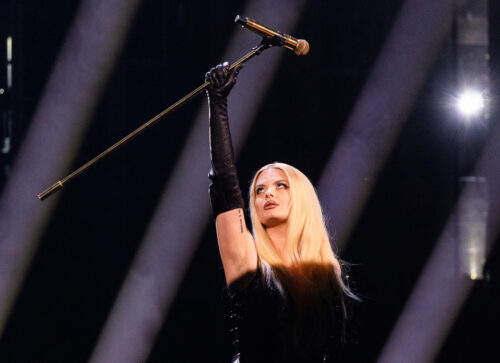
Erika Vikman’s first rehearsal closely followed her UMK staging, keeping the same concept on a larger scale. Dressed in a black latex-style outfit with gold spikes, she began atop a golden pedestal and later climbed onto a giant golden microphone. Bold LED graphics displayed “ICH KOMME” and “ERIKA,” with smoke jets adding impact. The performance featured no dancers—Erika commanded the stage solo. Reactions from the press were positive, highlighting her strong vocals and stage presence. While there were few surprises compared to the national final, fans appreciated the consistency. Finland currently sits around 8th in the betting odds, with no significant change following the rehearsal.
đź“· EBU/Corinne Cumming


Related news

Eurovision 2026

Weekly Update

It’s Tuesday, December 9, 2025, and time for another weekly update! This week, the Eurovision world has been rocked by a single major story: the controversy surrounding Israel’s participation in Eurovision 2026 and the adoption of new contest rules. The European Broadcasting Union (EBU)’s decision on December 4 set off a chain reaction of boycotts and debates. As the road to the 70th Contest in Vienna turns turbulent, here are this week’s top stories: Israel Stays in Eurovision 2026 & New Rules Approved EBU Confirms Israel’s Participation At an EBU general assembly in Geneva on December 4, members decided not to hold a vote on Israel’s status, effectively confirming that Israel will remain in the Eurovision 2026 lineup. This came after some broadcasters had called for Israel’s exclusion over the Gaza war and alleged voting irregularities. The EBU decided there was “no need for a further vote”, so the contest will proceed with Israel included. Albeit with additional safeguards in place. The decision ended weeks of uncertainty and affirmed that Israel is cleared to compete next year, despite the controversy. Broadcasters Approve New Contest Rules Instead of voting Israel out, the EBU put forward a package of new rules to reinforce the contest’s neutrality and fairness. Members from 37 countries voted on reforms aimed at “strengthening trust” in Eurovision. 65% of delegates backed these changes. Key measures include the return of an expanded professional jury in the semi-finals and stricter guidelines to discourage any government or third-party from excessively promoting entries to sway the vote. The number of jurors per country will expand (from 5 to 7) with younger members added, and anti-fraud systems will be enhanced to detect suspicious voting. Additionally, audience vote limits are being halved to curb mass voting campaigns. These rule changes were approved in a secret ballot. The are designed to keep Eurovision a “neutral space” for music and prevent a repeat of last year’s controversies. Martin Green Spain, Ireland and Others Withdraw in Protest Following the EBU’s announcement, four countries immediately declared a boycott of Eurovision 2026. Public broadcasters from the Netherlands, Ireland, Slovenia, and Spain all said they will not send an entry to Vienna in protest of Israel’s inclusion. The Dutch broadcaster AVROTROS stated that under the current circumstances participation “cannot be reconciled with the public values” of their organization. AVROTROS cited Israel’s “proven interference” in the 2025 contest and crackdowns on press freedom during the war. Ireland’s RTÉ deemed participation “unconscionable” given the appalling loss of civilian life in Gaza. Slovenia’s RTV SLO likewise announced a pull-out “on behalf of the 20,000 children who died in Gaza”. They say Eurovision must stand for peace. Spain’s RTVE not only withdrew its delegation but also said it will not broadcast the contest. RTVE Secretary-General Alfonso Morales cited the situation in Gaza and accused Israel of using Eurovision for political aims. This makes it “difficult to keep Eurovision a neutral cultural event”. This marks Spain’s first absence from the contest since 1961. It’s a particularly heavy blow as Spain is one of the Big Five automatic finalists whose participation underpins the event’s funding. Melody, Spain 2025, EBU Mixed Reactions from Across Europe Not all countries are on board with a boycott. Germany had warned it would pull out if Israel were excluded essentially backing Israel’s right to compete. German Culture Minister Wolfram Weimer insisted that “Israel belongs in the Eurovision Song Contest”, opposing any move to bar the country. France also confirmed it will participate regardless of Israel’s presence. French officials rejected the idea of a cultural boycott. Foreign Minister Jean-NoĂ«l Barrot praised the EBU for not giving in to pressure and said he “deeply regrets that several European TV channels made a different choice”. Austria’s ORF, the host broadcaster for 2026, welcomed the decision as well. ORF’s Director-General Roland WeiĂźmann argued the contest “is a competition for broadcasters, not governments”. He emphasized the importance of cultural dialogue and not “burning bridges” between participants. Meanwhile, Israeli officials applauded the outcome. President Isaac Herzog said Israel “deserves to be represented on every stage around the world”. The president expressed hope that Eurovision will remain a venue for music, friendship, and cross-border understanding. Israel’s public broadcaster KAN likened calls to exclude Israel to an unjust “cultural boycott”. They are celebrating the EBU’s decision to keep the country in. Outlook: A Fractured Contest Ahead? Eurovision now faces an unprecedented crisis heading into 2026. The slogan of Eurovision 2024 was “United by Music,” but experts warn the contest could be fractured by politics next year. Dr. Paul Jordan, a noted Eurovision expert, observed that the event is becoming “disunited through politics” as the fallout grows. Several broadcasters have yet to announce their stance. For example, Iceland’s RĂšV is deliberating and will decide by next week. More countries could potentially join the boycott before the EBU’s mid-December participation deadline. The loss of multiple major countries is raising concerns about television ratings and the contest’s reach. Eurovision typically draws over 150 million viewers worldwide, but with some national networks refusing to air it, viewership in those markets will vanish. If the audience drops significantly, it will “raise alarm bells” for the organizers. Additionally, many fans and commentators on social media are calling for a broader global boycott of Eurovision 2026, accusing the EBU of a double standard. They note that the EBU swiftly banned Russia after its 2022 invasion of Ukraine, so they ask “why should Israel be any different?”. The EBU maintains that Eurovision must stay non-political. That’s hard to maintain, given Israeli President Herzog’s involvement in the contest. As the 70th Eurovision Song Contest in Vienna (12–16 May 2026) approaches, the contest’s unity and spirit of inclusivity will be under intense scrutiny. Will the Eurovision community find a way to come together again, or is this rift a sign of lasting changes to come? Only time will tell.

Read More »
Eurovision 2026
Martijn

Weekly Update

It’s Tuesday, December 9, 2025, and time for another weekly update! This week, the Eurovision world has been rocked by a single major story: the controversy surrounding Israel’s participation in Eurovision 2026 and the adoption of new contest rules. The European Broadcasting Union (EBU)’s decision on December 4 set off a chain reaction of boycotts and debates. As the road to the 70th Contest in Vienna turns turbulent, here are this week’s top stories: Israel Stays in Eurovision 2026 & New Rules Approved EBU Confirms Israel’s Participation At an EBU general assembly in Geneva on December 4, members decided not to hold a vote on Israel’s status, effectively confirming that Israel will remain in the Eurovision 2026 lineup. This came after some broadcasters had called for Israel’s exclusion over the Gaza war and alleged voting irregularities. The EBU decided there was “no need for a further vote”, so the contest will proceed with Israel included. Albeit with additional safeguards in place. The decision ended weeks of uncertainty and affirmed that Israel is cleared to compete next year, despite the controversy. Broadcasters Approve New Contest Rules Instead of voting Israel out, the EBU put forward a package of new rules to reinforce the contest’s neutrality and fairness. Members from 37 countries voted on reforms aimed at “strengthening trust” in Eurovision. 65% of delegates backed these changes. Key measures include the return of an expanded professional jury in the semi-finals and stricter guidelines to discourage any government or third-party from excessively promoting entries to sway the vote. The number of jurors per country will expand (from 5 to 7) with younger members added, and anti-fraud systems will be enhanced to detect suspicious voting. Additionally, audience vote limits are being halved to curb mass voting campaigns. These rule changes were approved in a secret ballot. The are designed to keep Eurovision a “neutral space” for music and prevent a repeat of last year’s controversies. Martin Green Spain, Ireland and Others Withdraw in Protest Following the EBU’s announcement, four countries immediately declared a boycott of Eurovision 2026. Public broadcasters from the Netherlands, Ireland, Slovenia, and Spain all said they will not send an entry to Vienna in protest of Israel’s inclusion. The Dutch broadcaster AVROTROS stated that under the current circumstances participation “cannot be reconciled with the public values” of their organization. AVROTROS cited Israel’s “proven interference” in the 2025 contest and crackdowns on press freedom during the war. Ireland’s RTÉ deemed participation “unconscionable” given the appalling loss of civilian life in Gaza. Slovenia’s RTV SLO likewise announced a pull-out “on behalf of the 20,000 children who died in Gaza”. They say Eurovision must stand for peace. Spain’s RTVE not only withdrew its delegation but also said it will not broadcast the contest. RTVE Secretary-General Alfonso Morales cited the situation in Gaza and accused Israel of using Eurovision for political aims. This makes it “difficult to keep Eurovision a neutral cultural event”. This marks Spain’s first absence from the contest since 1961. It’s a particularly heavy blow as Spain is one of the Big Five automatic finalists whose participation underpins the event’s funding. Melody, Spain 2025, EBU Mixed Reactions from Across Europe Not all countries are on board with a boycott. Germany had warned it would pull out if Israel were excluded essentially backing Israel’s right to compete. German Culture Minister Wolfram Weimer insisted that “Israel belongs in the Eurovision Song Contest”, opposing any move to bar the country. France also confirmed it will participate regardless of Israel’s presence. French officials rejected the idea of a cultural boycott. Foreign Minister Jean-NoĂ«l Barrot praised the EBU for not giving in to pressure and said he “deeply regrets that several European TV channels made a different choice”. Austria’s ORF, the host broadcaster for 2026, welcomed the decision as well. ORF’s Director-General Roland WeiĂźmann argued the contest “is a competition for broadcasters, not governments”. He emphasized the importance of cultural dialogue and not “burning bridges” between participants. Meanwhile, Israeli officials applauded the outcome. President Isaac Herzog said Israel “deserves to be represented on every stage around the world”. The president expressed hope that Eurovision will remain a venue for music, friendship, and cross-border understanding. Israel’s public broadcaster KAN likened calls to exclude Israel to an unjust “cultural boycott”. They are celebrating the EBU’s decision to keep the country in. Outlook: A Fractured Contest Ahead? Eurovision now faces an unprecedented crisis heading into 2026. The slogan of Eurovision 2024 was “United by Music,” but experts warn the contest could be fractured by politics next year. Dr. Paul Jordan, a noted Eurovision expert, observed that the event is becoming “disunited through politics” as the fallout grows. Several broadcasters have yet to announce their stance. For example, Iceland’s RĂšV is deliberating and will decide by next week. More countries could potentially join the boycott before the EBU’s mid-December participation deadline. The loss of multiple major countries is raising concerns about television ratings and the contest’s reach. Eurovision typically draws over 150 million viewers worldwide, but with some national networks refusing to air it, viewership in those markets will vanish. If the audience drops significantly, it will “raise alarm bells” for the organizers. Additionally, many fans and commentators on social media are calling for a broader global boycott of Eurovision 2026, accusing the EBU of a double standard. They note that the EBU swiftly banned Russia after its 2022 invasion of Ukraine, so they ask “why should Israel be any different?”. The EBU maintains that Eurovision must stay non-political. That’s hard to maintain, given Israeli President Herzog’s involvement in the contest. As the 70th Eurovision Song Contest in Vienna (12–16 May 2026) approaches, the contest’s unity and spirit of inclusivity will be under intense scrutiny. Will the Eurovision community find a way to come together again, or is this rift a sign of lasting changes to come? Only time will tell.

Read More »
Follow Us: