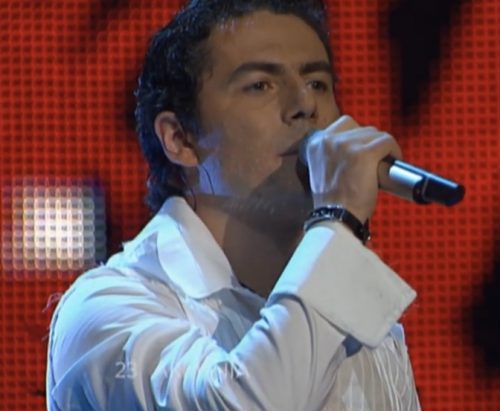
Armenian singer Hayko Hakobyan dies at age 48 from COVID-19

Hayko Hakobyan, who represented Armenia in 2007, sadly passed away today, 29 September 2021. Hayko reached the age of 48 years old. The ”Anytime you need” singer caught COVID-19 earlier this year. The first news about his hospitalisation hit the newsstands around 21 September 2021. Today the news reached us that Hayko has tragically died from the complications. Shushan Danielyan, chief of staff at Yerevan State Medical University has conformed the information.

Hayko was one of the most popular singers of the country. In 2003 and 2006 he was voted best singer of the year in Armenia. His popularity facilitated an automatic placement in Armenian national final in 2007. He ultimately won the competition and made his way to Finland to compete in the Eurovision Song Contest. With the entry ”Anytime you need”, Hayko planted Armenia in the 8th place of the contest.

Hayko’s first album, Romances, was released in 1999. The debut album had the musician winning three awards at the Armenian Music Awards in 2002. The awards included Best Singer, Best Project and Best Album.

He was the second artist to represent Armenia at the Eurovision Song Contest. André Hovnanian competed in 2006, who also finished in eighth place.

Related news

Eurovision 2026

Weekly Update

It’s Tuesday, December 9, 2025, and time for another weekly update! This week, the Eurovision world has been rocked by a single major story: the controversy surrounding Israel’s participation in Eurovision 2026 and the adoption of new contest rules. The European Broadcasting Union (EBU)’s decision on December 4 set off a chain reaction of boycotts and debates. As the road to the 70th Contest in Vienna turns turbulent, here are this week’s top stories: Israel Stays in Eurovision 2026 & New Rules Approved EBU Confirms Israel’s Participation At an EBU general assembly in Geneva on December 4, members decided not to hold a vote on Israel’s status, effectively confirming that Israel will remain in the Eurovision 2026 lineup. This came after some broadcasters had called for Israel’s exclusion over the Gaza war and alleged voting irregularities. The EBU decided there was “no need for a further vote”, so the contest will proceed with Israel included. Albeit with additional safeguards in place. The decision ended weeks of uncertainty and affirmed that Israel is cleared to compete next year, despite the controversy. Broadcasters Approve New Contest Rules Instead of voting Israel out, the EBU put forward a package of new rules to reinforce the contest’s neutrality and fairness. Members from 37 countries voted on reforms aimed at “strengthening trust” in Eurovision. 65% of delegates backed these changes. Key measures include the return of an expanded professional jury in the semi-finals and stricter guidelines to discourage any government or third-party from excessively promoting entries to sway the vote. The number of jurors per country will expand (from 5 to 7) with younger members added, and anti-fraud systems will be enhanced to detect suspicious voting. Additionally, audience vote limits are being halved to curb mass voting campaigns. These rule changes were approved in a secret ballot. The are designed to keep Eurovision a “neutral space” for music and prevent a repeat of last year’s controversies. Martin Green Spain, Ireland and Others Withdraw in Protest Following the EBU’s announcement, four countries immediately declared a boycott of Eurovision 2026. Public broadcasters from the Netherlands, Ireland, Slovenia, and Spain all said they will not send an entry to Vienna in protest of Israel’s inclusion. The Dutch broadcaster AVROTROS stated that under the current circumstances participation “cannot be reconciled with the public values” of their organization. AVROTROS cited Israel’s “proven interference” in the 2025 contest and crackdowns on press freedom during the war. Ireland’s RTÉ deemed participation “unconscionable” given the appalling loss of civilian life in Gaza. Slovenia’s RTV SLO likewise announced a pull-out “on behalf of the 20,000 children who died in Gaza”. They say Eurovision must stand for peace. Spain’s RTVE not only withdrew its delegation but also said it will not broadcast the contest. RTVE Secretary-General Alfonso Morales cited the situation in Gaza and accused Israel of using Eurovision for political aims. This makes it “difficult to keep Eurovision a neutral cultural event”. This marks Spain’s first absence from the contest since 1961. It’s a particularly heavy blow as Spain is one of the Big Five automatic finalists whose participation underpins the event’s funding. Melody, Spain 2025, EBU Mixed Reactions from Across Europe Not all countries are on board with a boycott. Germany had warned it would pull out if Israel were excluded essentially backing Israel’s right to compete. German Culture Minister Wolfram Weimer insisted that “Israel belongs in the Eurovision Song Contest”, opposing any move to bar the country. France also confirmed it will participate regardless of Israel’s presence. French officials rejected the idea of a cultural boycott. Foreign Minister Jean-Noël Barrot praised the EBU for not giving in to pressure and said he “deeply regrets that several European TV channels made a different choice”. Austria’s ORF, the host broadcaster for 2026, welcomed the decision as well. ORF’s Director-General Roland Weißmann argued the contest “is a competition for broadcasters, not governments”. He emphasized the importance of cultural dialogue and not “burning bridges” between participants. Meanwhile, Israeli officials applauded the outcome. President Isaac Herzog said Israel “deserves to be represented on every stage around the world”. The president expressed hope that Eurovision will remain a venue for music, friendship, and cross-border understanding. Israel’s public broadcaster KAN likened calls to exclude Israel to an unjust “cultural boycott”. They are celebrating the EBU’s decision to keep the country in. Outlook: A Fractured Contest Ahead? Eurovision now faces an unprecedented crisis heading into 2026. The slogan of Eurovision 2024 was “United by Music,” but experts warn the contest could be fractured by politics next year. Dr. Paul Jordan, a noted Eurovision expert, observed that the event is becoming “disunited through politics” as the fallout grows. Several broadcasters have yet to announce their stance. For example, Iceland’s RÚV is deliberating and will decide by next week. More countries could potentially join the boycott before the EBU’s mid-December participation deadline. The loss of multiple major countries is raising concerns about television ratings and the contest’s reach. Eurovision typically draws over 150 million viewers worldwide, but with some national networks refusing to air it, viewership in those markets will vanish. If the audience drops significantly, it will “raise alarm bells” for the organizers. Additionally, many fans and commentators on social media are calling for a broader global boycott of Eurovision 2026, accusing the EBU of a double standard. They note that the EBU swiftly banned Russia after its 2022 invasion of Ukraine, so they ask “why should Israel be any different?”. The EBU maintains that Eurovision must stay non-political. That’s hard to maintain, given Israeli President Herzog’s involvement in the contest. As the 70th Eurovision Song Contest in Vienna (12–16 May 2026) approaches, the contest’s unity and spirit of inclusivity will be under intense scrutiny. Will the Eurovision community find a way to come together again, or is this rift a sign of lasting changes to come? Only time will tell.

Read More »
Eurovision 2026
Martijn

Weekly Update

It’s Tuesday, December 9, 2025, and time for another weekly update! This week, the Eurovision world has been rocked by a single major story: the controversy surrounding Israel’s participation in Eurovision 2026 and the adoption of new contest rules. The European Broadcasting Union (EBU)’s decision on December 4 set off a chain reaction of boycotts and debates. As the road to the 70th Contest in Vienna turns turbulent, here are this week’s top stories: Israel Stays in Eurovision 2026 & New Rules Approved EBU Confirms Israel’s Participation At an EBU general assembly in Geneva on December 4, members decided not to hold a vote on Israel’s status, effectively confirming that Israel will remain in the Eurovision 2026 lineup. This came after some broadcasters had called for Israel’s exclusion over the Gaza war and alleged voting irregularities. The EBU decided there was “no need for a further vote”, so the contest will proceed with Israel included. Albeit with additional safeguards in place. The decision ended weeks of uncertainty and affirmed that Israel is cleared to compete next year, despite the controversy. Broadcasters Approve New Contest Rules Instead of voting Israel out, the EBU put forward a package of new rules to reinforce the contest’s neutrality and fairness. Members from 37 countries voted on reforms aimed at “strengthening trust” in Eurovision. 65% of delegates backed these changes. Key measures include the return of an expanded professional jury in the semi-finals and stricter guidelines to discourage any government or third-party from excessively promoting entries to sway the vote. The number of jurors per country will expand (from 5 to 7) with younger members added, and anti-fraud systems will be enhanced to detect suspicious voting. Additionally, audience vote limits are being halved to curb mass voting campaigns. These rule changes were approved in a secret ballot. The are designed to keep Eurovision a “neutral space” for music and prevent a repeat of last year’s controversies. Martin Green Spain, Ireland and Others Withdraw in Protest Following the EBU’s announcement, four countries immediately declared a boycott of Eurovision 2026. Public broadcasters from the Netherlands, Ireland, Slovenia, and Spain all said they will not send an entry to Vienna in protest of Israel’s inclusion. The Dutch broadcaster AVROTROS stated that under the current circumstances participation “cannot be reconciled with the public values” of their organization. AVROTROS cited Israel’s “proven interference” in the 2025 contest and crackdowns on press freedom during the war. Ireland’s RTÉ deemed participation “unconscionable” given the appalling loss of civilian life in Gaza. Slovenia’s RTV SLO likewise announced a pull-out “on behalf of the 20,000 children who died in Gaza”. They say Eurovision must stand for peace. Spain’s RTVE not only withdrew its delegation but also said it will not broadcast the contest. RTVE Secretary-General Alfonso Morales cited the situation in Gaza and accused Israel of using Eurovision for political aims. This makes it “difficult to keep Eurovision a neutral cultural event”. This marks Spain’s first absence from the contest since 1961. It’s a particularly heavy blow as Spain is one of the Big Five automatic finalists whose participation underpins the event’s funding. Melody, Spain 2025, EBU Mixed Reactions from Across Europe Not all countries are on board with a boycott. Germany had warned it would pull out if Israel were excluded essentially backing Israel’s right to compete. German Culture Minister Wolfram Weimer insisted that “Israel belongs in the Eurovision Song Contest”, opposing any move to bar the country. France also confirmed it will participate regardless of Israel’s presence. French officials rejected the idea of a cultural boycott. Foreign Minister Jean-Noël Barrot praised the EBU for not giving in to pressure and said he “deeply regrets that several European TV channels made a different choice”. Austria’s ORF, the host broadcaster for 2026, welcomed the decision as well. ORF’s Director-General Roland Weißmann argued the contest “is a competition for broadcasters, not governments”. He emphasized the importance of cultural dialogue and not “burning bridges” between participants. Meanwhile, Israeli officials applauded the outcome. President Isaac Herzog said Israel “deserves to be represented on every stage around the world”. The president expressed hope that Eurovision will remain a venue for music, friendship, and cross-border understanding. Israel’s public broadcaster KAN likened calls to exclude Israel to an unjust “cultural boycott”. They are celebrating the EBU’s decision to keep the country in. Outlook: A Fractured Contest Ahead? Eurovision now faces an unprecedented crisis heading into 2026. The slogan of Eurovision 2024 was “United by Music,” but experts warn the contest could be fractured by politics next year. Dr. Paul Jordan, a noted Eurovision expert, observed that the event is becoming “disunited through politics” as the fallout grows. Several broadcasters have yet to announce their stance. For example, Iceland’s RÚV is deliberating and will decide by next week. More countries could potentially join the boycott before the EBU’s mid-December participation deadline. The loss of multiple major countries is raising concerns about television ratings and the contest’s reach. Eurovision typically draws over 150 million viewers worldwide, but with some national networks refusing to air it, viewership in those markets will vanish. If the audience drops significantly, it will “raise alarm bells” for the organizers. Additionally, many fans and commentators on social media are calling for a broader global boycott of Eurovision 2026, accusing the EBU of a double standard. They note that the EBU swiftly banned Russia after its 2022 invasion of Ukraine, so they ask “why should Israel be any different?”. The EBU maintains that Eurovision must stay non-political. That’s hard to maintain, given Israeli President Herzog’s involvement in the contest. As the 70th Eurovision Song Contest in Vienna (12–16 May 2026) approaches, the contest’s unity and spirit of inclusivity will be under intense scrutiny. Will the Eurovision community find a way to come together again, or is this rift a sign of lasting changes to come? Only time will tell.

Read More »
Follow Us: