Austria in the Eurovision Song Contest, part 5

This year’s Eurovision Song Contest has been won by Austria. It was the 57th Austrian entry. Reason for us to go back to all the Austrian entries in history!

For the fourth episode, we will look back at the eighties and early nineties. Gary Lux returned again, and Thomas Forstner participated twice. And 1990 brings a special national final…

1986 – Timna Brauer – Die Zeit ist einsam

Timna Brauer represented Austria in Eurovision 1986 with the song “Die Zeit ist einsam” (English: “Time is Lonely”). It was composed by Peter Janda with lyrics by Peter Cornelius. This introspective ballad scored 12 points in total and finished 18th in the final at Bergen. Brauer, an Austrian-Israeli singer-songwriter, comes from a famous artistic family. Her father is artist Arik Brauer. She was known for blending jazz and world music elements in her performances.

1987 – Gary Lux – Nur noch Gefühl

Canadian-born singer Gary Lux returned to Austria in Eurovision 1987 with the song “Nur noch Gefühl” (“Only Feelings”). This gentle mid-tempo pop ballad was composed by Kenneth Westmore with lyrics by Austrian artist Stefanie Werger. On the night of the final in Brussels, Lux earned 8 points, placing 20th out of 22 entries. Gary Lux was already a Eurovision veteran. He had represented Austria multiple times in the 1980s, including as a solo act in 1985 and as part of the group Westend in 1983. His experience and smooth vocals made him a familiar name on the Eurovision stage, even though the 1987 entry did not score high.

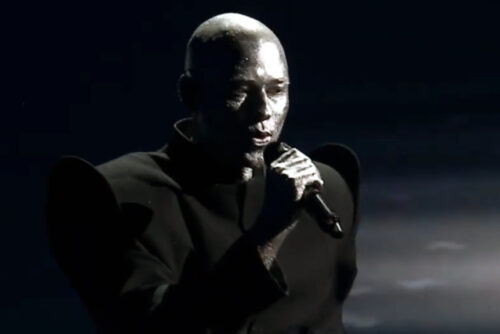
1988 – Wilfried – Lisa, Mona Lisa

Wilfried (Wilfried Scheutz) represented Austria in Eurovision 1988 with the song “Lisa, Mona Lisa”. This entry is a moody pop-rock number. It was co-written by Wilfried along with Klaus Kofler and Ronnie Herbolzheimer. In the Eurovision final held in Dublin, it unfortunately received nul points, finishing 21st (last) among the contenders. Wilfried was a prominent figure in Austropop: he had been one of the pioneers of Austrian pop/rock music since the 1970s. He even briefly served as lead singer of the band Erste Allgemeine Verunsicherung (EAV) before pursuing a solo career. Despite his domestic success and unique vocal style, “Lisa, Mona Lisa” did not manage to score with the international juries.

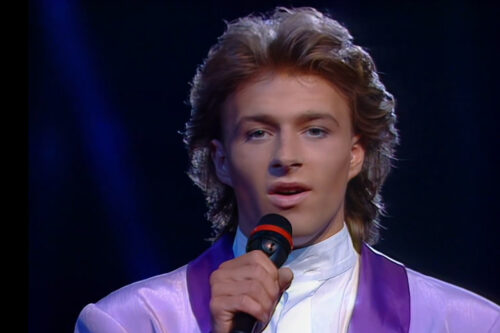
1989 – Thomas Forstner – Nur ein Lied

Nineteen-year-old Thomas Forstner represented Austria at Eurovision 1989 with the power ballad “Nur ein Lied” (“Only a Song”). German pop producer Dieter Bohlen composed the music, while Joachim Horn-Bernges wrote the lyrics. The song carries an uplifting message of hope and peace. Forstner delivered one of Austria’s strongest Eurovision performances. Austria finished 5th out of 22 countries and scored 97 points, the nation’s best result since its 1966 victory.

The success turned Forstner into a national pop star. “Nur ein Lied” climbed to #1 on the Austrian charts and strengthened his position in the local music scene. His breakthrough in Lausanne helped revive Austria’s Eurovision presence at the end of the 1980s and remains a key moment in the country’s contest history.

1990 – Simone – Keine Mauern mehr

Austria’s 1990 entry was the inspirational pop ballad Keine Mauern mehr (“No Walls Anymore”), performed by Simone Stelzer. Marc Berry and Nanna Berry composed the music, and Mario Botazzi wrote the lyrics. The song promotes unity and the removal of barriers, echoing the atmosphere after the fall of the Berlin Wall. In the Eurovision final in Zagreb, Simone finished 10th out of 22 countries and earned 58 points for Austria.

The national selection brought drama. During the live final, the duo Duett first won the competition, but their female singer fainted on stage while performing “Das Beste”. The song still topped the vote, yet officials later disqualified it because it had appeared in a 1988 German national final. As the runner-up, Simone took the Eurovision ticket and delivered a strong top-ten result for Austria.

1991 – Thomas Forstner – Venedig im Regen

Thomas Forstner returned to represent Austria in Eurovision 1991 with Venedig im Regen (“Venice in the Rain”). Robby Musenbichler, Hubert Moser, and Wolfgang Eltner wrote this romantic ballad. The song was chosen out of 10. Also Anita Spanner (Eurovision 1984) was among the contestants. “Venedig im Regen” aimed to match Forstner’s strong 1989 result. The contest in Rome brought a very different outcome. Forstner scored 0 points, a sharp contrast to the 5th place he earned two years earlier. The song offers a smooth melody and heartfelt lyrics about a brief meeting in rainy Venice, yet international juries did not connect with it. This setback created one of the most striking turns in Austria’s Eurovision history, as Forstner became one of the rare artists to follow a top-five finish with a nul-points result.

Related news

Uncategorized

70 years of Eurovision: growing pains

The Eurovision Song Contest is celebrating its 70th anniversary. That is a wonderful milestone. We at Eurovision Universe love diving into the history of the contest. That is why we are taking a closer look at the contests of the past 70 years. 1992 As far as Sweden was concerned, it was Malmö’s turn to host the Eurovision Song Contest. Lydia Capolicchio and Harald Treutiger were given the task of presenting. Compared to 1991, the Netherlands also participated again. However, a dark shadow hung over the Song Contest: with the unification of Europe, it threatened to succumb to its own success. But it had not come to that yet. The songs Sigga, the singer of Stjórnin (see 1990), participated again. This time as half of the duo Heart2Heart. Linda Martin also participated for the second time, once again with a song by Johnny Logan. Mia Martini was present once more. She was called upon just before she was about to start. Mia had a laugh about it for a moment but then managed to bring her beautiful ballad “Rapsodia” to the stage. She finished fourth with it. Wind, twice runner up for Germany, was less successful. In Greece, people were certainly not happy with singer Cleopatra. “Olou tou kosmou i elpida” sounded typically Greek. Surely they couldn’t do that to Europe, Greek fans grumbled. Europe, however, thought it was a great song. Cleopatra finished in fifth place. France opted for reggae, with Kali, hailing from Martinique. He sang his song “Monté la rivié” in French Creole. Evridiki performed for Cyprus. She was also among the favorites but failed to live up to expectations with “Teriazoume”. And then there was Extra Nena. She represented the slowly but surely falling apart Yugoslavia. The singer herself was expecting a victory. When asked how things would work if Yugoslavia won, she said decisively: “Eurovision will be held in Belgrade next year.” She finished thirteenth. The favorite was the British Michael Ball. He was primarily a well-known musical artist. In the national final, he was the only candidate, but out of the eight songs, the televoter picked exactly the song he himself absolutely detested. Yet he came second. The other favorite was Malta. The 47-year-old Mary Spiteri strutted around Malmö like a queen. Surely victory could no longer escape her with “Little Child”? But as always, the reality of the Eurovision Song Contest was just a little different, and she came third. Linda Martin For the winner of that year was the red-haired Linda Martin with her “Why me?”. Linda had been attempting to represent Ireland at the Eurovision Song Contest since the mid-1970s. First with the group Chips and later solo. In 1984, she came second with a song by Johnny Logan. This “Why me?” was also his work. And that made the whole thing special. For the third time, now as a composer, Logan succeeded in winning the Eurovision Song Contest. With this, his title as Mr. Eurovision was definitively cemented. It was therefore a beaming Johnny Logan, alongside Linda Martin, who received the award. 1993 A large number of Eastern European countries had become members of the EBU on January 1, 1993. This allowed them to participate in the Eurovision Song Contest, and a number of them wanted to do so. It was decided to hold an Eastern European national selection. Ultimately, a number of countries withdrew, leaving seven countries in the competition. Bosnia and Herzegovina, Croatia, and Slovenia won the ticket to the Eurovision Song Contest. It was held in Millstreet, in a hall where equestrian events took place. Financier Noel C. Duggan offered his hall as the venue. That saved the Irish broadcaster RTÉ a lot of money. Fionnuala Sweeney hosted the event. We would see her later on CNN. The songs The Dane Tommy Seebach represented his country for the third, and least successful, time. However, after his death, his son Rasmus also recorded the song “Under stjernerne på himlen.” He did have a hit with it in his own country. Tony Wegas participated for Austria for the second consecutive time. Katri Helena also returned for Finland after 14 years. Singer Barbara Dex represented Belgium. The song “Iemand als jij” did not stand out much. The clothing, however, did. In fact, it stood out so much in a negative way that for years a prize was awarded for the worst-dressed artist: the Barbara Dex Award. For France, the singing was once again in a minority language. Patrick Fiori sang the chorus of his “Mama Corsica” partly in Corsican. An established artist participated for the United Kingdom: Sonia, from the hitmakers Stock, Aitken and Waterman. But the most striking candidates were the members of the group Fazla, representing Bosnia and Herzegovina. The country was at war at that time. During the press conferences, the members explained how they had to flee the country while hiding from snipers. This was the only way they could be present in Millstreet. Niamh Kavanagh And Ireland won on home soil. The ballad “In Your Eyes” by Niamh Kavanagh received the most points after a thrilling battle with the United Kingdom. The 25-year-old singer had previously collaborated on the soundtrack of the film The Commitments. At that time, she did not yet have a major career in her own country. She would, of course, build one up. 17 years later, we saw Niamh return to the Eurovision stage, but with “It’s For You” she failed to imitate Johnny Logan and take home yet another prize.

Read More »
2026
Anja Kroeze

Road to Vienna: Lithuania

Road to Vienna: Lithuania We cannot wait for the Eurovision Song Contest in Vienna. Therefore, we take a closer look at one of the contestants each day. Today, we highlight Lithuania.    Lion Ceccah: Lithuania’s Theatrical Pop Visionary Lion Ceccah, born Tomas Alenčikas, first gained attention as Alen Chicco on X Faktorius in 2017. As the show’s first drag performer, he reached the semi-finals and stood out with his bold, theatrical style and fearless self-expression. Unique Style and Music Career Blending pop, electronic, and theatrical influences, Lion Ceccah became known for boundary-pushing music and striking visuals. Songs like “Lithuanian Queen” and “Aš Čia” helped build a loyal fanbase, while his creative collective House of Alen Chicco strengthened his impact on Lithuania’s LGBTQ+ scene. Eurovision Journey and Reinvention After several attempts in Lithuania’s national selections, he reinvented himself as Lion Ceccah in 2024. This new era brought renewed success, including a runner-up finish in 2025 and growing recognition as a top contender. Road to Eurovision Song Contest 2026 In 2026, Lion Ceccah won Lithuania’s national selection with “Sólo Quiero Más.” His electrifying performance and strong public support secured his place on the Eurovision stage, marking the peak of his long journey to international recognition. Sólo Quiero Más: A Powerful Emotional Journey Sólo Quiero Más is an emotional track about self-discovery, resilience, and the constant desire for more. It explores fear, judgment, and uncertainty while encouraging personal growth. A Balance of Vulnerability and Strength The song blends introspective lyrics with powerful declarations, creating a dynamic contrast between fragility and confidence. Its multilingual approach adds depth and universal appeal. Cinematic Sound and Universal Message With atmospheric production and electronic influences, the track captures life’s emotional highs and lows. At its core, it delivers a relatable message: the drive for “more” keeps us moving forward, even in uncertain times. Lithuania in the Eurovision Song Contest Lithuania has participated in the Eurovision Song Contest 24 times since its debut in 1994. The country’s best result came in 2006 when LT United finished 6th with the song “We Are the Winners.” The last few years, since 2021, Lithuania always manages to reach the final. The Roop even reached an 8th place! The Bookmakers Lithuania is currently ranked 19th with the bookmakers, suggesting a place in the final—but can they get closer to the top 10?  

Read More »
Follow Us: