Vienna 12 points: from traditions to a worldwide hit

Several countries start their second rehearsals in Vienna. As we still don’t have access to the rehearsals, we will do something else. Per entry, we highlight one subject and give you some more information. That can be something about the artist, the song, the lyrics or even something completely different.


🇧🇬 Bulgaria — DARA, “Bangaranga”

Running order: 1 | Rehearsal: 8 May, 10:30–10:55 CEST

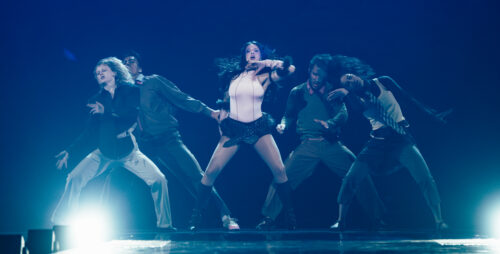
The Kukeri tradition in Bulgaria is one of the country’s most striking winter rituals. Dressed in heavy costumes, frightening masks and loud bells, Kukeri dancers move through villages to chase away evil spirits and welcome health, fertility and a good harvest. The custom is linked to ancient Balkan beliefs and is still passed on from generation to generation. Around New Year and before spring, communities gather for processions in which the sound, rhythm and costumes create a powerful, almost supernatural atmosphere.

That makes the tradition a fascinating link to Bulgaria’s Eurovision Song Contest staging in Vienna this year. When the dancers appear with wild movements and ritual energy, they are not just adding drama. They are referring to a living folklore practice that many Bulgarians immediately recognise. For international viewers, the Kukeri tradition in Bulgaria shows how music, dance and symbolism can turn a pop performance into a cultural story.
📷 EBU/Sarah Louise Bennett

🇦🇿 Azerbaijan — JIVA, “Just Go”

Running order: 2 | Rehearsal: 8 May, 11:05–11:30 CEST

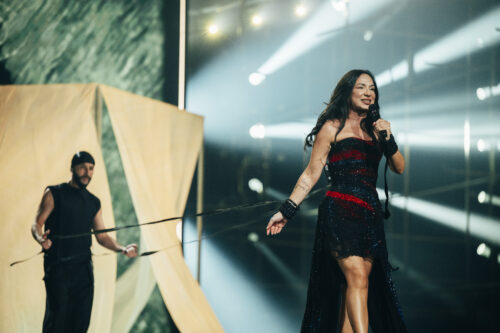
The Azerbaijan Eurovision AI rumours quickly became a talking point after JIVA released “Just Go” for the Eurovision Song Contest 2026. Some online discussions claimed that the song may have been created with artificial intelligence, partly because songwriter Fuad Javadov had been linked by fans to earlier AI-related demos. However, Azerbaijani broadcaster İctimai Television (İTV) has strongly denied the claims.

In a statement, İTV said the allegations did not reflect reality. The broadcaster described “Just Go” as an original musical work, created through a professional process based on experience and creative labour. İTV also explained that JIVA was chosen after a multi-stage internal selection, with expert opinions and a focus group helping to decide the entry.

For Eurovision viewers, the debate shows how sensitive the contest has become to questions about technology, authorship and transparency. For now, Azerbaijan insists that “Just Go” is a human-made Eurovision entry for Vienna 2026.
📷 EBU/Sarah Louise Bennett

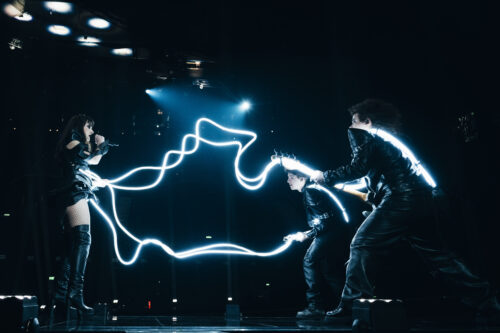
🇷🇴 Romania — Alexandra Căpitănescu, “Choke Me”

Running order: 3 | Rehearsal: 8 May, 11:40–12:05 CEST

The Romanian Eurovision lyrics controversy around Alexandra Căpitănescu’s “Choke Me” has put the country’s 2026 entry under a sharp spotlight. After the song was selected for Vienna, some campaigners and fans argued that the repeated phrase “choke me” could be heard as a reference to sexual choking. They warned that, in a family show, such wording might normalise a dangerous practice rather than simply create drama.

Romania’s delegation and broadcaster TVR rejected that interpretation. According to TVR, the stage concept is designed to underline the metaphorical nature of the message and rule out a literal reading of the lyrics. Căpitănescu has also explained that the song is about emotional pressure, inner fears, self-doubt and feeling suffocated by expectations. In that reading, “Choke Me” is not a call for violence or sex, but a dark image for anxiety and the struggle to reclaim one’s voice before the worldwide audience in May.
📷 EBU/Sarah Louise Bennett

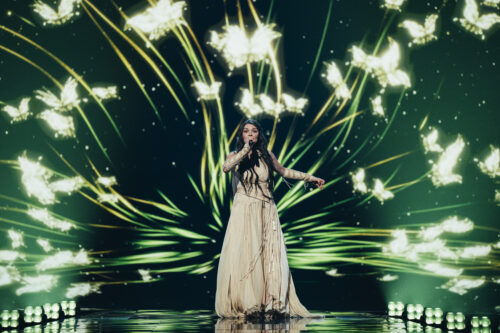
🇱🇺 Luxembourg — Eva Marija, “Mother Nature”

Running order: 4 | Rehearsal: 8 May, 12:20–12:45 CEST

he Slovenian community in Luxembourg may be small, but it has a clear cultural presence in the Grand Duchy. For Eurovision fans, that background adds extra meaning to Eva Marija, Luxembourg’s 2026 contestant, who was born in Luxembourg to Slovenian parents. Around 768 Slovenian nationals lived in Luxembourg on 1 January 2025, according to STATEC. In such a multilingual country, the community connects Slovenian heritage with everyday Luxembourgish life. The Slovenian Association in Luxembourg, also known as Slolux, keeps that connection alive through events, language lessons, celebrations and informal support for newcomers. It promotes Slovenia, helps people integrate and brings families together throughout the year. In a country where almost half of residents are foreign nationals, Slovenes are part of Luxembourg’s wider European mosaic. Eva Marija’s story therefore clearly reflects both her Luxembourgish home and her Slovenian roots beautifully this year in Vienna for a wider Eurovision audience across Europe.
📷 EBU/Sarah Louise Bennett

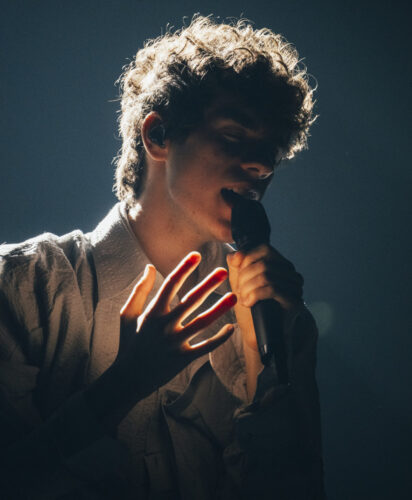
🇨🇿 Czechia — Daniel Žižka, “CROSSROADS”

Running order: 5 | Rehearsal: 8 May, 12:55–13:20

Mikolas Josef Eurovision history still matters for Czechia. In 2018, the Prague-born singer represented the country in Lisbon with “Lie To Me”, a playful pop song full of attitude, choreography and a memorable backpack. He finished sixth in the Grand Final with 281 points, Czechia’s best result at the contest so far. That record is now the benchmark Daniel Zizka may try to beat in Vienna 2026 with “CROSSROADS”.

After Eurovision, Mikolas did not disappear from the music scene. He released singles such as “Me Gusta”, “Abu Dhabi” and “Acapella”, built an international fanbase and later continued simply as MIKOLAS. Recent years brought new music, including “Boys Don’t Cry”, “Delilah” and his debut album “ONE”. His post-Eurovision career shows how one strong contest result can become the start of a longer pop journey, not just a one-night Eurovision success story for Czech music fans and the wider Eurovision audience today.
📷 EBU/Sarah Louise Bennett

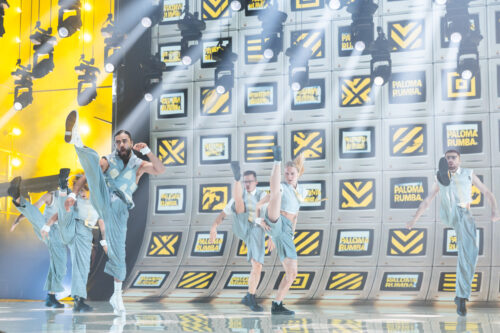
🇦🇲 Armenia — SIMÓN, “Paloma Rumba”

Running order: 6 | Rehearsal: 8 May, 13:30–13:55 CEST

Mikolas Josef Eurovision history still matters for Czechia. In 2018, the Prague-born singer represented the country in Lisbon with “Lie To Me”, a playful pop song full of attitude, choreography and a memorable backpack. He finished sixth in the Grand Final with 281 points, Czechia’s best result at the contest so far. That record is now the benchmark Daniel Zizka may try to beat in Vienna 2026 with “CROSSROADS”.

After Eurovision, Mikolas did not disappear from the music scene. He released singles such as “Me Gusta”, “Abu Dhabi” and “Acapella”, built an international fanbase and later continued simply as MIKOLAS. Recent years brought new music, including “Boys Don’t Cry”, “Delilah” and his debut album “ONE”. His post-Eurovision career shows how one strong contest result can become the start of a longer pop journey, not just a one-night Eurovision success story for Czech music fans and the wider Eurovision audience today.
 

📷 EBU/Corinne Cumming


Related news

Eurovision 2026

Vienna 12 points: the joy of being 2nd

Several countries start their second rehearsals in Vienna. As we still don’t have access to the rehearsals, we will do something else. Per entry, we highlight one subject and give you some more information. That can be something about the artist, the song, the lyrics or even something completely different.  🇩🇪 Germany — Sarah Engels, “Fire” Running order: – | Rehearsal: 9 May, 15:00–15:25 CEST Deutschland sucht den Superstar is one of Germany’s longest-running TV talent shows. Since its first broadcast on RTL in 2002, DSDS has introduced many singers to a national audience. One of its most memorable former contestants is Sarah Engels. Her story in the show was not an instant success. She auditioned in 2009 and 2010, but failed to reach the live shows. In 2011, her third attempt changed everything. Sarah reached the final of Deutschland sucht den Superstar and finished second behind Pietro Lombardi. That season also brought strong media attention, partly because Sarah and Pietro became a couple during the competition. For Sarah Engels, DSDS became the platform that launched a lasting music and television career. Her journey shows why casting shows can still matter. A failed audition does not always mark the end. Sometimes, as Sarah proved, it is only the beginning for many artists in Germany today. 🇫🇷 France — Monroe, “Regarde!” Running order: – | Rehearsal: 9 May, 15:35–16:00 CEST France at Eurovision has rediscovered its confidence since Barbara Pravi’s “Voilà” in 2021. The chanson finished second with 499 points and quickly became a modern Eurovision classic. It gave France something it had missed for years: a clear identity and real winning momentum. The years after “Voilà” were not perfect. Alvan & Ahez finished 24th in 2022, while La Zarra ended 16th in 2023. Still, both entries showed France was willing to take risks. In 2024, Slimane restored the country’s place near the top. His emotional performance of “Mon amour” finished fourth with 445 points. In 2025, Louane kept the positive run alive, taking seventh place with “maman”. This year, Monroe’s “Regarde !” keeps France in the top-five conversation. Whether it reaches that result remains uncertain. Yet France now looks like a country that believes in its Eurovision choices again. That confidence may be its strongest result of the decade so far. 🇬🇧 United Kingdom — Look Mum No Computer, “Eins, Zwei, Drei” Running order: – | Rehearsal: 9 May, 16:10–16:35 CEST Before Look Mum No Computer was confirmed for Eurovision 2026, the BBC faced reports about another possible UK act. In January, media claimed that a participant had been dropped. Routine checks had reportedly raised concerns about historic online comments. The Euro Trip Podcast later gave a more careful account. It reported that an unnamed act was told they would not represent the United Kingdom in Vienna. However, the person had not signed a contract. The BBC also said no formal offer had been made. That means the story is not a simple rejection. It suggests the artist was considered, but never officially chosen. Weeks later, the BBC announced Look Mum No Computer, the stage name of Sam Battle. His song “Eins, Zwei, Drei” gives the United Kingdom a strikingly unusual entry. With synth-pop, humour and eccentric British creativity, it marks a clear change of direction for the BBC at Eurovision. 🇦🇹 Austria — Cosmó, “Tanzschein” Running order: 25 | Rehearsal: 9 May, 16:45–17:10 CEST Hosting Eurovision has become more of a curse than an advantage. Since 2015, many host countries have struggled on the scoreboard. Austria finished 26th in 2015. Ukraine came 24th in 2017. Portugal ended last in 2018, while Israel placed 23rd in 2019. The Netherlands also finished 23rd in 2021. The United Kingdom came 25th in 2023. There were brighter results too. Sweden finished fifth in 2016 and ninth in 2024. Italy came sixth in 2022. Switzerland reached tenth in 2025 with Zoë Më and “Voyage”. Still, six of the last ten host countries ended in the bottom five. No host country has won Eurovision since Ireland in 1994. Fans often call this trend the “host country curse”. Some speculate that broadcasters avoid another expensive victory. Whatever the reason, hosting now seems to bring pressure rather than a clear advantage. Recent results make that debate easy to understand for many fans.  

Read More »
Eurovision 2026
Martijn

Vienna 12 points: the joy of being 2nd

Several countries start their second rehearsals in Vienna. As we still don’t have access to the rehearsals, we will do something else. Per entry, we highlight one subject and give you some more information. That can be something about the artist, the song, the lyrics or even something completely different.  🇩🇪 Germany — Sarah Engels, “Fire” Running order: – | Rehearsal: 9 May, 15:00–15:25 CEST Deutschland sucht den Superstar is one of Germany’s longest-running TV talent shows. Since its first broadcast on RTL in 2002, DSDS has introduced many singers to a national audience. One of its most memorable former contestants is Sarah Engels. Her story in the show was not an instant success. She auditioned in 2009 and 2010, but failed to reach the live shows. In 2011, her third attempt changed everything. Sarah reached the final of Deutschland sucht den Superstar and finished second behind Pietro Lombardi. That season also brought strong media attention, partly because Sarah and Pietro became a couple during the competition. For Sarah Engels, DSDS became the platform that launched a lasting music and television career. Her journey shows why casting shows can still matter. A failed audition does not always mark the end. Sometimes, as Sarah proved, it is only the beginning for many artists in Germany today. 🇫🇷 France — Monroe, “Regarde!” Running order: – | Rehearsal: 9 May, 15:35–16:00 CEST France at Eurovision has rediscovered its confidence since Barbara Pravi’s “Voilà” in 2021. The chanson finished second with 499 points and quickly became a modern Eurovision classic. It gave France something it had missed for years: a clear identity and real winning momentum. The years after “Voilà” were not perfect. Alvan & Ahez finished 24th in 2022, while La Zarra ended 16th in 2023. Still, both entries showed France was willing to take risks. In 2024, Slimane restored the country’s place near the top. His emotional performance of “Mon amour” finished fourth with 445 points. In 2025, Louane kept the positive run alive, taking seventh place with “maman”. This year, Monroe’s “Regarde !” keeps France in the top-five conversation. Whether it reaches that result remains uncertain. Yet France now looks like a country that believes in its Eurovision choices again. That confidence may be its strongest result of the decade so far. 🇬🇧 United Kingdom — Look Mum No Computer, “Eins, Zwei, Drei” Running order: – | Rehearsal: 9 May, 16:10–16:35 CEST Before Look Mum No Computer was confirmed for Eurovision 2026, the BBC faced reports about another possible UK act. In January, media claimed that a participant had been dropped. Routine checks had reportedly raised concerns about historic online comments. The Euro Trip Podcast later gave a more careful account. It reported that an unnamed act was told they would not represent the United Kingdom in Vienna. However, the person had not signed a contract. The BBC also said no formal offer had been made. That means the story is not a simple rejection. It suggests the artist was considered, but never officially chosen. Weeks later, the BBC announced Look Mum No Computer, the stage name of Sam Battle. His song “Eins, Zwei, Drei” gives the United Kingdom a strikingly unusual entry. With synth-pop, humour and eccentric British creativity, it marks a clear change of direction for the BBC at Eurovision. 🇦🇹 Austria — Cosmó, “Tanzschein” Running order: 25 | Rehearsal: 9 May, 16:45–17:10 CEST Hosting Eurovision has become more of a curse than an advantage. Since 2015, many host countries have struggled on the scoreboard. Austria finished 26th in 2015. Ukraine came 24th in 2017. Portugal ended last in 2018, while Israel placed 23rd in 2019. The Netherlands also finished 23rd in 2021. The United Kingdom came 25th in 2023. There were brighter results too. Sweden finished fifth in 2016 and ninth in 2024. Italy came sixth in 2022. Switzerland reached tenth in 2025 with Zoë Më and “Voyage”. Still, six of the last ten host countries ended in the bottom five. No host country has won Eurovision since Ireland in 1994. Fans often call this trend the “host country curse”. Some speculate that broadcasters avoid another expensive victory. Whatever the reason, hosting now seems to bring pressure rather than a clear advantage. Recent results make that debate easy to understand for many fans.  

Read More »
Follow Us: