🇭🇷 National: Lelek wins Dora 2026

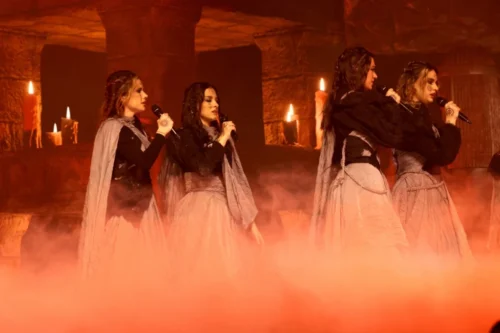
Croatia has chosen their representatives! The annual edition of Dora has taken place, and Lelek have crowned themselves the winner! The group won over both the jury and televote. The girls will represent croatia at the Eurovision Song Contest in Vienna.

photo: HRT/ Dario Njavro

date: 15 February
Place: HRT Studios, Prisavlje, Zagreb
Hosts: Barbara Kolar, Duško Čurlić, Ivan Vukušić & Iva Šulentić

1 Ananda Dora 13 7 20 15
l: Ananda Đuranović, Diogo Guerra, Tchiah Ommar Abdulrahman & Ynke Dingenen m: Ananda Đuranović, Diogo Guerra, Dora Pejačević, Tchiah Ommar Abdulrahman & Ynke Dingenen        
2 Sergej Scream 33 9 42 10
l: Laura Sučec, Matej Magdić & Sergej Božić m: Laura Sučec        
3 Noelle Uninterrupted 27 11 38 13
l: Bonnie Max, Ivana ‘Noelle’ Crnković, Larissa Tormey & Rebecca Lane m: Bonnie Max, Filipe Nicolau, Larissa Tormey, Rebecca Lane        
4 Alen Đuras From Ashes To Flame 41 15 56 7
l & m: Alen Đuras & Siniša Reljić        
5 Irma Ni traga 32 11 43 8
l & m: Anja Grabovac & Jan Jakovljev        
6 Lara Demarin Mantra 22 18 40 12
l: Ananda Đuranović, Lara Demarin & Luka Demarin  m: Ananda Đuranović, Lara Demarin, Robert Aralica        
7 Ema Bubić Vrijeme za nas 3 9 12 16
l & m: Lara Pilepić        
8 Lima Len Raketa 20 36 56 6
l & m: Alen Kozić & Damir Božanić        
9 Lana Mandarić Tama 21 11 32 14
l: Zorana Mandarić  m: Zorana Mandarić & Lana Mandarić        
10 Ritam Noir Profumi Di Mare 5 35 40 11
l & m: Moris Orbanić        
11 Marko Kutlić Neotuđivo 20 22 42 9
l & m: Marko Kutlić        
12 Devin Over Me 22 39 61 5
l & m: Devin Juraj        
13 Lelek Andromeda 77 96 173 1
l: Tomislav Roso m: Filip Lacković, Lazar Pajić & Zorja Pajić        
14 ToMa Ledina 44 27 71 4
l: Tomislav Marić  m: Jan Jakovljev & Tomislav Marić        
15 Stela Rade Nema te 46 47 93 3
l & m: Anja Grabovac & Jan Jakovljev        
16 Cold Snap Mucho Macho 38 70 108 2
l: Jan Kerekeš  m: Jan Kerekeš & Josip Novak        


1st semifinal

date: 12 february
Place: HRT Studios, Prisavlje, Zagreb
Hosts: Barbara Kolar, Duško Čurlić, Ivan Vukušić & Iva Šulentić

1 Lima Len Raketa advanced      
l & m: Alen Kozić & Damir Božanić        
2 Jasmina Makota Higher eliminated      
l: Jasmina Makota  m: Jasmina Makota & Marin Hraščanec        
3 Ananda Dora advanced      
l: Ananda Đuranović, Diogo Guerra, Tchiah Ommar Abdulrahman & Ynke Dingenen m: Ananda Đuranović, Diogo Guerra, Dora Pejačević, Tchiah Ommar Abdulrahman & Ynke Dingenen        
4 Tony Sky O Ne! eliminated      
l & m: Toni Volar        
5 Fran Uccellini Ako bolje bude sutra eliminated      
l & m: Fran Uccellini        
6 Ema Bubić Vrijeme za nas advanced      
l & m: Lara Pilepić        
7 Noelle Uninterrupted advanced      
l: Bonnie Max, Ivana ‘Noelle’ Crnković, Larissa Tormey & Rebecca Lane m: Bonnie Max, Filipe Nicolau, Larissa Tormey, Rebecca Lane        
8 Alen Đuras From Ashes To Flame advanced      
l & m: Alen Đuras & Siniša Reljić        
9 Fenksta Momento Mori eliminated      
l: Abby Dank, Emma Louise Gale & Saša ‘Fenksta” Stević  m: Abby Dank & Saša ‘Fenksta’ Stević        
10 Cold Snap Mucho Macho advanced      
l: Jan Kerekeš  m: Jan Kerekeš & Josip Novak        
11 ToMa Ledina advanced      
l: Tomislav Marić  m: Jan Jakovljev & Tomislav Marić        
12 Lelek Andromeda advanced      
l: Tomislav Roso m: Filip Lacković, Lazar Pajić & Zorja Pajić        


2nd semifinal

date: 13 February
Place: HRT Studios, Prisavlje, Zagreb
Hosts: Barbara Kolar, Duško Čurlić, Ivan Vukušić & Iva Šulentić

1 Ritam Noir Profumi Di Mare advanced      
l & m: Moris Orbanić        
2 Irma Ni traga advanced      
l & m: Anja Grabovac & Jan Jakovljev        
3 Gabrijel Ivić Light Up eliminated      
l & m: Gabrijel Ivić & Jun Ishida        
4 Zevin My Mind eliminated      
l & m: Jernej Drnovšek, Nives Cilenšek        
5 Ivan Sever Crying Eyes eliminated      
l & m: Aidan O’Connor, Ivan Sever & John Doherty        
6 Lana Mandarić Tama advanced      
l: Zorana Mandarić  m: Zorana Mandarić & Lana Mandarić        
7 Stela Rade Nema te advanced      
l & m: Anja Grabovac & Jan Jakovljev        
8 Devin Over Me advanced      
l & m: Devin Juraj        
9 3 ujutro eliminated      
l & m: Stjepko ‘Kandžija’ Galović        
10 Marko Kutlić Neotuđivo advanced      
l & m: Marko Kutlić        
11 Sergej Scream advanced      
l: Laura Sučec, Matej Magdić & Sergej Božić m: Laura Sučec        
12 Lara Demarin Mantra advanced      
l: Ananda Đuranović, Lara Demarin & Luka Demarin  m: Ananda Đuranović, Lara Demarin, Robert Aralica        


Related news

History

70 years of Eurovision: the first years

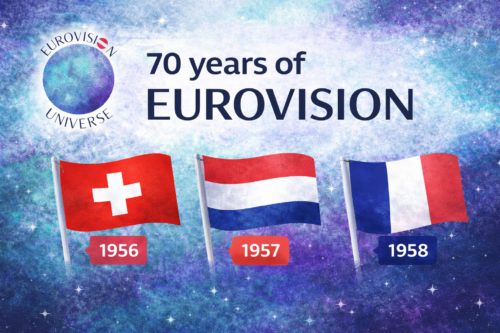
The Eurovision Song Contest is celebrating its 70th anniversary. That is a wonderful milestone. We at Eurovision Universe love diving into the history of the contest. That is why we are taking a closer look at the contests of the past 70 years. 1956 Seven countries lined up at the start of the Song Contest. Lugano, Switzerland hosted the event. Belgium, Germany, France, Italy, Luxembourg, the Netherlands, and Switzerland took part. Each country could submit two songs, which helped fill the programme. Lohengrin Filipello presented the show entirely in Italian. The scoring lacked suspense. Two jurors from each country gave their verdict. At the end of the evening, Rolf Liebermann, the Martin Green of his time, came on stage and announced Switzerland as the winner. That result did not come as a surprise. Luxembourg did not send any jurors and instead asked two Swiss jurors to vote on their behalf. The winning song was the Swiss “Refrain”. When singer Lys Assia had to sing her song again, it became too much for her. She said she was overcome by emotions and decided to start over. Few moving images of the festival have survived; however, an audio recording does. 1957 United Kingdom, Denmark, and Austria joined the seven already participating countries. The contest was held in Frankfurt am Main, Germany. And this time, there was a voting procedure. Host Anaid Iplikjan had an assistant who established the telephone connections. It was a tough job for the presenter: not every jury chairman had read the instructions properly. Anaid had to constantly make adjustments. One entry that should not go unmentioned is that of Denmark. Birthe Wilke and Gustav Winckler played a fishing couple. She said goodbye to him because he had to go sailing. The act ended with a kiss. At a sign from the director, the two were supposed to let go of each other. However, the person who was supposed to give that sign was not paying attention, causing the kiss to last an extremely long time. And this happened in 1957! It did not get any more exciting after that. The Dutch Corry Brokken won with a landslide. She made quite an impression with her “Net als toen”. This was due in no small part to the beautiful solo by violinist Sem Nijveen. 1958 For the first time, the winning country hosted the Song Contest the following year. Ten countries competed in the AVRO studio in Hilversum. Great Britain skipped this edition, but Sweden made its debut. Hannie Lips served as the host. She only appeared after all the songs had been performed. At that point, she explained that technical problems had prevented some countries from broadcasting the first entry, Italy’s song. The organisers therefore repeated it. He did not win. However, it was a lucrative experience for the Italian Domenico Modugno. His song “Nel blu dipinto di blu”, under the title “Volare”, probably became the biggest Eurovision hit ever. Countless versions have been made of it. Dean Martin’s is the best known, but David Bowie and Paul McCartney also sang the song. The battle for first place was incredibly exciting. This one was between France and Switzerland. 1956 winner Lys Assia seemed poised to take first place with her “Giorgio”. She just missed out. It was the Frenchman André Claveau who claimed first place with “Dors mon amour”. And for anyone who thinks he went on to buy a villa or a yacht with the proceeds from this song: not at all. He happily announced that he could now purchase an extra cow for his herd!

Read More »
History
Martijn

70 years of Eurovision: the first years

The Eurovision Song Contest is celebrating its 70th anniversary. That is a wonderful milestone. We at Eurovision Universe love diving into the history of the contest. That is why we are taking a closer look at the contests of the past 70 years. 1956 Seven countries lined up at the start of the Song Contest. Lugano, Switzerland hosted the event. Belgium, Germany, France, Italy, Luxembourg, the Netherlands, and Switzerland took part. Each country could submit two songs, which helped fill the programme. Lohengrin Filipello presented the show entirely in Italian. The scoring lacked suspense. Two jurors from each country gave their verdict. At the end of the evening, Rolf Liebermann, the Martin Green of his time, came on stage and announced Switzerland as the winner. That result did not come as a surprise. Luxembourg did not send any jurors and instead asked two Swiss jurors to vote on their behalf. The winning song was the Swiss “Refrain”. When singer Lys Assia had to sing her song again, it became too much for her. She said she was overcome by emotions and decided to start over. Few moving images of the festival have survived; however, an audio recording does. 1957 United Kingdom, Denmark, and Austria joined the seven already participating countries. The contest was held in Frankfurt am Main, Germany. And this time, there was a voting procedure. Host Anaid Iplikjan had an assistant who established the telephone connections. It was a tough job for the presenter: not every jury chairman had read the instructions properly. Anaid had to constantly make adjustments. One entry that should not go unmentioned is that of Denmark. Birthe Wilke and Gustav Winckler played a fishing couple. She said goodbye to him because he had to go sailing. The act ended with a kiss. At a sign from the director, the two were supposed to let go of each other. However, the person who was supposed to give that sign was not paying attention, causing the kiss to last an extremely long time. And this happened in 1957! It did not get any more exciting after that. The Dutch Corry Brokken won with a landslide. She made quite an impression with her “Net als toen”. This was due in no small part to the beautiful solo by violinist Sem Nijveen. 1958 For the first time, the winning country hosted the Song Contest the following year. Ten countries competed in the AVRO studio in Hilversum. Great Britain skipped this edition, but Sweden made its debut. Hannie Lips served as the host. She only appeared after all the songs had been performed. At that point, she explained that technical problems had prevented some countries from broadcasting the first entry, Italy’s song. The organisers therefore repeated it. He did not win. However, it was a lucrative experience for the Italian Domenico Modugno. His song “Nel blu dipinto di blu”, under the title “Volare”, probably became the biggest Eurovision hit ever. Countless versions have been made of it. Dean Martin’s is the best known, but David Bowie and Paul McCartney also sang the song. The battle for first place was incredibly exciting. This one was between France and Switzerland. 1956 winner Lys Assia seemed poised to take first place with her “Giorgio”. She just missed out. It was the Frenchman André Claveau who claimed first place with “Dors mon amour”. And for anyone who thinks he went on to buy a villa or a yacht with the proceeds from this song: not at all. He happily announced that he could now purchase an extra cow for his herd!

Read More »
Follow Us: