EBU warning Israel after voting campaign

đź“·EBU/Corinne Cumming

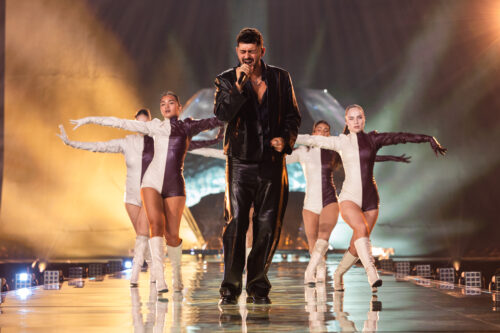
The EBU warning to Israel concerns broadcaster KAN and its promotion of “Michelle” by Noam Bettan. The song is Israel’s Eurovision 2026 entry. The warning followed promotional videos in which viewers were urged to use all ten votes for Israel. Eurovision director Martin Green said the EBU contacted the delegation soon after the videos appeared. The campaign was then removed from the relevant platforms.

According to the EBU, such a direct voting appeal does not fit the contest rules. It also goes against the spirit of fair competition. KAN said the campaign was the artist’s own initiative. The broadcaster also denied that illegal funding was involved.

Rule changes after Israel debate

The EBU warning to Israel is notable because it comes in the first year under stricter Eurovision rules. These changes followed the debate after Eurovision 2025. That year, Israel’s Yuval Raphael finished second overall and won the public vote. Several broadcasters and commentators then raised questions about promotion, voting transparency and organised support.

As a result, the EBU changed parts of the voting system. The maximum number of votes per payment method was reduced from 20 to 10. Professional juries also returned to the semi-finals. In addition, the EBU tightened its rules on disproportionate promotion. This is especially relevant when governments or third parties are involved.

Israel’s Eurovision entries have also faced repeated scrutiny over lyrics. In 2024, Eden Golan’s original song “October Rain” was rejected by the EBU. The lyrics were seen as too political for the contest. A second version, “Dance Forever”, was also not accepted in its first form. Israel eventually competed with the revised song “Hurricane”. This year, Israel’s 2026 entry was approved only after extra checks and reported minor changes.

Taken together, the warning, the rule changes and the lyric interventions show a clear pattern. Israel remains part of Eurovision, and KAN denies deliberate rule-breaking. Still, Israel again seems to test how far the rules go. Time after time, the country appears to search for the edges of what is allowed. 


Related news

Eurovision 2026

Vienna 12 points: the joy of being 2nd

Several countries start their second rehearsals in Vienna. As we still don’t have access to the rehearsals, we will do something else. Per entry, we highlight one subject and give you some more information. That can be something about the artist, the song, the lyrics or even something completely different.  🇩🇪 Germany — Sarah Engels, “Fire” Running order: – | Rehearsal: 9 May, 15:00–15:25 CEST Deutschland sucht den Superstar is one of Germany’s longest-running TV talent shows. Since its first broadcast on RTL in 2002, DSDS has introduced many singers to a national audience. One of its most memorable former contestants is Sarah Engels. Her story in the show was not an instant success. She auditioned in 2009 and 2010, but failed to reach the live shows. In 2011, her third attempt changed everything. Sarah reached the final of Deutschland sucht den Superstar and finished second behind Pietro Lombardi. That season also brought strong media attention, partly because Sarah and Pietro became a couple during the competition. For Sarah Engels, DSDS became the platform that launched a lasting music and television career. Her journey shows why casting shows can still matter. A failed audition does not always mark the end. Sometimes, as Sarah proved, it is only the beginning for many artists in Germany today. 🇫🇷 France — Monroe, “Regarde!” Running order: – | Rehearsal: 9 May, 15:35–16:00 CEST France at Eurovision has rediscovered its confidence since Barbara Pravi’s “Voilà” in 2021. The chanson finished second with 499 points and quickly became a modern Eurovision classic. It gave France something it had missed for years: a clear identity and real winning momentum. The years after “Voilà” were not perfect. Alvan & Ahez finished 24th in 2022, while La Zarra ended 16th in 2023. Still, both entries showed France was willing to take risks. In 2024, Slimane restored the country’s place near the top. His emotional performance of “Mon amour” finished fourth with 445 points. In 2025, Louane kept the positive run alive, taking seventh place with “maman”. This year, Monroe’s “Regarde !” keeps France in the top-five conversation. Whether it reaches that result remains uncertain. Yet France now looks like a country that believes in its Eurovision choices again. That confidence may be its strongest result of the decade so far. 🇬🇧 United Kingdom — Look Mum No Computer, “Eins, Zwei, Drei” Running order: – | Rehearsal: 9 May, 16:10–16:35 CEST Before Look Mum No Computer was confirmed for Eurovision 2026, the BBC faced reports about another possible UK act. In January, media claimed that a participant had been dropped. Routine checks had reportedly raised concerns about historic online comments. The Euro Trip Podcast later gave a more careful account. It reported that an unnamed act was told they would not represent the United Kingdom in Vienna. However, the person had not signed a contract. The BBC also said no formal offer had been made. That means the story is not a simple rejection. It suggests the artist was considered, but never officially chosen. Weeks later, the BBC announced Look Mum No Computer, the stage name of Sam Battle. His song “Eins, Zwei, Drei” gives the United Kingdom a strikingly unusual entry. With synth-pop, humour and eccentric British creativity, it marks a clear change of direction for the BBC at Eurovision. 🇦🇹 Austria — CosmĂł, “Tanzschein” Running order: 25 | Rehearsal: 9 May, 16:45–17:10 CEST Hosting Eurovision has become more of a curse than an advantage. Since 2015, many host countries have struggled on the scoreboard. Austria finished 26th in 2015. Ukraine came 24th in 2017. Portugal ended last in 2018, while Israel placed 23rd in 2019. The Netherlands also finished 23rd in 2021. The United Kingdom came 25th in 2023. There were brighter results too. Sweden finished fifth in 2016 and ninth in 2024. Italy came sixth in 2022. Switzerland reached tenth in 2025 with ZoĂ« MĂ« and “Voyage”. Still, six of the last ten host countries ended in the bottom five. No host country has won Eurovision since Ireland in 1994. Fans often call this trend the “host country curse”. Some speculate that broadcasters avoid another expensive victory. Whatever the reason, hosting now seems to bring pressure rather than a clear advantage. Recent results make that debate easy to understand for many fans.  

Read More »
Eurovision 2026
Martijn

Vienna 12 points: the joy of being 2nd

Several countries start their second rehearsals in Vienna. As we still don’t have access to the rehearsals, we will do something else. Per entry, we highlight one subject and give you some more information. That can be something about the artist, the song, the lyrics or even something completely different.  🇩🇪 Germany — Sarah Engels, “Fire” Running order: – | Rehearsal: 9 May, 15:00–15:25 CEST Deutschland sucht den Superstar is one of Germany’s longest-running TV talent shows. Since its first broadcast on RTL in 2002, DSDS has introduced many singers to a national audience. One of its most memorable former contestants is Sarah Engels. Her story in the show was not an instant success. She auditioned in 2009 and 2010, but failed to reach the live shows. In 2011, her third attempt changed everything. Sarah reached the final of Deutschland sucht den Superstar and finished second behind Pietro Lombardi. That season also brought strong media attention, partly because Sarah and Pietro became a couple during the competition. For Sarah Engels, DSDS became the platform that launched a lasting music and television career. Her journey shows why casting shows can still matter. A failed audition does not always mark the end. Sometimes, as Sarah proved, it is only the beginning for many artists in Germany today. 🇫🇷 France — Monroe, “Regarde!” Running order: – | Rehearsal: 9 May, 15:35–16:00 CEST France at Eurovision has rediscovered its confidence since Barbara Pravi’s “Voilà” in 2021. The chanson finished second with 499 points and quickly became a modern Eurovision classic. It gave France something it had missed for years: a clear identity and real winning momentum. The years after “Voilà” were not perfect. Alvan & Ahez finished 24th in 2022, while La Zarra ended 16th in 2023. Still, both entries showed France was willing to take risks. In 2024, Slimane restored the country’s place near the top. His emotional performance of “Mon amour” finished fourth with 445 points. In 2025, Louane kept the positive run alive, taking seventh place with “maman”. This year, Monroe’s “Regarde !” keeps France in the top-five conversation. Whether it reaches that result remains uncertain. Yet France now looks like a country that believes in its Eurovision choices again. That confidence may be its strongest result of the decade so far. 🇬🇧 United Kingdom — Look Mum No Computer, “Eins, Zwei, Drei” Running order: – | Rehearsal: 9 May, 16:10–16:35 CEST Before Look Mum No Computer was confirmed for Eurovision 2026, the BBC faced reports about another possible UK act. In January, media claimed that a participant had been dropped. Routine checks had reportedly raised concerns about historic online comments. The Euro Trip Podcast later gave a more careful account. It reported that an unnamed act was told they would not represent the United Kingdom in Vienna. However, the person had not signed a contract. The BBC also said no formal offer had been made. That means the story is not a simple rejection. It suggests the artist was considered, but never officially chosen. Weeks later, the BBC announced Look Mum No Computer, the stage name of Sam Battle. His song “Eins, Zwei, Drei” gives the United Kingdom a strikingly unusual entry. With synth-pop, humour and eccentric British creativity, it marks a clear change of direction for the BBC at Eurovision. 🇦🇹 Austria — CosmĂł, “Tanzschein” Running order: 25 | Rehearsal: 9 May, 16:45–17:10 CEST Hosting Eurovision has become more of a curse than an advantage. Since 2015, many host countries have struggled on the scoreboard. Austria finished 26th in 2015. Ukraine came 24th in 2017. Portugal ended last in 2018, while Israel placed 23rd in 2019. The Netherlands also finished 23rd in 2021. The United Kingdom came 25th in 2023. There were brighter results too. Sweden finished fifth in 2016 and ninth in 2024. Italy came sixth in 2022. Switzerland reached tenth in 2025 with ZoĂ« MĂ« and “Voyage”. Still, six of the last ten host countries ended in the bottom five. No host country has won Eurovision since Ireland in 1994. Fans often call this trend the “host country curse”. Some speculate that broadcasters avoid another expensive victory. Whatever the reason, hosting now seems to bring pressure rather than a clear advantage. Recent results make that debate easy to understand for many fans.  
Read More »
Follow Us: