🇵🇱 Road to Basel: Poland

Road to Basel: Poland

Road to Basel: Poland. As the Eurovision Song Contest in Basel approaches, we continue our daily spotlight on this year’s contestants. Today, we focus on Poland.

Justyna Steczkowska

Justyna Steczkowska is a renowned Polish singer, songwriter, and actress, born on August 2, 1972, in Rzeszów, Poland. She first gained international recognition in 1995 when she represented Poland at the Eurovision Song Contest with the song “Sama,” ultimately finishing in 18th place. Since then, Steczkowska has established herself as a versatile artist by exploring various genres, including pop, alternative, trip hop, and world music. Moreover, throughout a career spanning more than three decades, she has released numerous albums and has collaborated with many different artists. As a result, she has solidified her status as a prominent figure in the Polish music scene.

Gaja (What does AI say?)

Her Eurovision 2025 entry, “Gaja,” is a compelling composition that blends electronic pop elements together with ethereal melodies. Significantly, the song takes its name from Gaia, the personification of Earth in Greek mythology, and thus explores themes about humanity’s connection with nature as well as the importance of environmental awareness. Additionally, “Gaja” is performed in both Polish and English, opening memorably with the evocative line, “They call me Gaja,” which immediately sets the mystical tone of the song. As a result, the track has strongly resonated with audiences, rapidly becoming a viral sensation and accumulating over 10 million views on YouTube, along with more than 2 million streams on Spotify.

National Selection Process

Poland’s representative for Eurovision 2025 was chosen through the national selection event “Wielki Finał Polskich Kwalifikacji,” held on February 14, 2025, at the TVP Headquarters in Warsaw. The competition featured 11 entries, with the winner determined solely by public televote. Justyna Steczkowska’s “Gaja” emerged victorious, securing 39.32% of the votes and earning her the honor of representing Poland in Basel.

The results were:

  1. Justyna Steczkowska, “Gaja
  2. Swada x Niczos, “Lusterka
  3. Dominik Dudek, “Hold The Light
  4. Chrust, “Tempo
  5. Kuba Szmajkowski, “Pray
  6. Teo, “Immortal
  7. Janusz Radek, “In Cosmic Mist
  8. Sonia Maselik, “Rumours
  9. Tynsky, “Miracle
  10. Marien, “Can’t Hide
  11. Daria Marx, “Let It Burn
Poland in the Eurovision Song Contest

Poland made its Eurovision debut in 1994 and achieved its best result that year, finishing second with Edyta Górniak‘s “To nie ja!” Since then, the country has participated numerous times, with varying degrees of success. They never made it to the top-5 again. Ich Troje was the most succesful group with “Keine Grenzen – Żadnych granic” in 2003. Notably, Justyna Steczkowska’s return to the Eurovision stage in 2025 marks a significant moment, as she becomes the Polish artist with the longest interval between two Eurovision appearances.
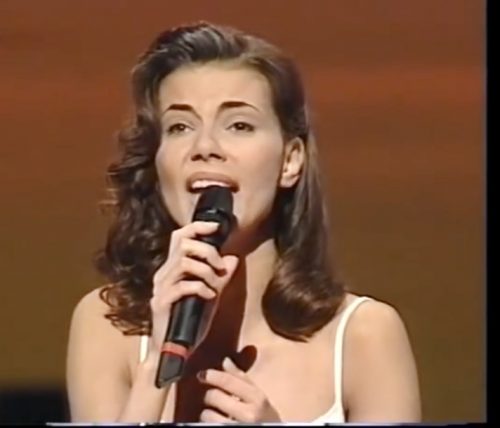
Edyta Gorniak

A Random Polish Entry

Reflecting on Poland’s Eurovision history, random.org chose the song that never entered the Eurovision stage: “Empire” by Alicja. In 2020 the contest was canceled due to COVID19. While other countries chose the same artist again the other year, Poland did not. Alicja did another attempt in the 2023 national final, but failed. Maybe we will see her back in another Eurovision final…

Betting Odds

As of now, Justyna Steczkowska’s “Gaja” has garnered a 24th place in the odds to win the contest. It looks like she will not win. However, in the end any surprise is possible.

We eagerly await the Eurovision Song Contest in Basel and look forward to witnessing Justyna Steczkowska’s performance on the grand stage.

Related news

Eurovision 2026

Eurovision 2026 reactions after second semi-final

The Eurovision 2026 reactions continued immediately after Thursday night’s second semi-final in Vienna. Bulgaria, Ukraine, Norway, Australia, Romania, Malta, Cyprus, Albania, Denmark and Czechia qualified for Saturday’s Grand Final. Azerbaijan, Luxembourg, Armenia, Switzerland and Latvia did not make it through. Since Eurovision will only reveal the detailed ranking after the final, the “winners” of the night are again the ten qualifiers. Social media quickly filled with tears, hugs and short messages from the green room. Qualifiers celebrate their Grand Final place Bulgaria’s DARA was the first name announced, and her disbelief was clear. In a filmed reaction, she said she “could not believe” it, while also underlining how much she loved being on stage with “Bangaranga”. Ukraine’s LELÉKA reacted with a softer kind of joy. She said she felt happy, hopeful and “lightful” after taking “Ridnym” to the final. Australia’s Delta Goodrem also moved quickly into gratitude mode. After qualifying with “Eclipse”, she called the moment “pure magic” and thanked fans for every vote, message and bit of love. Norway’s Jonas Lovv sounded equally relieved. Speaking to Norwegian press, he said the result felt “insanely” good and joked that his celebration plan was to go straight to bed. Malta’s AIDAN gave one of the most emotional reactions of the night. He said he was “genuinely so happy” and pointed out that the Maltese language was back on the Eurovision stage after 54 years. Denmark’s Søren Torpegaard Lund described himself as overwhelmed and happy, while Czechia’s Daniel Zizka said he was grateful, tired and still trying to understand what had happened. Albania’s Alis also remained emotional after “Nân” reached the final. Cyprus’ Antigoni thanked everyone who supported “JALLA” and said she had felt confident Cyprus could qualify. Romania’s Alexandra Căpitănescu also celebrated online after “Choke Me” secured Romania a place in the Grand Final. For all ten qualifiers, the mood immediately shifted from nerves to preparation for Saturday. Non-qualifiers thank fans and look back For the five non-qualifiers, the Eurovision 2026 reactions were more reflective. Luxembourg’s Eva Marija looked back with pride after “Mother Nature” missed the final. She said she had given everything, was proud of herself and felt grateful for the Eurovision adventure. Azerbaijan’s JIVA ended her performance by thanking Europe, but “Just Go” did not qualify. Armenia’s SIMÓN, Switzerland’s Veronica Fusaro and Latvia’s Atvara also stayed in the semi-final. Their latest Eurovision messages focused on the performance itself, the meaning behind their songs and the support around them. That made their reactions quieter, but not less meaningful. The second semi-final therefore showed the familiar two sides of Eurovision: pure celebration for the qualifiers and gratitude, disappointment and pride for those whose Vienna journey ended before Saturday.

Read More »
Eurovision 2026
Martijn

Eurovision 2026 reactions after second semi-final

The Eurovision 2026 reactions continued immediately after Thursday night’s second semi-final in Vienna. Bulgaria, Ukraine, Norway, Australia, Romania, Malta, Cyprus, Albania, Denmark and Czechia qualified for Saturday’s Grand Final. Azerbaijan, Luxembourg, Armenia, Switzerland and Latvia did not make it through. Since Eurovision will only reveal the detailed ranking after the final, the “winners” of the night are again the ten qualifiers. Social media quickly filled with tears, hugs and short messages from the green room. Qualifiers celebrate their Grand Final place Bulgaria’s DARA was the first name announced, and her disbelief was clear. In a filmed reaction, she said she “could not believe” it, while also underlining how much she loved being on stage with “Bangaranga”. Ukraine’s LELÉKA reacted with a softer kind of joy. She said she felt happy, hopeful and “lightful” after taking “Ridnym” to the final. Australia’s Delta Goodrem also moved quickly into gratitude mode. After qualifying with “Eclipse”, she called the moment “pure magic” and thanked fans for every vote, message and bit of love. Norway’s Jonas Lovv sounded equally relieved. Speaking to Norwegian press, he said the result felt “insanely” good and joked that his celebration plan was to go straight to bed. Malta’s AIDAN gave one of the most emotional reactions of the night. He said he was “genuinely so happy” and pointed out that the Maltese language was back on the Eurovision stage after 54 years. Denmark’s Søren Torpegaard Lund described himself as overwhelmed and happy, while Czechia’s Daniel Zizka said he was grateful, tired and still trying to understand what had happened. Albania’s Alis also remained emotional after “Nân” reached the final. Cyprus’ Antigoni thanked everyone who supported “JALLA” and said she had felt confident Cyprus could qualify. Romania’s Alexandra Căpitănescu also celebrated online after “Choke Me” secured Romania a place in the Grand Final. For all ten qualifiers, the mood immediately shifted from nerves to preparation for Saturday. Non-qualifiers thank fans and look back For the five non-qualifiers, the Eurovision 2026 reactions were more reflective. Luxembourg’s Eva Marija looked back with pride after “Mother Nature” missed the final. She said she had given everything, was proud of herself and felt grateful for the Eurovision adventure. Azerbaijan’s JIVA ended her performance by thanking Europe, but “Just Go” did not qualify. Armenia’s SIMÓN, Switzerland’s Veronica Fusaro and Latvia’s Atvara also stayed in the semi-final. Their latest Eurovision messages focused on the performance itself, the meaning behind their songs and the support around them. That made their reactions quieter, but not less meaningful. The second semi-final therefore showed the familiar two sides of Eurovision: pure celebration for the qualifiers and gratitude, disappointment and pride for those whose Vienna journey ended before Saturday.

Read More »
Follow Us: