🇩🇪 Road to Malmö: Germany

We can not wait for the Eurovision Song Contest in Malmö. Therefore, we have a closer look at one of the contestants every day. Today: Germany.

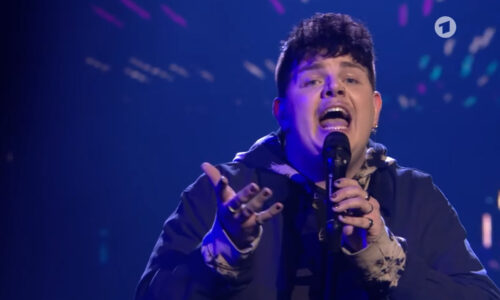
Isaak

Isaak Guderian, a gifted German singer and musical actor born in 1996 in Minden and raised in Costedt, has etched a remarkable path in the music industry, stemming from a musical household that laid the foundation for his early interest in guitar and piano. Embarking on his musical journey with street performances at just twelve, Guderian’s talent became evident when his rendition of Oasis’s “Wonderwall” on the X Factor TV show won the hearts of many at fifteen. Transitioning to a solo career by eighteen, he navigated through performances at various events until the pandemic shifted his course temporarily towards reliance on unemployment benefits.

Another moment in 2021 saw Guderian clinching victory in the Show your Talent online contest, catapulting him into streaming success and garnering accolades from international stars like Pink. With hits like “Water to the Seed” and “Impact” amassing over a million streams each, and the chart-topping collaboration “Baby Steps” with DJ David Puentez, his career reached new heights. Guderian’s triumph in the German Eurovision selection for 2024 with “Always On The Run” further solidified his status as a notable talent. Residing in Valdorf with his wife Loreen and their two sons, Isaak Guderian continues to captivate and inspire with his musical prowess.

Eurovision Song Contest – Das Deutsche Finale

Prior to the German final Eurovision Song Contest – Das Deutsche Finale a talent show was held: Ich Will Zum ESC! Coached by Conchita Wurst and Rea Garvey, 15 talents competed for a ticket to the final. The show was won by Floryan. He was one of the 9 competitors in the final. Another contestant was returning artist Max Mutzke, who previously represented Germany in the 2004 Eurovision final. Marie Reim, the daughter of famous schlager singer Matthias Reim, was also part of the competition. But in the end, it was Isaak who won.

Germany in the Eurovision Song Contest

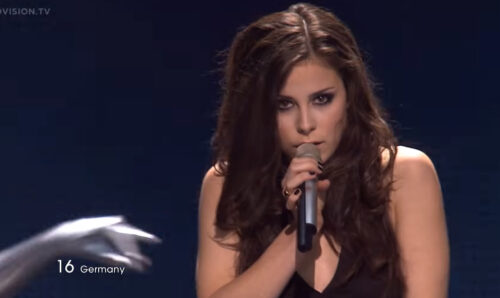
The only country participating in ALL the Eurovision Song Contests is Germany. Only in 1996, Leon did not reach the final with his “Planet of Blue”, as the song did not survive an audio final. A lot of times, Germany was close to winning. Only two times it really happened: in 1982 with Nicole‘s “Ein bißchen Frieden” and in 2010 with Lena‘s “Sattelite”. The last couple of years, Germany seems to have lost it, with very low scores.
The Bookmakers

Currently, the bookmakers predict a 29th place in the odds. Germany is automatically placed in the final, but the score is not too promising. However, we don’t know as staging and performance can also lift a song. Let’s wait and see.

The song

And this is the song:

Related news

Eurovision 2026

Vienna 12 points: From MUSEXPO to Musical

Several countries start their second rehearsals in Vienna. As we still don’t have access to the rehearsals, we will do something else. Per entry, we highlight one subject and give you some more information. That can be something about the artist, the song, the lyrics or even something completely different.  Switzerland — Veronica Fusaro, “Alice” Running order: 7 | Rehearsal: 8 May, 15:00–15:25 CEST MUSEXPO is one of the music industry’s key meeting places, where artists, labels, publishers, managers and media professionals come together to discover new talent and discuss the future of music. Founded by A&R Worldwide, the event combines panels, networking sessions, awards and live showcases. It has been held in Los Angeles and has also had European editions, including London, making it a truly international platform. For Eurovision fans, MUSEXPO is interesting because it often gives rising artists a stage before a wider breakthrough. Singer Veronica Fusaro performed at MUSEXPO in London and Los Angeles, showing how the event can connect young talent with influential people from the global music business. Unlike a traditional festival, MUSEXPO is mainly aimed at professionals. Its goal is not only entertainment, but also discovery, cooperation and new opportunities across the music, media and technology world, especially for artists ready to grow internationally today.  Cyprus — Antigoni, “Jalla” Running order: 8 | Rehearsal: 8 May, 15:35–16:00 CEST Tsifteteli is a lively dance style from Greece, Cyprus, Turkey and the wider eastern Mediterranean. The name comes from the Turkish çiftetelli, often linked to a “double string” musical style. In Greek culture, tsifteteli is known for fluid hip movements, expressive arms and a sensual, celebratory feeling. It is often compared with belly dancing, but it also belongs to everyday social life: people dance it at parties, weddings and festivals, not only on stage. That background gives extra colour to Antigoni’s Eurovision lyric “Shake my hips to tsifteteli”. As a British artist with Greek-Cypriot roots, she uses the word as a cultural reference, not just as a dance instruction. In “Jalla”, tsifteteli helps create a Mediterranean party atmosphere, mixing modern pop energy with sounds and movements that many Greek and Cypriot listeners will instantly recognise. For international fans, it is a small word with big cultural meaning at Eurovision 2026 in Vienna.  Latvia — Atvara, “Ēnā” Running order: 9 | Rehearsal: 8 May, 16:10–16:35 CEST Ēnā meaning is central to Latvia’s Eurovision 2026 entry by Atvara. In Latvian, ēna means “shadow” or “shade”, while ēnā means “in the shadow” or “in the shade”. That small grammatical change gives the title extra weight, because the song places its main character inside darkness, not just near it. The lyrics show someone losing confidence, hiding feelings and drifting away from the light. Atvara links this image to the pain of growing up around another person’s addiction, which gives “Ēnā” a personal and emotional meaning. For Eurovision viewers, the title explains the dark atmosphere of Latvia’s entry. This song does not tell a simple story about sadness. It explores fear, family pressure and the courage someone needs to step out of darkness in Vienna at Eurovision 2026. That makes it a strong title for a dramatic performance. “Ēnā” proves how one Latvian word can carry emotion, memory and resilience.  Denmark — Søren Torpegaard Lund, “Før vi går hjem” Running order: 10 | Rehearsal: 8 May, 16:45–17:10 CEST Matador musical brings one of Denmark’s best-loved classics to the stage. The story comes from DR’s “Matador”, with scripts by Lise Nørgaard and direction by Erik Balling, and takes audiences back to the fictional town of Korsbæk. There, banker Hans Christian Varnæs and newcomer Mads Skjern represent two families, two social worlds and a changing Denmark before and during the Second World War. In 2024, One & Only Musicals presented a new original version with songs by Lise Cabble and Burhan G. The production mixed nostalgia, humour, ambition and family drama with a fresh musical sound. Søren Torpegaard Lund played Daniel Skjern, the son of Mads and Ingeborg Skjern. His role gave him a touching solo moment with “En dreng som mig”, a song about expectations and identity. For Eurovision fans, Matador shows the theatre background behind Denmark’s 2026 artist and adds context to his performance skills on the Eurovision stage in Vienna.  

Read More »
Eurovision 2026
Martijn

Vienna 12 points: From MUSEXPO to Musical

Several countries start their second rehearsals in Vienna. As we still don’t have access to the rehearsals, we will do something else. Per entry, we highlight one subject and give you some more information. That can be something about the artist, the song, the lyrics or even something completely different.  Switzerland — Veronica Fusaro, “Alice” Running order: 7 | Rehearsal: 8 May, 15:00–15:25 CEST MUSEXPO is one of the music industry’s key meeting places, where artists, labels, publishers, managers and media professionals come together to discover new talent and discuss the future of music. Founded by A&R Worldwide, the event combines panels, networking sessions, awards and live showcases. It has been held in Los Angeles and has also had European editions, including London, making it a truly international platform. For Eurovision fans, MUSEXPO is interesting because it often gives rising artists a stage before a wider breakthrough. Singer Veronica Fusaro performed at MUSEXPO in London and Los Angeles, showing how the event can connect young talent with influential people from the global music business. Unlike a traditional festival, MUSEXPO is mainly aimed at professionals. Its goal is not only entertainment, but also discovery, cooperation and new opportunities across the music, media and technology world, especially for artists ready to grow internationally today.  Cyprus — Antigoni, “Jalla” Running order: 8 | Rehearsal: 8 May, 15:35–16:00 CEST Tsifteteli is a lively dance style from Greece, Cyprus, Turkey and the wider eastern Mediterranean. The name comes from the Turkish çiftetelli, often linked to a “double string” musical style. In Greek culture, tsifteteli is known for fluid hip movements, expressive arms and a sensual, celebratory feeling. It is often compared with belly dancing, but it also belongs to everyday social life: people dance it at parties, weddings and festivals, not only on stage. That background gives extra colour to Antigoni’s Eurovision lyric “Shake my hips to tsifteteli”. As a British artist with Greek-Cypriot roots, she uses the word as a cultural reference, not just as a dance instruction. In “Jalla”, tsifteteli helps create a Mediterranean party atmosphere, mixing modern pop energy with sounds and movements that many Greek and Cypriot listeners will instantly recognise. For international fans, it is a small word with big cultural meaning at Eurovision 2026 in Vienna.  Latvia — Atvara, “Ēnā” Running order: 9 | Rehearsal: 8 May, 16:10–16:35 CEST Ēnā meaning is central to Latvia’s Eurovision 2026 entry by Atvara. In Latvian, ēna means “shadow” or “shade”, while ēnā means “in the shadow” or “in the shade”. That small grammatical change gives the title extra weight, because the song places its main character inside darkness, not just near it. The lyrics show someone losing confidence, hiding feelings and drifting away from the light. Atvara links this image to the pain of growing up around another person’s addiction, which gives “Ēnā” a personal and emotional meaning. For Eurovision viewers, the title explains the dark atmosphere of Latvia’s entry. This song does not tell a simple story about sadness. It explores fear, family pressure and the courage someone needs to step out of darkness in Vienna at Eurovision 2026. That makes it a strong title for a dramatic performance. “Ēnā” proves how one Latvian word can carry emotion, memory and resilience.  Denmark — Søren Torpegaard Lund, “Før vi går hjem” Running order: 10 | Rehearsal: 8 May, 16:45–17:10 CEST Matador musical brings one of Denmark’s best-loved classics to the stage. The story comes from DR’s “Matador”, with scripts by Lise Nørgaard and direction by Erik Balling, and takes audiences back to the fictional town of Korsbæk. There, banker Hans Christian Varnæs and newcomer Mads Skjern represent two families, two social worlds and a changing Denmark before and during the Second World War. In 2024, One & Only Musicals presented a new original version with songs by Lise Cabble and Burhan G. The production mixed nostalgia, humour, ambition and family drama with a fresh musical sound. Søren Torpegaard Lund played Daniel Skjern, the son of Mads and Ingeborg Skjern. His role gave him a touching solo moment with “En dreng som mig”, a song about expectations and identity. For Eurovision fans, Matador shows the theatre background behind Denmark’s 2026 artist and adds context to his performance skills on the Eurovision stage in Vienna.  

Read More »
Follow Us: