🇦🇱 Road to Malmö: Albania

We can not wait for the Eurovision Song Contest in Malmö. Therefore, we have a closer look at one of the contestants every day. Today: Albania.

Besa

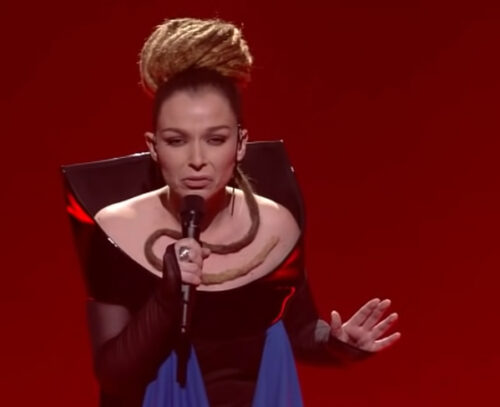
Besa Kokëdhima, known as Besa, is a famous singer from Albania. She was born on May 29, 1986, in Fier, Albania. When she was 15, she moved to the UK to study. Her music career started in 2003 with her first song, “Më Beso,” which won an award. She released her first album in 2006 with songs made with famous Albanian musicians.

Besa has done really well in music contests. She won an R&B award for her song “Lëshoje Hapin.” She tried to get into Eurovision with “Nothin’ Gonna Change” and won an award for Best Female Singer in 2010 with “Kalorësi i Natës.” She’s also known for songs like “Fishekzjarre” and “Burning.”

Besides singing, Besa judged on The Voice of Albania and released albums that got great reviews. In 2022, she sang “En Equilibre” in French. Recently, she was chosen to represent Albania in Eurovision 2024 with “Zemrën n’dorë” after winning the televote.

Festivali i Këngës

Festivali i KĂ«ngĂ«s is a prestigious music competition held annually in Albania, beginning in 1962. It’s famous for showcasing new talents and original songs across various genres, becoming a cornerstone of Albanian culture. Over the years, it has evolved but always remains true to celebrating Albanian music and creativity. This festival also serves as Albania’s method for selecting its Eurovision Song Contest entry since 2004, adding an international dimension to its significance. Winners gain not only national fame but also the chance to represent Albania on the Eurovision stage, making it a highly anticipated event in the country’s musical calendar. Since last year, a jury decides the winner, televote decides who will represent Albania in the Eurovision Song Contest. Besa won the televote this year with the song “ZemrĂ«n n’dorĂ«”, which is now translated into English, titled “Titan”.

Albania in the Eurovision Song Contest

The first ever Albanian eurovision song was “The image of you” by Anjeza Shahini in 2004. “Titan” will be the 20th Albanian Eurovision song. Over the years, Albania has reached the Grand Final in many occasions. However, only one time the Albanians managed to reach the top-5: that was in 2012 with Rona Nishliu and her song “Suus”; she reached the 5th place.

The Bookmakers

Currently, Albania is 32nd in the betting odds to win the contest. However, the experience is that Albania reaches the final quite easily, so there is serious hope for Besa.

The song

And this is the song:

Related news

Eurovision 2026

Vienna 12 points: From festivali i Këngës to Sanremo

Several countries start their second rehearsals in Vienna. As we still don’t have access to the rehearsals, we will do something else. Per entry, we highlight one subject and give you some more information. That can be something about the artist, the song, the lyrics or even something completely different.  Australia — Delta Goodrem, “Eclipse” Running order: 11 | Rehearsal: 9 May, 10:30–10:55 CEST Delta Goodrem’s breakthrough came at the perfect intersection of television and music. After signing a record deal at fifteen, the Australian singer was cast as shy schoolgirl Nina Tucker in Neighbours in 2002. The role gave her music a national platform: “Born to Try”, performed within the series, introduced audiences to her piano-led pop sound and quickly became her first Australian number one. In March 2003, Goodrem released her debut album Innocent Eyes, a polished collection of emotional ballads and radio-friendly pop songs. The album turned her from promising newcomer into one of Australia’s defining pop stars of the decade. It debuted at number one on the ARIA Albums Chart and remained there for 29 weeks, an Australian-artist record. With five number-one singles, including “Lost Without You”, “Not Me, Not I” and “Predictable”, Innocent Eyes became a major landmark debut and established Goodrem as a powerful vocalist and songwriter internationally.  Ukraine — LelĂ©ka, “Ridnym” Running order: 12 | Rehearsal: 9 May, 11:05–11:30 CEST When Ukraine’s Eurovision 2026 act is called LELÉKA, it can seem slightly confusing: the name refers both to singer Viktoria LelĂ©ka and to the band she founded in Berlin in 2016. The group is her own long-running Ukrainian-German folk-jazz project. Built around Viktoria’s distinctive voice, LELÉKA combines Ukrainian traditional melodies with contemporary jazz, improvisation and warm acoustic arrangements. The quartet’s line-up includes Viktoria LelĂ©ka on vocals, Povel Widestrand on piano, Thomas Kolarczyk on double bass and Jakob Hegner on drums. Long before Eurovision, the band had already made a name for itself on the European jazz scene. They won the Creole Global Music Contest in Berlin and the European Young Jazz Talent Award in Burghausen. Releases such as Tuman, Sonce u Serci and Rizdvo show the group’s musical identity: rooted in Ukrainian culture, but shaped in Berlin’s vibrant international jazz world today.  Albania — Alis, “Nân” Running order: 13 | Rehearsal: 9 May, 11:40–12:05 CEST Festivali i KĂ«ngĂ«s is often introduced as Albania’s national final. Its story began however long before Albania joined the contest. The first edition was held in Tirana in December 1962. That makes it one of Europe’s longest-running song festivals. Created by Albanian public broadcaster Radio Televizioni Shqiptar, the festival became a central stage for Albanian light music, composers, orchestras and vocalists. During the communist period it also reflected the country’s cultural restrictions. The songs and performances were closely controlled. Yet the festival survived, year after year, and many of Albania’s best-known singers built their reputations there. Since 2004, the winner or selected act from Festivali i KĂ«ngĂ«s has represented Albania at the Eurovision Song Contest.Anjeza Shahini was the first one. That Eurovision link gave FiK a new international audience, but at its heart it remains much more than a selection show. It is Albanian music history and national cultural tradition.  Malta — AIDAN, “Bella” Running order: 14 | Rehearsal: 9 May, 12:20–12:45 CEST With Aidan’s Eurovision entry “Bella”, the Maltese language returns to the contest for the first time since Claudette Pace’s “Desire” in 2000. Maltese, or Malti, is a small island language with a remarkably rich history. It is Malta’s national language and, together with English, one of the country’s two official languages. Linguistically, it is especially unusual. Maltese is a Semitic language, developed from medieval Arabic, but shaped over centuries by Sicily, Italy and later Britain. As a result, its sound world feels both Mediterranean and distinctly its own. Words of Arabic origin sit naturally beside vocabulary influenced by Italian, Sicilian and English, while the language is written in the Latin alphabet. Since Malta joined the European Union, Maltese has also been an official EU language. At Eurovision, hearing Maltese again is therefore more than a musical detail: it is a proud reminder of Malta’s layered cultural identity and history today.  Norway — JONAS LOVV, “Ya Ya Ya” Running order: 15 | Rehearsal: 9 May, 12:55–13:20 CEST In Eurovision, repetitions can become statistics. Norway’s Jonas Lovv turns “Ya” into an unofficial record: in “YA YA YA” he sings the word 72 times, matching Finland’s Pave Maijanen, who packed “Yamma” 72 times into “Yamma, yamma”. Maijanen represented Finland in Malmö in 1992 with a cheerful, nostalgic song about the old valve radio. The lyrics imagine a tiny box containing “a hundred musicians”, while memories of Sinatra and John Lennon on the radio become seeds of happiness. Musically, “Yamma, yamma” is built around its nonsense-like hook, a playful syllable that does more than fill space: it gives the song its identity. The entry did not convince the juries and finished 23rd and last with four points. Still, three decades later, its repeated refrain has found a new claim to fame: a shared Eurovision record with Jonas Lovv’s chant in the contest’s ever-growing book of memorable lyrical curiosities and oddities. 🇮🇹 Italy — Sal Da Vinci, “Per sempre si” Running order: – | Rehearsal: 9 May, 13:30–13:55 CEST Festival di Sanremo is much more than Italy’s Eurovision selection. The contest was first held in 1951 in the Casino Theatre of Sanremo. It was created as a festival for new Italian songs and quickly became a national institution. Its format was so influential that it helped inspire the creation of the Eurovision Song Contest in 1956. Over the decades, Sanremo has introduced classics, launched careers and reflected changing Italian tastes. Since Italy’s Eurovision return, the link between the two contests has become increasingly important. Today, the winner of the Campioni section is given the first choice to represent Italy at Eurovision, usually with the Sanremo-winning song. If the winner declines, RAI can choose another act from the festival. That rule

Read More »
Eurovision 2026
Martijn

Vienna 12 points: From festivali i Këngës to Sanremo

Several countries start their second rehearsals in Vienna. As we still don’t have access to the rehearsals, we will do something else. Per entry, we highlight one subject and give you some more information. That can be something about the artist, the song, the lyrics or even something completely different.  Australia — Delta Goodrem, “Eclipse” Running order: 11 | Rehearsal: 9 May, 10:30–10:55 CEST Delta Goodrem’s breakthrough came at the perfect intersection of television and music. After signing a record deal at fifteen, the Australian singer was cast as shy schoolgirl Nina Tucker in Neighbours in 2002. The role gave her music a national platform: “Born to Try”, performed within the series, introduced audiences to her piano-led pop sound and quickly became her first Australian number one. In March 2003, Goodrem released her debut album Innocent Eyes, a polished collection of emotional ballads and radio-friendly pop songs. The album turned her from promising newcomer into one of Australia’s defining pop stars of the decade. It debuted at number one on the ARIA Albums Chart and remained there for 29 weeks, an Australian-artist record. With five number-one singles, including “Lost Without You”, “Not Me, Not I” and “Predictable”, Innocent Eyes became a major landmark debut and established Goodrem as a powerful vocalist and songwriter internationally.  Ukraine — LelĂ©ka, “Ridnym” Running order: 12 | Rehearsal: 9 May, 11:05–11:30 CEST When Ukraine’s Eurovision 2026 act is called LELÉKA, it can seem slightly confusing: the name refers both to singer Viktoria LelĂ©ka and to the band she founded in Berlin in 2016. The group is her own long-running Ukrainian-German folk-jazz project. Built around Viktoria’s distinctive voice, LELÉKA combines Ukrainian traditional melodies with contemporary jazz, improvisation and warm acoustic arrangements. The quartet’s line-up includes Viktoria LelĂ©ka on vocals, Povel Widestrand on piano, Thomas Kolarczyk on double bass and Jakob Hegner on drums. Long before Eurovision, the band had already made a name for itself on the European jazz scene. They won the Creole Global Music Contest in Berlin and the European Young Jazz Talent Award in Burghausen. Releases such as Tuman, Sonce u Serci and Rizdvo show the group’s musical identity: rooted in Ukrainian culture, but shaped in Berlin’s vibrant international jazz world today.  Albania — Alis, “Nân” Running order: 13 | Rehearsal: 9 May, 11:40–12:05 CEST Festivali i KĂ«ngĂ«s is often introduced as Albania’s national final. Its story began however long before Albania joined the contest. The first edition was held in Tirana in December 1962. That makes it one of Europe’s longest-running song festivals. Created by Albanian public broadcaster Radio Televizioni Shqiptar, the festival became a central stage for Albanian light music, composers, orchestras and vocalists. During the communist period it also reflected the country’s cultural restrictions. The songs and performances were closely controlled. Yet the festival survived, year after year, and many of Albania’s best-known singers built their reputations there. Since 2004, the winner or selected act from Festivali i KĂ«ngĂ«s has represented Albania at the Eurovision Song Contest.Anjeza Shahini was the first one. That Eurovision link gave FiK a new international audience, but at its heart it remains much more than a selection show. It is Albanian music history and national cultural tradition.  Malta — AIDAN, “Bella” Running order: 14 | Rehearsal: 9 May, 12:20–12:45 CEST With Aidan’s Eurovision entry “Bella”, the Maltese language returns to the contest for the first time since Claudette Pace’s “Desire” in 2000. Maltese, or Malti, is a small island language with a remarkably rich history. It is Malta’s national language and, together with English, one of the country’s two official languages. Linguistically, it is especially unusual. Maltese is a Semitic language, developed from medieval Arabic, but shaped over centuries by Sicily, Italy and later Britain. As a result, its sound world feels both Mediterranean and distinctly its own. Words of Arabic origin sit naturally beside vocabulary influenced by Italian, Sicilian and English, while the language is written in the Latin alphabet. Since Malta joined the European Union, Maltese has also been an official EU language. At Eurovision, hearing Maltese again is therefore more than a musical detail: it is a proud reminder of Malta’s layered cultural identity and history today.  Norway — JONAS LOVV, “Ya Ya Ya” Running order: 15 | Rehearsal: 9 May, 12:55–13:20 CEST In Eurovision, repetitions can become statistics. Norway’s Jonas Lovv turns “Ya” into an unofficial record: in “YA YA YA” he sings the word 72 times, matching Finland’s Pave Maijanen, who packed “Yamma” 72 times into “Yamma, yamma”. Maijanen represented Finland in Malmö in 1992 with a cheerful, nostalgic song about the old valve radio. The lyrics imagine a tiny box containing “a hundred musicians”, while memories of Sinatra and John Lennon on the radio become seeds of happiness. Musically, “Yamma, yamma” is built around its nonsense-like hook, a playful syllable that does more than fill space: it gives the song its identity. The entry did not convince the juries and finished 23rd and last with four points. Still, three decades later, its repeated refrain has found a new claim to fame: a shared Eurovision record with Jonas Lovv’s chant in the contest’s ever-growing book of memorable lyrical curiosities and oddities. 🇮🇹 Italy — Sal Da Vinci, “Per sempre si” Running order: – | Rehearsal: 9 May, 13:30–13:55 CEST Festival di Sanremo is much more than Italy’s Eurovision selection. The contest was first held in 1951 in the Casino Theatre of Sanremo. It was created as a festival for new Italian songs and quickly became a national institution. Its format was so influential that it helped inspire the creation of the Eurovision Song Contest in 1956. Over the decades, Sanremo has introduced classics, launched careers and reflected changing Italian tastes. Since Italy’s Eurovision return, the link between the two contests has become increasingly important. Today, the winner of the Campioni section is given the first choice to represent Italy at Eurovision, usually with the Sanremo-winning song. If the winner declines, RAI can choose another act from the festival. That rule
Read More »
Follow Us: