About
Biography
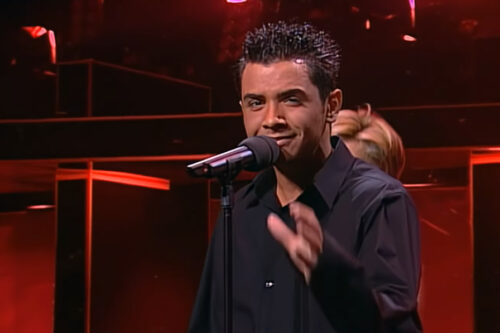
David Civera Gracia (born January 8, 1979) is a Spanish pop singer from Teruel, Aragón. He is best known for representing Spain at the Eurovision Song Contest 2001 with the catchy pop song “Dile que la quiero”, which earned him a 6th place finish in the competition. This strong Eurovision showing launched Civera to national fame. Over a career spanning more than 20 years, he has released numerous hit songs and albums, made popular TV appearances, and remained a beloved figure in Spanish pop music.
Early Life and Beginnings (1979–2000)
As a teen David Civera studied computing in school, but music was his true passion. With support from his family, he took solfège, guitar, and piano lessons in Valencia, traveling from his hometown of Teruel to improve his musical skills. His first taste of show business came at 17 years old, when he began entering television talent contests. He won a national karaoke TV show and participated in several regional TV programs in the mid-1990s. In 1996, Civera got his first big TV break on the popular talent show Lluvia de Estrellas, where contestants impersonated famous singers. He performed as Enrique Iglesias on that show. Although he did not win the contest, judges complimented him for having his own style. The following year, 1997, he released his first album titled Hoy como ayer. However, this debut album failed to achieve commercial success.
Eurovision Breakthrough in 2001
After several years of honing his craft, David Civera’s big break arrived in 2001. He caught the attention of producer Alejandro Abad, who encouraged him to enter Eurocanción, the Spanish national song contest to select Spain’s Eurovision representative. Civera entered Eurocanción with the song “Dile que la quiero” (“Tell Her That I Love Her”) and won. This victory earned him the honor of representing Spain at the Eurovision Song Contest 2001 in Copenhagen. At the Eurovision final on May 12, 2001, Civera delivered an energetic performance and achieved 6th place out of 23 entries. Civera’s Eurovision hit “Dile que la quiero” became a nationwide summer anthem and reached #1 on the Spanish charts. His breakthrough at Eurovision not only kick-started his solo career but also had a wider influence. Industry insiders credit Civera’s success for inspiring the launch of Spain’s first Operación Triunfo talent show later in 2001.
Post-Eurovision Musical Success (2001–2005)
Riding the momentum of Eurovision, David Civera quickly built a successful pop music career in the early 2000s. He released an album also titled Dile que la quiero in 2001, which became a commercial hit in Spain. The album went multi-platinum, selling over 300,000 copies, and produced multiple hit singles. In 2002, Civera followed up with his next album En cuerpo y alma, which sold more than 200,000 copies. He earned a Platinum certification. This album’s lead single “Que la detengan” (“Stop Her”) was a huge summer hit that topped Spanish radio charts. Civera became known as a specialist in catchy “canciones del verano” (“summer songs”), as he churned out one summertime hit after another. In 2003, he traveled to New Orleans to record his third major album, La Chiqui Big Band, which had a big band influence. This album spawned popular songs like “Bye Bye” and “Rosas y espinas”, a duet with fellow star David Bisbal. All of these singles reached the #1 spot on Los 40 Principales, Spain’s top pop music chart. By the mid-2000s, Civera had accumulated multiple Platinum records for his album sales, firmly establishing him as one of Spain’s prominent pop artists of the decade.
New album and ¡Mira quién baila!
In 2004, Civera took a brief step back from recording (releasing only a live concert DVD), but he returned in 2005 with a new studio album Perdóname. This album had a distinctive tango-inspired style that showcased his willingness to experiment. Perdóname was another commercial success (reaching double Platinum sales), and its title track became a #1 hit in Spain. During that same year, David Civera expanded his fame beyond music by participating in the Spanish edition of Dancing with the Stars, called ¡Mira quién baila!. He won the televised dance competition, demonstrating his charisma on the dance floor, and he generously donated his prize money to benefit Alzheimer’s disease patients. This charitable act was a personal milestone that endeared him to many fans.
Continued Career and Television Work (2006–Present)
After 2005, David Civera continued to release new music regularly and also became involved in other media projects. His 2006 album Ni el primero ni el último marked a slight shift, featuring more ballads and dance-pop tunes. In 2007, he released No bastará, an album influenced by Italian pop sounds. Around this time, Civera received an honorary tribute in his hometown Teruel, where he was celebrated at the famous Mausoleum of the Lovers of Teruel in 2007. By 2008, after delivering seven studio albums, Civera fulfilled his recording contract with Vale Music and released his first Greatest Hits compilation that year. Also in 2008, he broadened his media career by debuting as a television presenter. Civera became the host of Madrid Superstar, a regional TV talent show on Telemadrid.
Civera’s musical output continued steadily into the 2010s. In late 2009 he put out Podemos elegir, and in 2011 he released A ritmo de clásicos, an album of classic song covers that reached an impressive #6 on the Spanish albums chart. The single “Gloria” from that album also charted nationally. His next studio album, Versión original, came in 2013 and featured new original songs. After that, Civera shifted his focus slightly. He did not release another full studio album in the mid-2010s. However, he stayed in the public eye through singles, live performances, and TV appearances. In 2016, to celebrate 15 years of mainstream success, he released 15 Aniversario, a special compilation album and his first independent record. Demonstrating that he was still actively creating music, Civera put out an EP titled Empatía in 2019.
Recent work
In the 2020s, David Civera remains a familiar name in Spanish entertainment. In 2021, he was honored by his hometown’s tourism center with a “Lovers of Teruel” figure recognizing his cultural contributions. The following year, in 2022, he released a new pop single called “Entre amigos” and performed on national television during Telecinco’s Sálvame Mediafest music festival. He also joined the lineup of the nostalgia-themed Love the Tuenti’s music festival in Madrid that summer. To mark over two decades in music, Civera embarked on a “20+1” concert tour in 2022, celebrating 21 years since his breakthrough. In May 2023, he continued to produce new music with the release of his single “Vida”, demonstrating his ongoing creativity and relevance. After many albums and hit singles, Civera’s career totals include three Platinum records and one Gold record in Spain, reflecting the strong sales of his early 2000s releases. Even after so many years, he continues to appear on stage and on television, maintaining a loyal fan base.
Personal Life and Milestones
Beyond music and media, David Civera has important personal milestones that have shaped his life. He married his longtime girlfriend, Ana María Benedí, on September 29, 2007, in a ceremony at the Cathedral of Teruel. The couple had been sweethearts since their teenage years. They have two children together: a son named Daniel, born in 2011, and a daughter named Laura, born in 2013. Civera has often expressed that family is very important to him, and he balanced his music career with his family life, especially in the 2010s when his children were young.
Entries
Dile que la quiero
Country
🇪🇸 Spain
Year
2001
Language
Spanish
Lyrics
Victor Salvi
Alejandro Abad
Music
Victor Salvi
Alejandro Abad
Backings
Belinda Sánchez Leal
Eva Gomariz
Susana Ribalta
Irina Grusza
Irina Riatchancheva
Results
Points: 76
Position: 6
Running order: 13