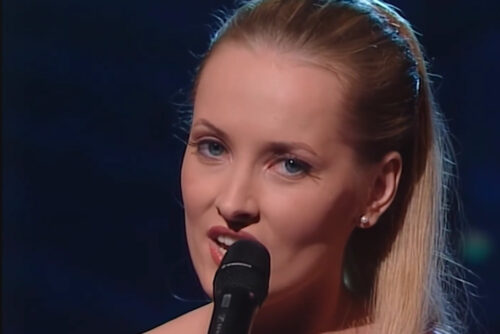
Blast from the past: Slovenia 1997

We know a lot about Eurovision and we want to share this knowledge with you! Therefore we’d like to bring you a blast from the past. Today, we go back to 1997, when Tanja Ribič represented Slovenia with her song “Zbudi se”.

Slovenia in the Eurovision Song Contest

Slovenia has competed in Eurovision since 1993, representing RTV Slovenija after the Yugoslav era. Its best results are two seventh places: Darja Švajger in 1995 and Nuša Derenda in 2001. Recent years illustrate range and ambition: LPS with “Disko” (2022), Joker Out with “Carpe Diem” qualifying for the 2023 final, and Raiven’s opera-pop “Veronika” placing 23rd in 2024. In 2025, Klemen won EMA with “How Much Time Do We Have Left” and finished 13th in Semi-Final 1, so Slovenia missed the final. 
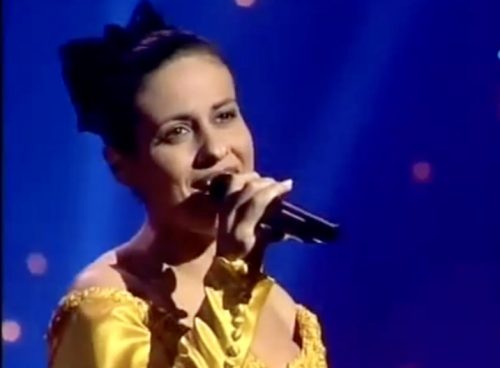
EMA 1997

Evrovizijska Melodija, mostly shortened as EMA, was and is the Slovenian national selection. In 1997, it was held in RTVSLO Studio 1 in Ljubljana. Mojca Mavec hosted the show on 22 February. No less than 13 songs competed.

  1. Nekdo“, sung by Natalija Verboten, 265 pts, 12th
  2. Zaradi nje“, sung by Dominik Kozarič, 650 pts, 9th
  3. Zbudi se“, sung by Tanja Ribič, 4,493 pts, 1st
  4. Veter z juga“, sung by Tinkara Kovac, 574 pts, 10th
  5. Kadar boš ob njej zaspal“, sung by Irena Vrčkovnik, 1,010 pts, 7th
  6. Daljave“, sung by Melita & Klarisa, 512 pts, 11th
  7. Le en poljub“, sung by Grom, 895 pts, 8th
  8. Prosim ostani“, sung by Napoleon, 1,794 pts, 5th
  9. Korak v dežju“, sung by Katrina, 213 pts, 13nd
  10. Jagode in čokolada“, sung by Rok ‘n’ Band, 2,226 pts, 3rd
  11. Vsakdanji čudež“, sung by Darja Švajger, 4,076 pts, 2nd
  12. Ti in jaz“, Vili Resnik, 1,521 pts, 6th
  13. Objemi me nežno“, M4M, 2,047 pts, 4th

No former Eurovision participants took part this year. However, no less than three artists would get to the Eurovision stage on later occasions: Tinkara Kovac, Darja Švajger and Vili Resnik.

Tanja Ribič

Tanja Ribič (born 28 June 1968) is a Slovenian actress and singer whose career spans theatre, film and television. She studied acting at the Academy of Theatre, Radio, Film and Television (AGRFT) in Ljubljana; she enrolled in 1987 and joined the Ljubljana City Theatre (MGL) in 1992, where she has remained a long‑standing member. On television, she became widely known to Slovenian audiences through the sitcom Naša mala klinika. On film, she appeared in regional and domestic productions, among them Kajmak i marmelada (2003) and Traktor, ljubezen in Rock’n’Roll (2008). Her stage and screen work shows a mix of comedy and drama, and she has also performed music alongside acting. 
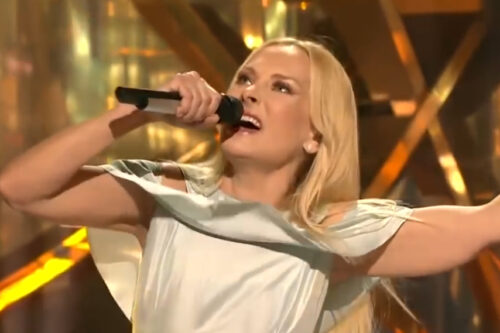
Ribič reached an international audience in 1997, when she represented Slovenia at the Eurovision Song Contest in Dublin with the song “Zbudi se”. She finished tenth with 60 points, a result that consolidated her visibility beyond the theatre. After Eurovision, she continued to work across media, taking roles in television series and films while returning regularly to the MGL ensemble. Later film work includes the comedy‑horror Prekletstvo Valburge (2019) and a role in the 2024 feature Tartinijev ključ. Ribič married Bosnian actor and director Branko Đurić in 2000, and the couple has occasionally collaborated professionally; they have two children. She continues to appear on stage and screen in Slovenia.

Zbudi se

“Zbudi se” (“Wake Up”) was Slovenia’s Eurovision 1997 entry, performed by Tanja Ribič. It placed 10th with 60 points in Dublin. The song is a gentle Slovene-language pop ballad from the live-orchestra era, built on piano and strings with a mid-tempo lift and a lilting chorus. Its lyric is an invitation to awaken and embrace love, giving the performance a warm, romantic tone rather than showy drama. The arrangement leaves space for Ribič’s voice and backing vocals to blend, creating an accessible, radio-friendly sound. An English version, “Waken Now,” later circulated, but the original “Zbudi se” remains the standard version.

Related news

History

🇦🇹 Austria in the Eurovision Song Contest, part 3

📷 Waterloo & Robinson This year’s Eurovision Song Contest has been won by Austria. It was the 57th Austrian entry. Reason for us to go back to all the Austrian entries in history! For the third episode, we will look back at the seventies. Austria entered the top-5 twice. They also sang in a minority language. They also had some deviant entries. 1971 – Marianne Mendt – Musik Austria returned to the Eurovision Song Contest in 1971 after a two-year absence . They boycotted the Franco-ruled 1969 contest and protesting the four-way tie of 1969 by skipping 1970. Marianne Mendt performed “Musik.” Mendt, a jazz-pop singer from Vienna, delivered the song in her native Viennese German dialect, a rarity at Eurovision. Richard Schönherz and Manuel Rigoni composed “Musik” and also wrote its lyrics, giving the entry a swinging, soulful vibe about the power of music. At the contest in Dublin, “Musik” scored 66 points and finished 16th out of 18 entries. 1972 – The Milestones – Falter im Wind The Austrian rock band The Milestones represented the country at the Eurovision Song Contest 1972 in Edinburgh with “Falter im Wind” (“Butterfly in the Wind”). Composers Richard Schönherz and Manuel Rigoni teamed up with lyricist Heinz Unger to craft this folk-tinged pop song addressed to a butterfly. They reflected on life’s impermanence. The song’s gentle melody and rich harmonies resonated with the juries. Austria earned 100 points and achieved 5th place. This was the country’s best Eurovision result since its 1966 victory, showcasing a high point for Austria before a brief mid-’70s withdrawal from the contest. 1976 – Waterloo & Robinson – My Little World After skipping the contest from 1973 to 1975, Austria returned at the Eurovision Song Contest 1976 in The Hague with pop duo Waterloo & Robinson performing “My Little World.” The duo was already popular at home. They presented an upbeat, feel-good song that songwriter Gerhard Heinz had composed. Sung in English, “My Little World” celebrates the simple joys of love and life. It earned 80 points and reached 5th place, matching Austria’s 1972 success. This strong result followed ORF’s mid-’70s Eurovision hiatus, which was reportedly due to dissatisfaction with the contest’s scoring system at the time. 1977 – Die Schmetterlinge – Boom Boom Boomerang Austria took a daring turn at the Eurovision Song Contest 1977 in London with the group Schmetterlinge and their song “Boom Boom Boomerang.” Known for their political cabaret style, Schmetterlinge delivered a satirical pop performance. In that performance they lampooned the commercial music industry, complete with nonsense “international” lyrics and zany on-stage antics. Group members like Georg “Schurli” Herrnstadt and Willi Resetarits wrote the music, while Lukas Resetarits provided tongue-in-cheek lyrics skewering formulaic pop. Despite the bold concept and humor, the entry earned only 11 points, placing 17th out of 18 countries. Notably, two members of Schmetterlinge had been part of The Milestones (Austria’s 1972 act), adding a nod to the country’s earlier Eurovision experience. 1978 – Springtime – Mrs. Caroline Robinson In 1978, Austria was represented by Springtime, a pop trio formed by brothers Walter and Gerhard Markel with bassist Norbert Niedermayer. Their song “Mrs. Caroline Robinson” was an upbeat schlager-pop number with a humorous twist. It was written by the trio themselves. The lyrics told the quirky story of Caroline Robinson, the “top-witch of this town” who captivates everyone with her charm. Springtime’s performance in Paris was fun and energetic, and the song even became a hit at home. It earned a gold record in Austria. On the Eurovision scoreboard, however, “Mrs. Caroline Robinson” earned 14 points, finishing 15th out of 20 countries in 1978. 1979 – Christina Simon – Heute in Jerusalem Austria’s 1979 entry was the soulful “Heute in Jerusalem” (“Today in Jerusalem”), performed by singer Christina Simon. Christina had a background as a jazz vocalist. This reflective ballad was composed by Peter Wolf with lyrics by Austrian artist André Heller. Musically it blended contemporary jazz and blues influences, and its lyrics carried a heartfelt plea for peace in Jerusalem. That was quite fittingly, the contest was held in Jerusalem just days after the Israel–Egypt peace treaty. Simon’s emotional delivery brought gravitas to the stage. Unfortunately, “Heute in Jerusalem” received only 5 points, ending up in 18th (last) place at the 1979 contest. 

Read More »
History
Martijn

🇦🇹 Austria in the Eurovision Song Contest, part 3

📷 Waterloo & Robinson This year’s Eurovision Song Contest has been won by Austria. It was the 57th Austrian entry. Reason for us to go back to all the Austrian entries in history! For the third episode, we will look back at the seventies. Austria entered the top-5 twice. They also sang in a minority language. They also had some deviant entries. 1971 – Marianne Mendt – Musik Austria returned to the Eurovision Song Contest in 1971 after a two-year absence . They boycotted the Franco-ruled 1969 contest and protesting the four-way tie of 1969 by skipping 1970. Marianne Mendt performed “Musik.” Mendt, a jazz-pop singer from Vienna, delivered the song in her native Viennese German dialect, a rarity at Eurovision. Richard Schönherz and Manuel Rigoni composed “Musik” and also wrote its lyrics, giving the entry a swinging, soulful vibe about the power of music. At the contest in Dublin, “Musik” scored 66 points and finished 16th out of 18 entries. 1972 – The Milestones – Falter im Wind The Austrian rock band The Milestones represented the country at the Eurovision Song Contest 1972 in Edinburgh with “Falter im Wind” (“Butterfly in the Wind”). Composers Richard Schönherz and Manuel Rigoni teamed up with lyricist Heinz Unger to craft this folk-tinged pop song addressed to a butterfly. They reflected on life’s impermanence. The song’s gentle melody and rich harmonies resonated with the juries. Austria earned 100 points and achieved 5th place. This was the country’s best Eurovision result since its 1966 victory, showcasing a high point for Austria before a brief mid-’70s withdrawal from the contest. 1976 – Waterloo & Robinson – My Little World After skipping the contest from 1973 to 1975, Austria returned at the Eurovision Song Contest 1976 in The Hague with pop duo Waterloo & Robinson performing “My Little World.” The duo was already popular at home. They presented an upbeat, feel-good song that songwriter Gerhard Heinz had composed. Sung in English, “My Little World” celebrates the simple joys of love and life. It earned 80 points and reached 5th place, matching Austria’s 1972 success. This strong result followed ORF’s mid-’70s Eurovision hiatus, which was reportedly due to dissatisfaction with the contest’s scoring system at the time. 1977 – Die Schmetterlinge – Boom Boom Boomerang Austria took a daring turn at the Eurovision Song Contest 1977 in London with the group Schmetterlinge and their song “Boom Boom Boomerang.” Known for their political cabaret style, Schmetterlinge delivered a satirical pop performance. In that performance they lampooned the commercial music industry, complete with nonsense “international” lyrics and zany on-stage antics. Group members like Georg “Schurli” Herrnstadt and Willi Resetarits wrote the music, while Lukas Resetarits provided tongue-in-cheek lyrics skewering formulaic pop. Despite the bold concept and humor, the entry earned only 11 points, placing 17th out of 18 countries. Notably, two members of Schmetterlinge had been part of The Milestones (Austria’s 1972 act), adding a nod to the country’s earlier Eurovision experience. 1978 – Springtime – Mrs. Caroline Robinson In 1978, Austria was represented by Springtime, a pop trio formed by brothers Walter and Gerhard Markel with bassist Norbert Niedermayer. Their song “Mrs. Caroline Robinson” was an upbeat schlager-pop number with a humorous twist. It was written by the trio themselves. The lyrics told the quirky story of Caroline Robinson, the “top-witch of this town” who captivates everyone with her charm. Springtime’s performance in Paris was fun and energetic, and the song even became a hit at home. It earned a gold record in Austria. On the Eurovision scoreboard, however, “Mrs. Caroline Robinson” earned 14 points, finishing 15th out of 20 countries in 1978. 1979 – Christina Simon – Heute in Jerusalem Austria’s 1979 entry was the soulful “Heute in Jerusalem” (“Today in Jerusalem”), performed by singer Christina Simon. Christina had a background as a jazz vocalist. This reflective ballad was composed by Peter Wolf with lyrics by Austrian artist André Heller. Musically it blended contemporary jazz and blues influences, and its lyrics carried a heartfelt plea for peace in Jerusalem. That was quite fittingly, the contest was held in Jerusalem just days after the Israel–Egypt peace treaty. Simon’s emotional delivery brought gravitas to the stage. Unfortunately, “Heute in Jerusalem” received only 5 points, ending up in 18th (last) place at the 1979 contest. 

Read More »
Follow Us: