Blast from the past: Germany 1967

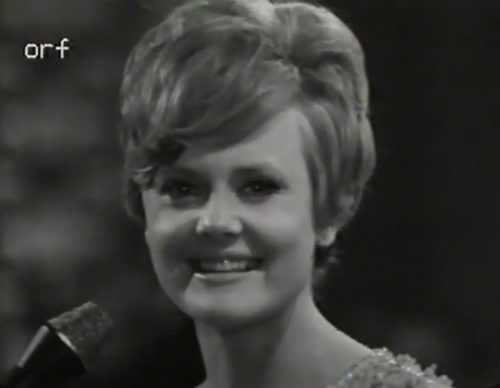
We know a lot about Eurovision and we want to share this knowledge with you! Therefore we’d like to bring you a blast from the past. Today, we go back to 1967 when Inge Brück represented Germany with the song “Anouschka”.

Germany in the Eurovision Song Contest

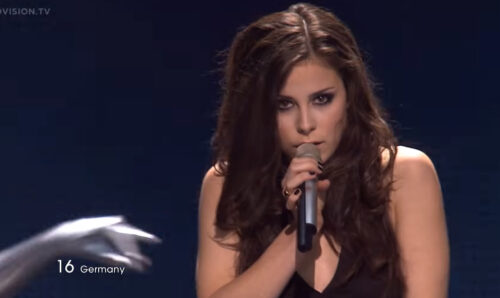
Germany has a long Eurovision history, having competed since 1956 and won twice: in 1982 with Ein bißchen Frieden (Nicole) and in 2010 with Satellite (Lena). Being part of the “Big Five”, Germany is always in the final.

Recent entries have had mixed success. In 2022, Malik Harris sang Rockstars and ended up 25th with 6 points. In 2023, Lord of the Lost performed Blood & Glitter, finishing 26th (last) with 18 points. The year after, Isaak represented Germany with Always on the Run, placing 12th with 117 points, a much stronger showing.

For 2025, Germany was represented by Abor & Tynna with Baller. They were selected through the national competition Chefsache ESC 2025 – Wer singt für Deutschland? and finished 15th in the final, scoring 151 points.
Internal selection for Germany

Germany selected their song internally. 145 songs were submitted to the Hessischer Rundfunk (HR), the broadcaster responsible for the German entry. The winning song was sung by Inge Brück. The titles of the top-3 are known:

  1. Anouschka (lyrics and music by Hans Blum)
  2. Die Nacht hat viele Gesichter (lyrics and music by Fred Strittmatter)
  3. Das Glück dieser Welt (lyrics and music by Hubert Wolf)
Inge Brück

Inge Brück, born on 12 October 1936 in Mannheim, Germany, passed away on 8 September 2025 in Meschede, at the age of 88. She began her career in the 1950s as a singer with the Erwin Lehn dance orchestra, where pianist Horst Jankowski discovered her talent. After a television appearance with Hans-Joachim Kulenkampff she was offered a record contract. In 1957, she scored her first hit with “Peter, komm heut’ abend zum Hafen”, the German version of Green Door, which reached number seven in the German charts.

Her international breakthrough came in 1966 when she won the International Song Festival in Brazil with the song Frag den Wind. A year later, in 1967, German broadcaster NDR internally selected her to represent Germany at the Eurovision Song Contest in Vienna with the song Anouschka. She finished in shared eighth place with 7 points.

After Eurovision, Brück increasingly turned to acting. In 1970 she starred in the ZDF television series Miss Molly Mill, playing the lead role of a cleaning lady turned amateur detective. The show was a huge success, often attracting more than 20 million viewers per episode. From the 1970s onwards, she shifted her focus to religious music and joined the group Künstler für Christus (“Artists for Christ”), together with other well-known German performers such as Katja Ebstein and Peter Horton.

Inge Brück leaves behind a rich legacy: as a popular singer of the radio and television era, as an actress on screen, and later as a performer of religious music. Her voice and versatility made her a beloved figure in German culture.

Anouschka

Anouschka was the German entry at the Eurovision Song Contest 1967 in Vienna, performed by Inge Brück. The song was written and composed by Hans Blum. It finished in eighth place, scoring seven points.

Musically, Anouschka followed the classic schlager style that was popular in Germany during the 1960s. The arrangement featured a melodic, light orchestral backing, with a clear emphasis on Brück’s warm and emotional vocals. The song had a gentle rhythm and a traditional structure, making it easy to follow and appealing to a broad audience of the time.

The lyrics told a story of longing and heartbreak. The singer addresses Anouschka, a woman who left, and asks why she had to go, leaving behind sadness and emptiness. The combination of its melodic charm and emotional theme gave the song a nostalgic quality, typical of many Eurovision ballads of the era.

 

Related news

Eurovision 2026

Song: Switzerland, Armenia, Czechia and Georgia complete the latest reveal wave

The latest Eurovision 2026 entries have sharpened the picture for Vienna. Switzerland has confirmed Veronica Fusaro with Alice. Armenia has completed the artist lineup with SIMÓN and Paloma Rumba. Czechia moves forward with Daniel Zizka and CROSSROADS. Georgia closes the release cycle with Bzikebi’s On Replay. Together, these four songs add alternative pop, rebellious energy, emotional sincerity and a strong dose of comeback value to a contest field that is now taking clear shape ahead of May. Switzerland brings a darker message with Alice Switzerland’s new entry may be one of the most serious songs in this latest batch of Eurovision 2026 entries. Eurovision describes Veronica Fusaro’s Alice as an alternative pop track with rock influences. The song tells the story of a woman whose boundaries are crossed under the disguise of affection. In the official article you can read the lyrics explore several forms of violence, including manipulation, control and abuse of power. It is also a new version of a song from Fusaro’s 2025 album Looking for Connection, reworked with British producer Charlie McClean. Armenia completes the lineup with Paloma Rumba Armenia, meanwhile, arrives with one of the day’s most immediate concepts. Paloma Rumba, performed by SIMÓN, is framed by Eurovision as a rebellious anthem about breaking out of a suffocating routine and choosing ambition over comfort. The official story explains that the title refers to a joyful dance of freedom, while the lyrics follow a character who walks away from an unrewarding nine-to-five life. The song was composed by LI’LITH, and the lyric team includes Rosa Linn, who represented Armenia at Eurovision 2022. With this announcement on 11 March, Armenia also became the final country to confirm its singer for Vienna 2026. Czechia puts its faith in Daniel Zizka Czechia takes a different route. Rather than leaning into spectacle, broadcaster ČT appears to be backing authenticity with 23-year-old Daniel Zizka. Eurovision describes him as one of the most compelling voices of a new generation in Czech music, while the official participant list confirms CROSSROADS as his song for Vienna. The Eurovision feature also notes that magazine Headliner has named him among the future talents of the Czech scene. In addition, Czech delegation head Kryštof Šámal praised Zizka’s focus and control in early studio sessions, while Zizka himself said he wants to bring music and emotion rather than hide behind flashy tricks. Georgia turns nostalgia into a new Eurovision chapter Finally, Georgia offers one of the most intriguing stories of the season. Bzikebi are no ordinary newcomers: the trio won Junior Eurovision for Georgia in 2008, and Eurovision.com notes that the country has since gone on to collect a record-setting four Junior Eurovision victories. Now reunited as adults, Giorgi Shiolashvili, Mariam Tatulashvili and Mariam Kikuashvili return with On Replay, which Eurovision calls the final song to be released for the 70th contest. Composed by Giga Kukhianidze with lyrics by Lizi Japaridze, the entry sends Georgia into the First Half of the First Semi-Final on 12 May with a familiar name and a fresh mission. What these Eurovision 2026 entries say about this year Taken together, these Eurovision 2026 entries reveal a striking balance. Switzerland brings social weight and a darker lyrical edge. Armenia goes for motion, release and personal freedom. Czechia bets on sincerity and clean emotional delivery. Georgia, by contrast, turns proven Eurovision history into a contemporary comeback story. That variety matters. In a contest where memorability is often just as important as melody, none of these four countries has chosen the same lane, and that should help each entry carve out its own identity as rehearsals draw closer. source: eurovision.com        

Read More »
Eurovision 2026
Martijn

Song: Switzerland, Armenia, Czechia and Georgia complete the latest reveal wave

The latest Eurovision 2026 entries have sharpened the picture for Vienna. Switzerland has confirmed Veronica Fusaro with Alice. Armenia has completed the artist lineup with SIMÓN and Paloma Rumba. Czechia moves forward with Daniel Zizka and CROSSROADS. Georgia closes the release cycle with Bzikebi’s On Replay. Together, these four songs add alternative pop, rebellious energy, emotional sincerity and a strong dose of comeback value to a contest field that is now taking clear shape ahead of May. Switzerland brings a darker message with Alice Switzerland’s new entry may be one of the most serious songs in this latest batch of Eurovision 2026 entries. Eurovision describes Veronica Fusaro’s Alice as an alternative pop track with rock influences. The song tells the story of a woman whose boundaries are crossed under the disguise of affection. In the official article you can read the lyrics explore several forms of violence, including manipulation, control and abuse of power. It is also a new version of a song from Fusaro’s 2025 album Looking for Connection, reworked with British producer Charlie McClean. Armenia completes the lineup with Paloma Rumba Armenia, meanwhile, arrives with one of the day’s most immediate concepts. Paloma Rumba, performed by SIMÓN, is framed by Eurovision as a rebellious anthem about breaking out of a suffocating routine and choosing ambition over comfort. The official story explains that the title refers to a joyful dance of freedom, while the lyrics follow a character who walks away from an unrewarding nine-to-five life. The song was composed by LI’LITH, and the lyric team includes Rosa Linn, who represented Armenia at Eurovision 2022. With this announcement on 11 March, Armenia also became the final country to confirm its singer for Vienna 2026. Czechia puts its faith in Daniel Zizka Czechia takes a different route. Rather than leaning into spectacle, broadcaster ČT appears to be backing authenticity with 23-year-old Daniel Zizka. Eurovision describes him as one of the most compelling voices of a new generation in Czech music, while the official participant list confirms CROSSROADS as his song for Vienna. The Eurovision feature also notes that magazine Headliner has named him among the future talents of the Czech scene. In addition, Czech delegation head Kryštof Šámal praised Zizka’s focus and control in early studio sessions, while Zizka himself said he wants to bring music and emotion rather than hide behind flashy tricks. Georgia turns nostalgia into a new Eurovision chapter Finally, Georgia offers one of the most intriguing stories of the season. Bzikebi are no ordinary newcomers: the trio won Junior Eurovision for Georgia in 2008, and Eurovision.com notes that the country has since gone on to collect a record-setting four Junior Eurovision victories. Now reunited as adults, Giorgi Shiolashvili, Mariam Tatulashvili and Mariam Kikuashvili return with On Replay, which Eurovision calls the final song to be released for the 70th contest. Composed by Giga Kukhianidze with lyrics by Lizi Japaridze, the entry sends Georgia into the First Half of the First Semi-Final on 12 May with a familiar name and a fresh mission. What these Eurovision 2026 entries say about this year Taken together, these Eurovision 2026 entries reveal a striking balance. Switzerland brings social weight and a darker lyrical edge. Armenia goes for motion, release and personal freedom. Czechia bets on sincerity and clean emotional delivery. Georgia, by contrast, turns proven Eurovision history into a contemporary comeback story. That variety matters. In a contest where memorability is often just as important as melody, none of these four countries has chosen the same lane, and that should help each entry carve out its own identity as rehearsals draw closer. source: eurovision.com        

Read More »
Follow Us: